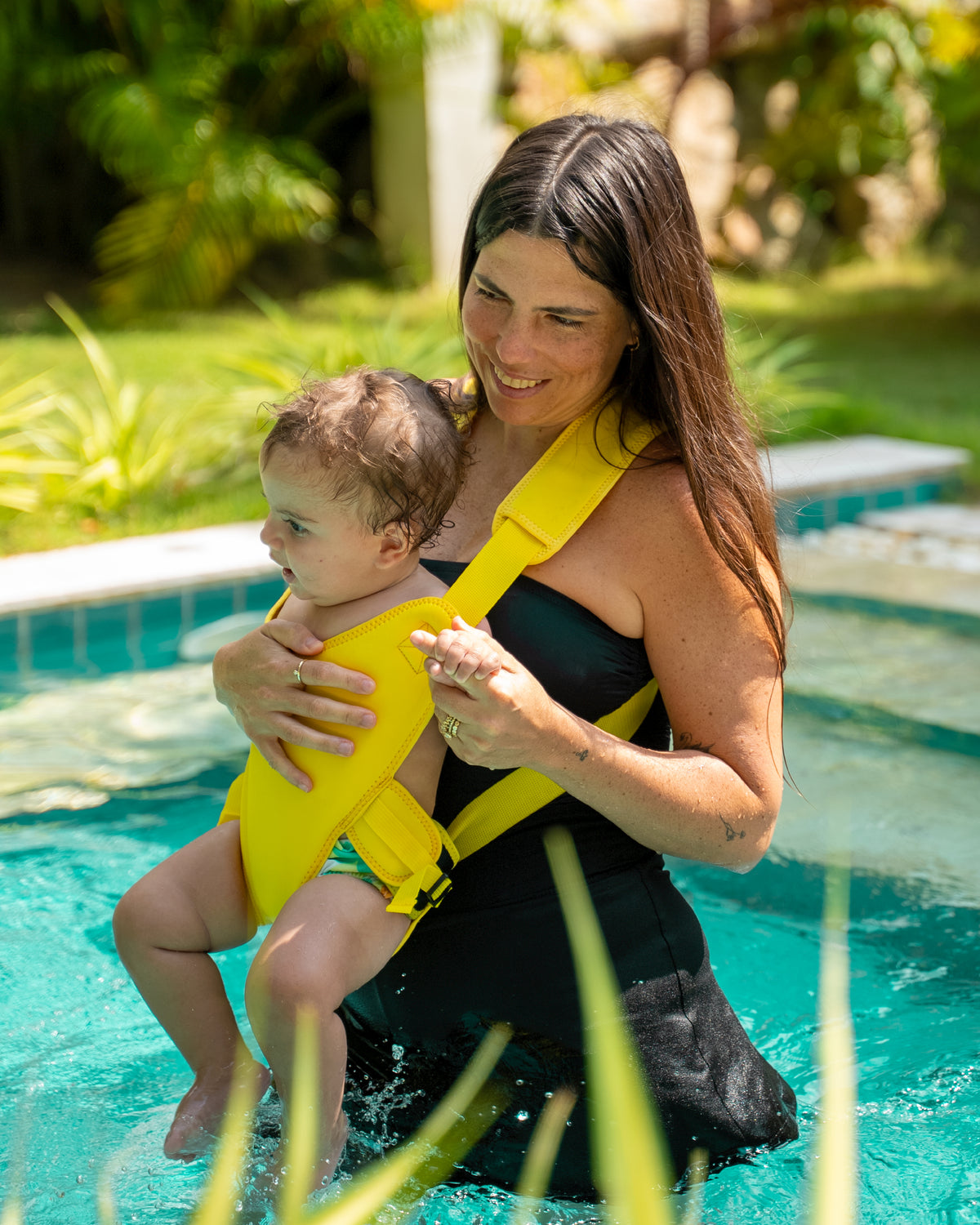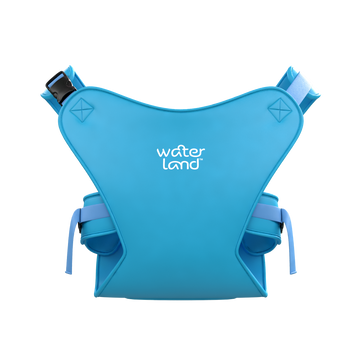
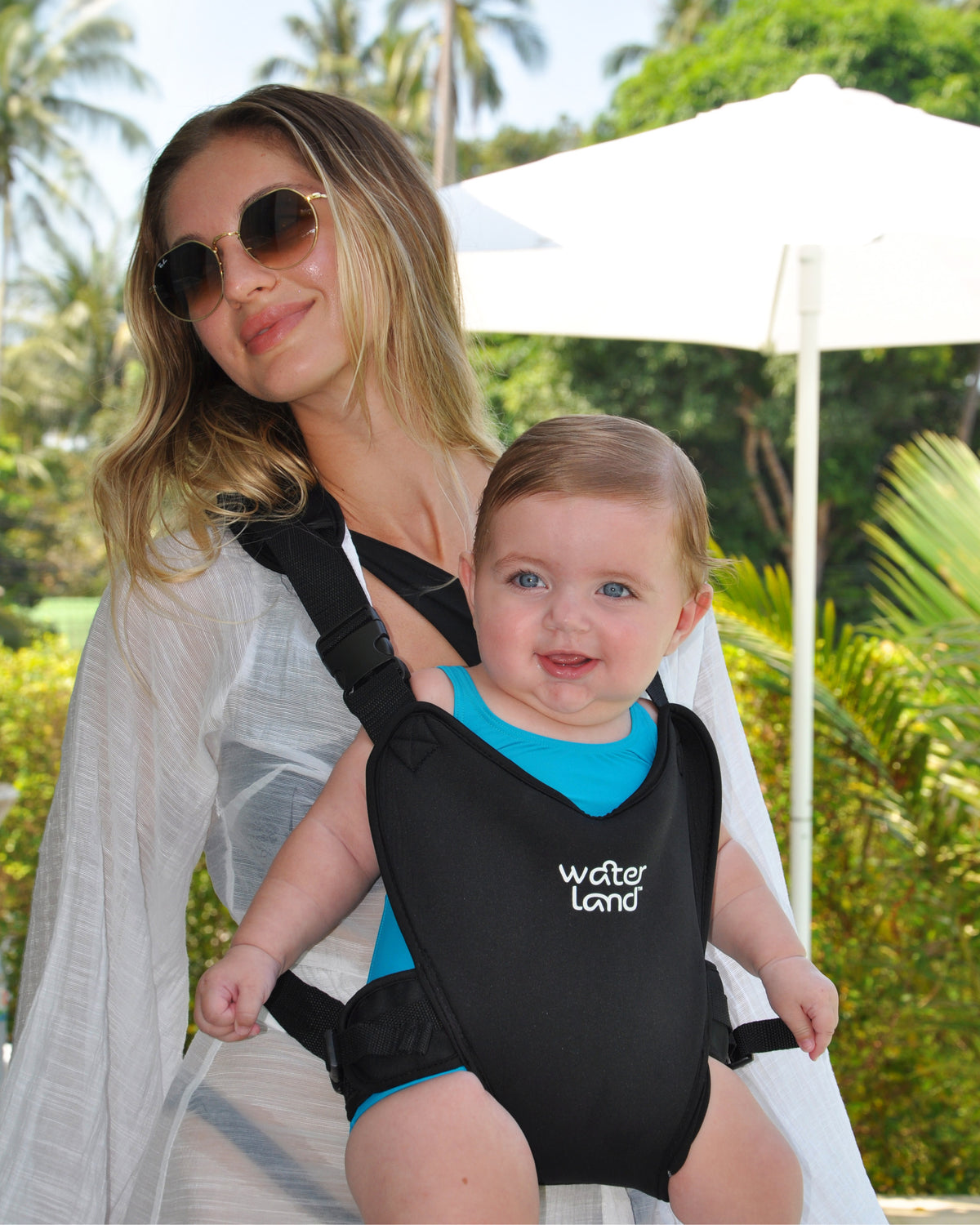
How it works.
Your setup and safety guide.
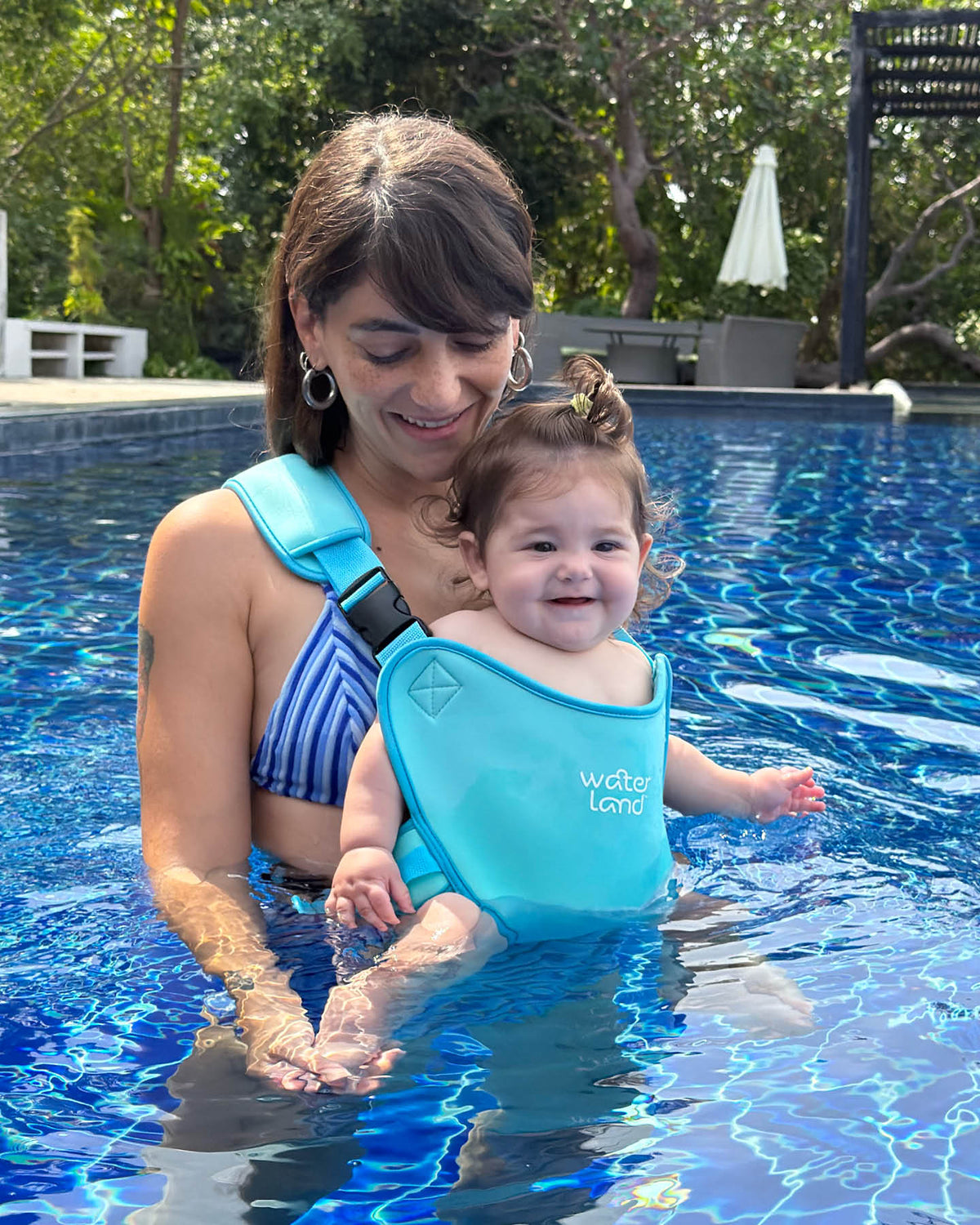
Made for 4–24 months.
Head held steady, without support.
Born early?
Use their corrected age, and ask your pediatrician if you’re unsure.
Will it fit me?
One size, adjustable: it fits a chest of about 30–56 in (76–142 cm), from a women’s XS to about a 4XL or a men’s S to about a 3XL. Adjust it once at home, then it goes on like a T-shirt.
On in a minute.
Adjust it once on dry land. After that, it goes on like a T-shirt.
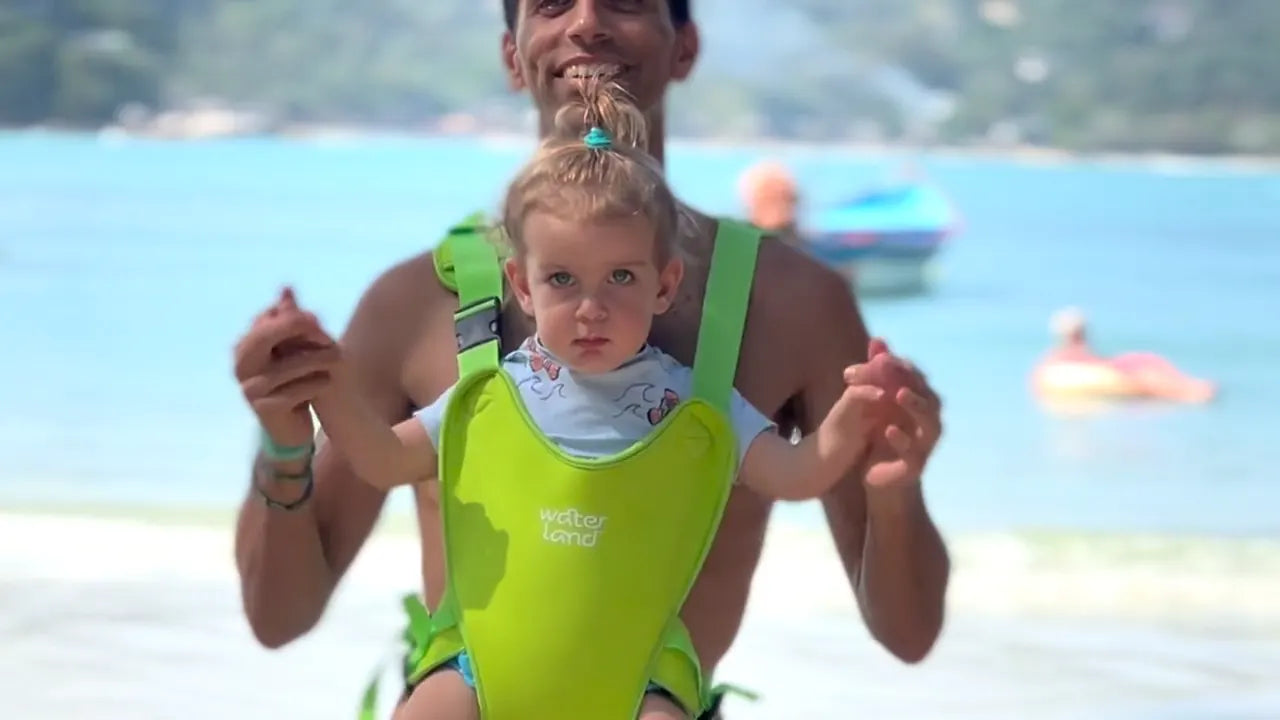
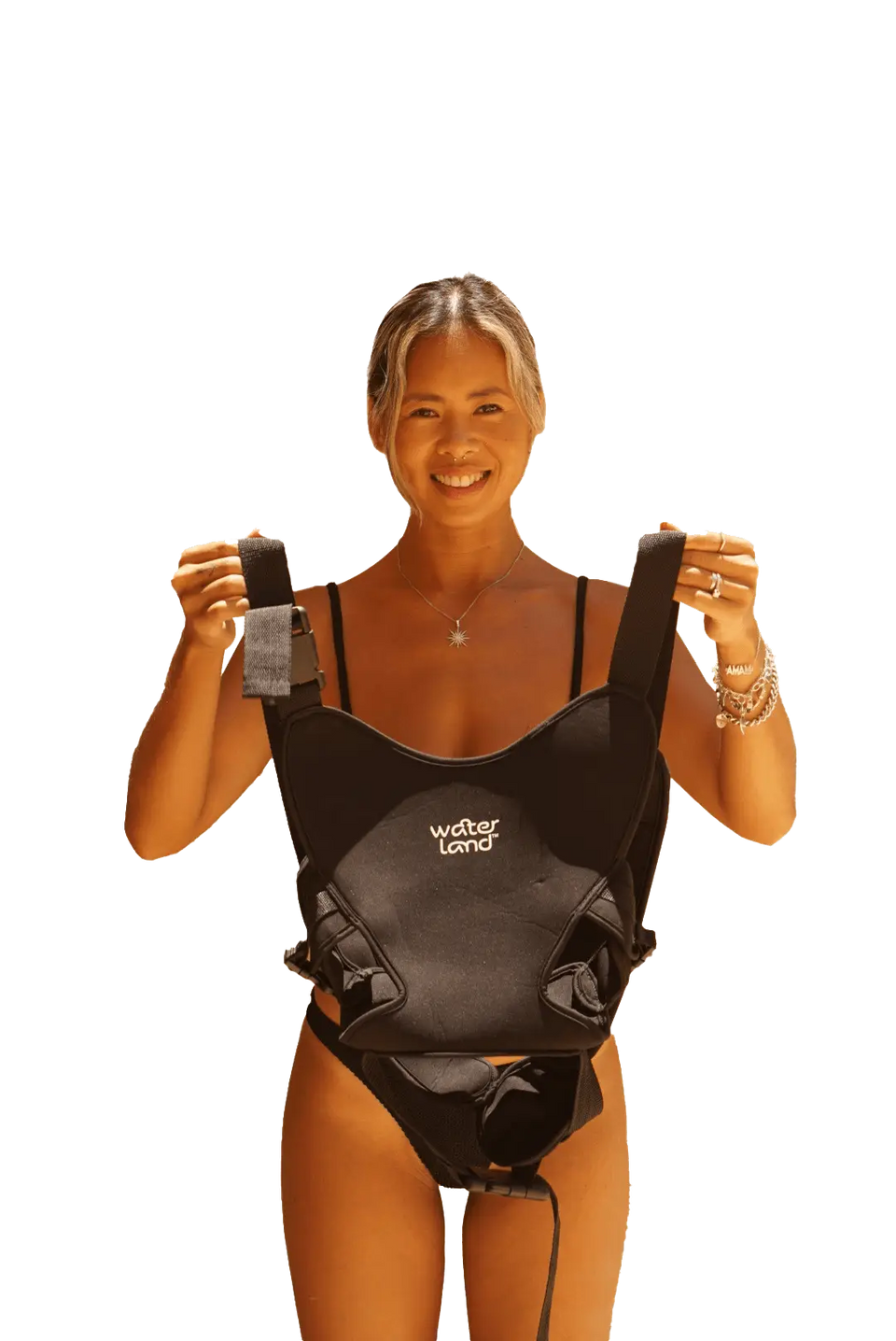
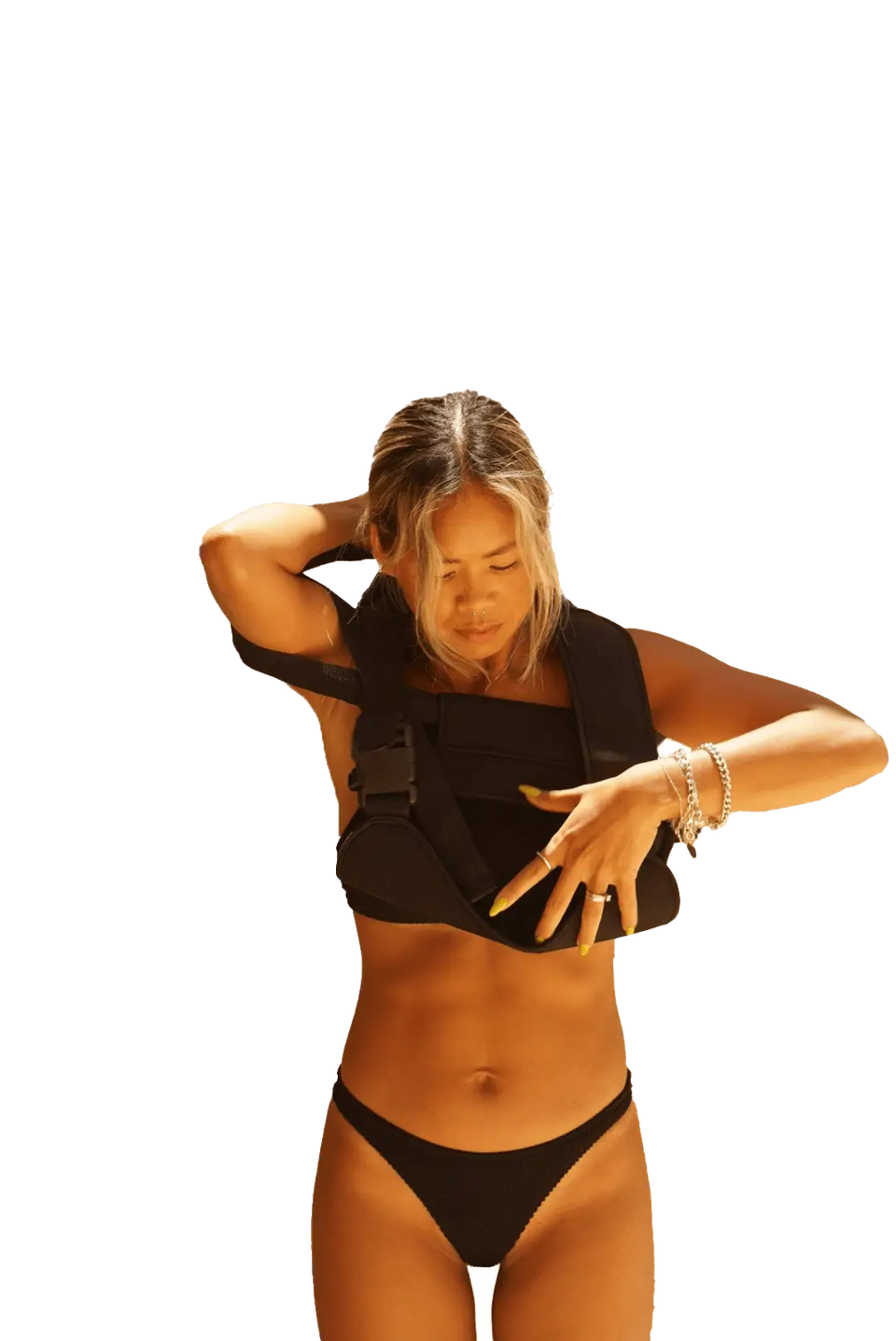
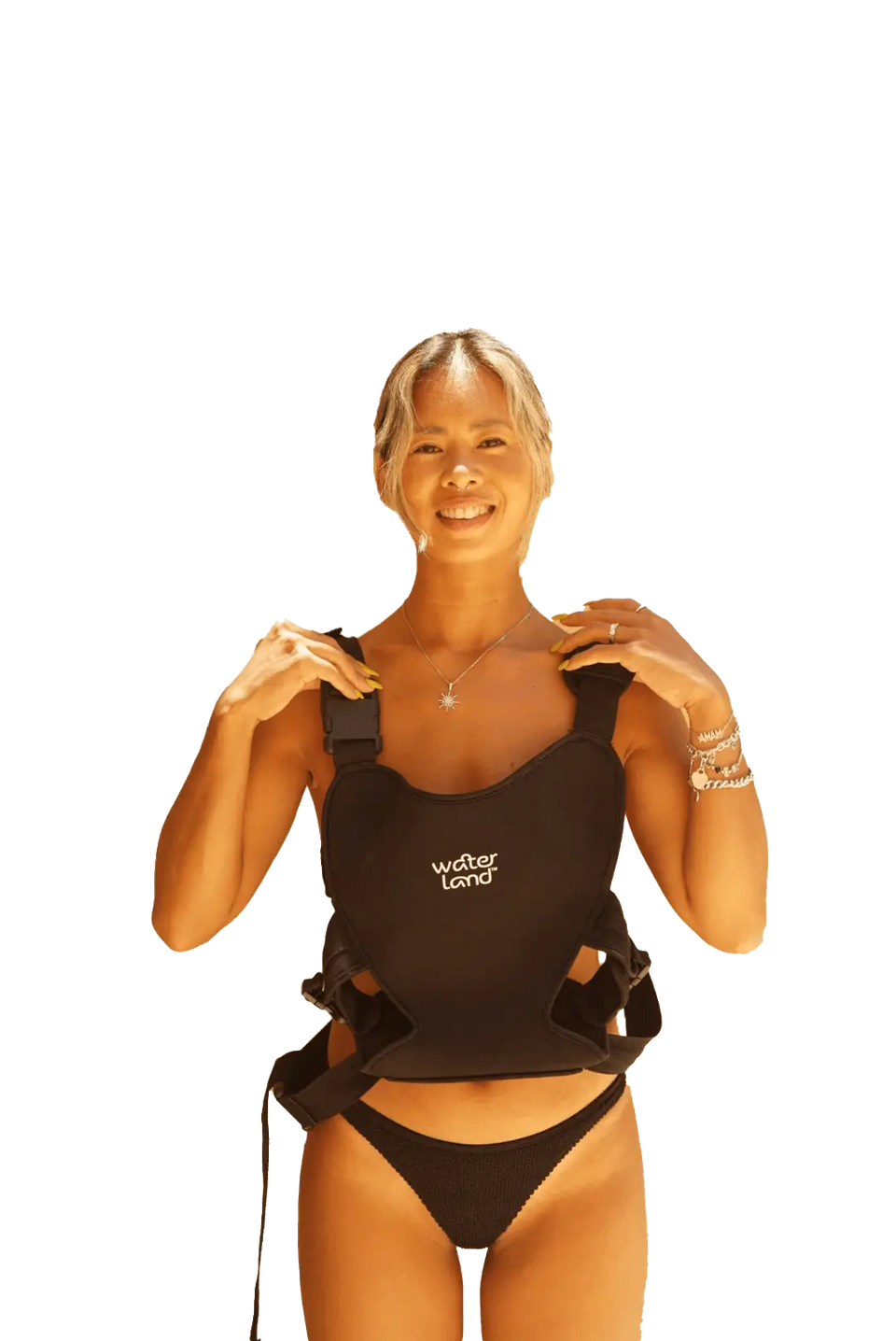
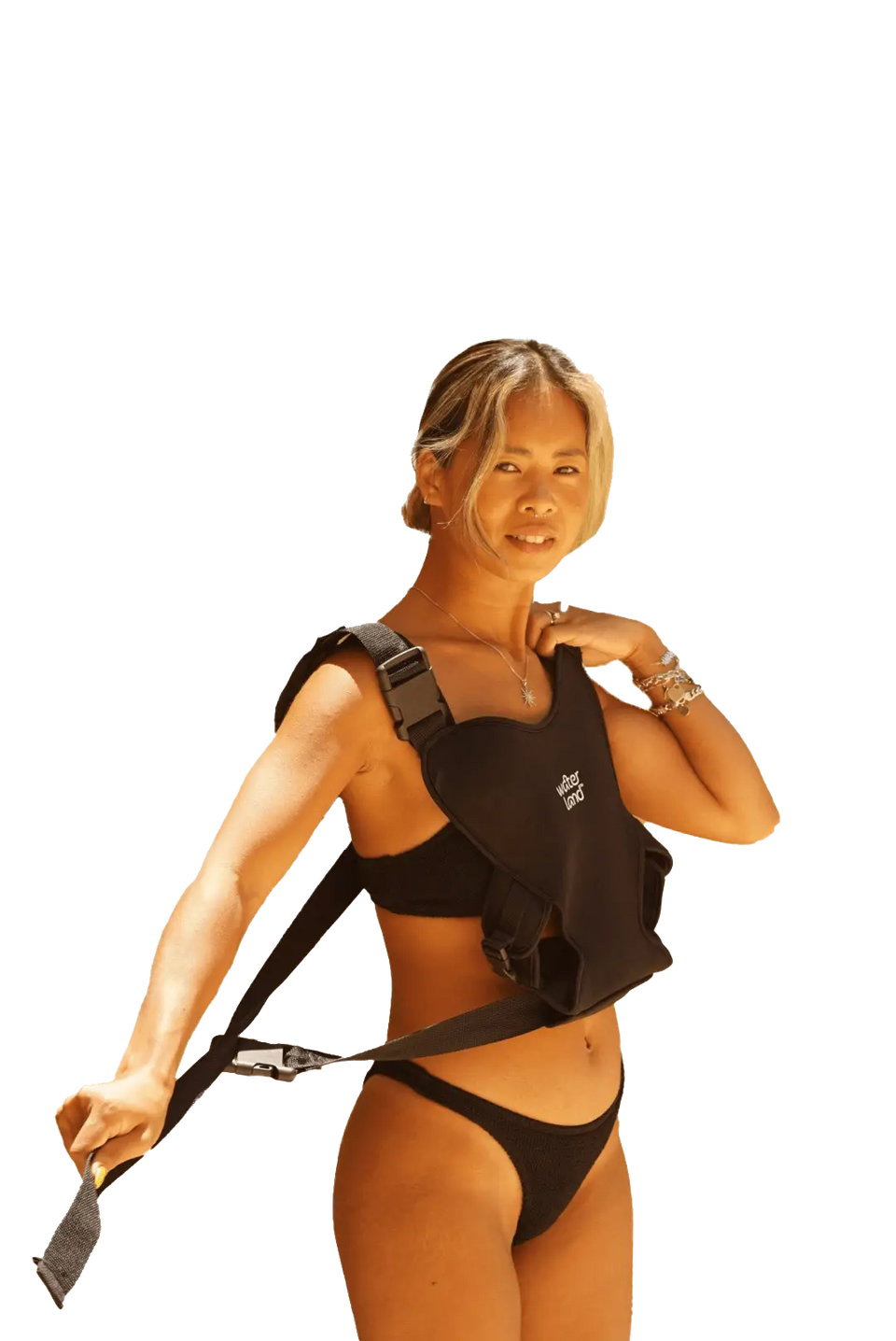
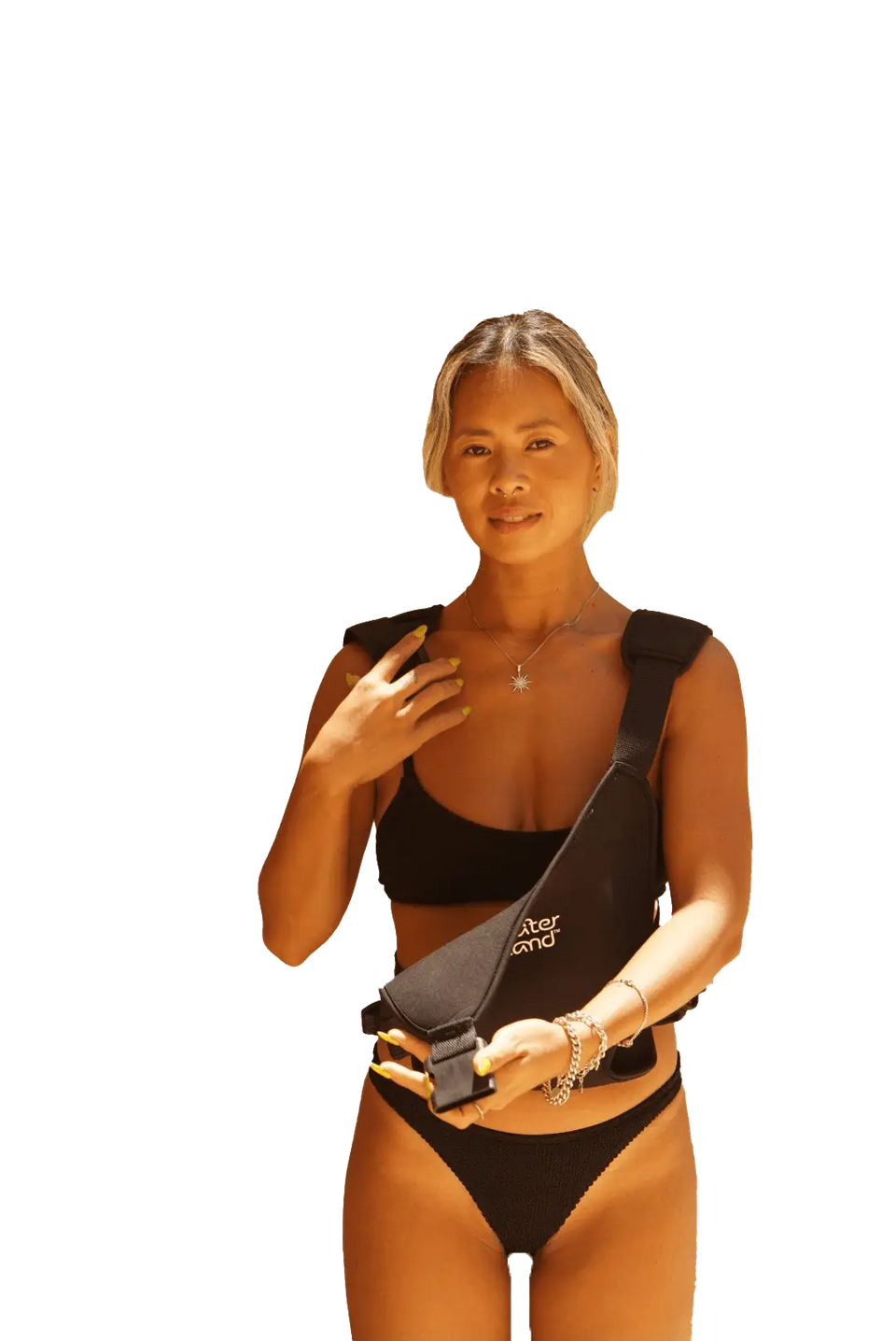
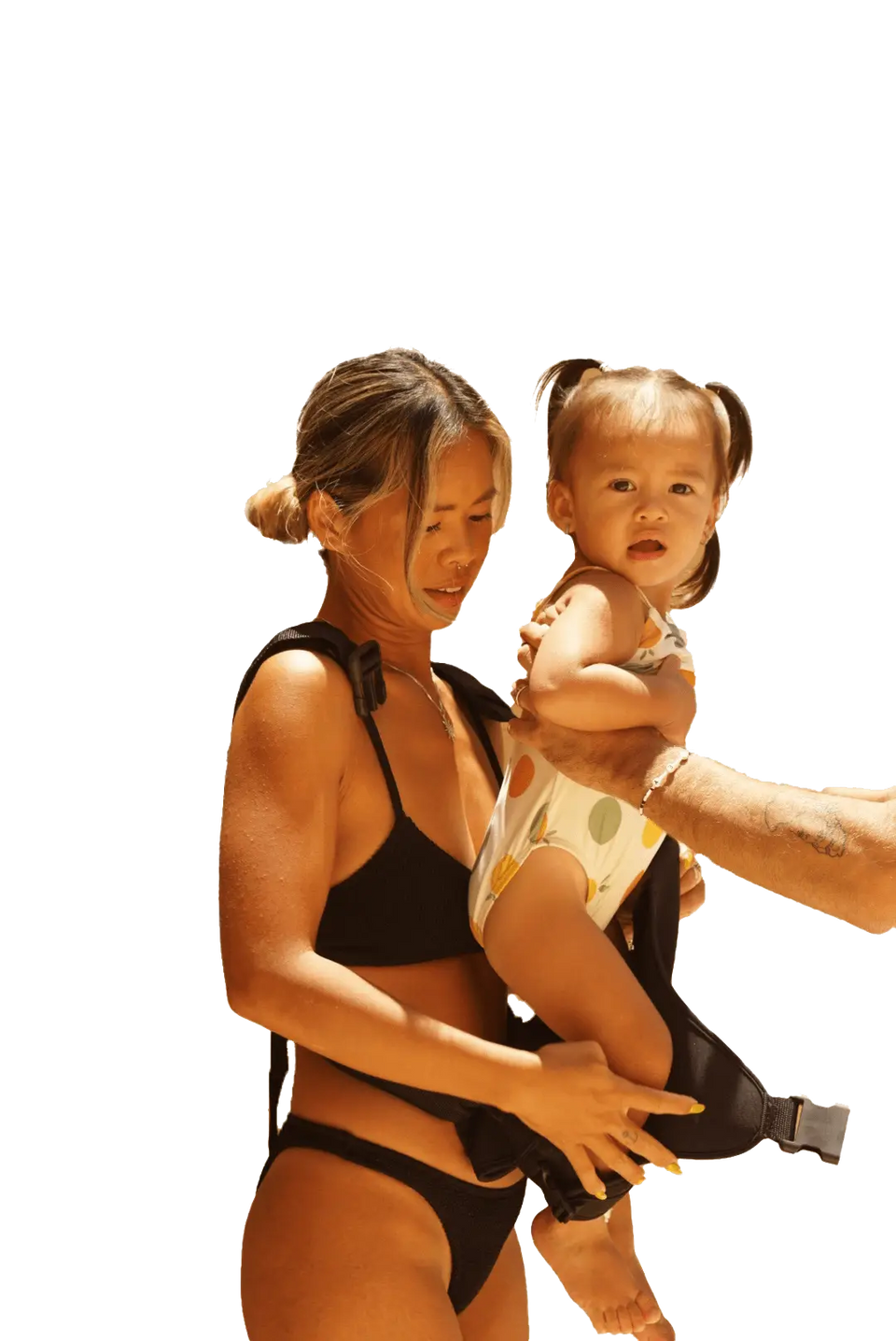
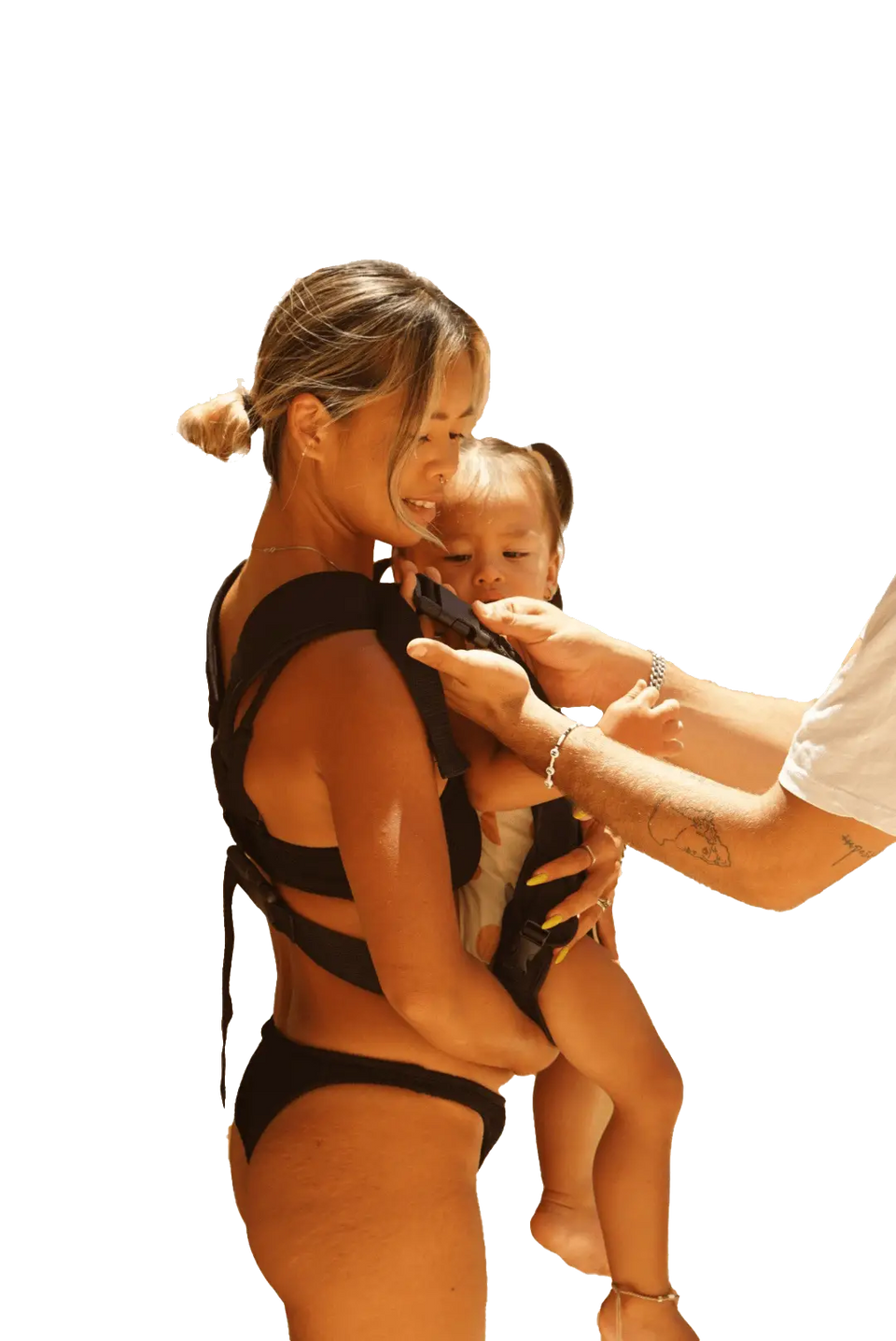
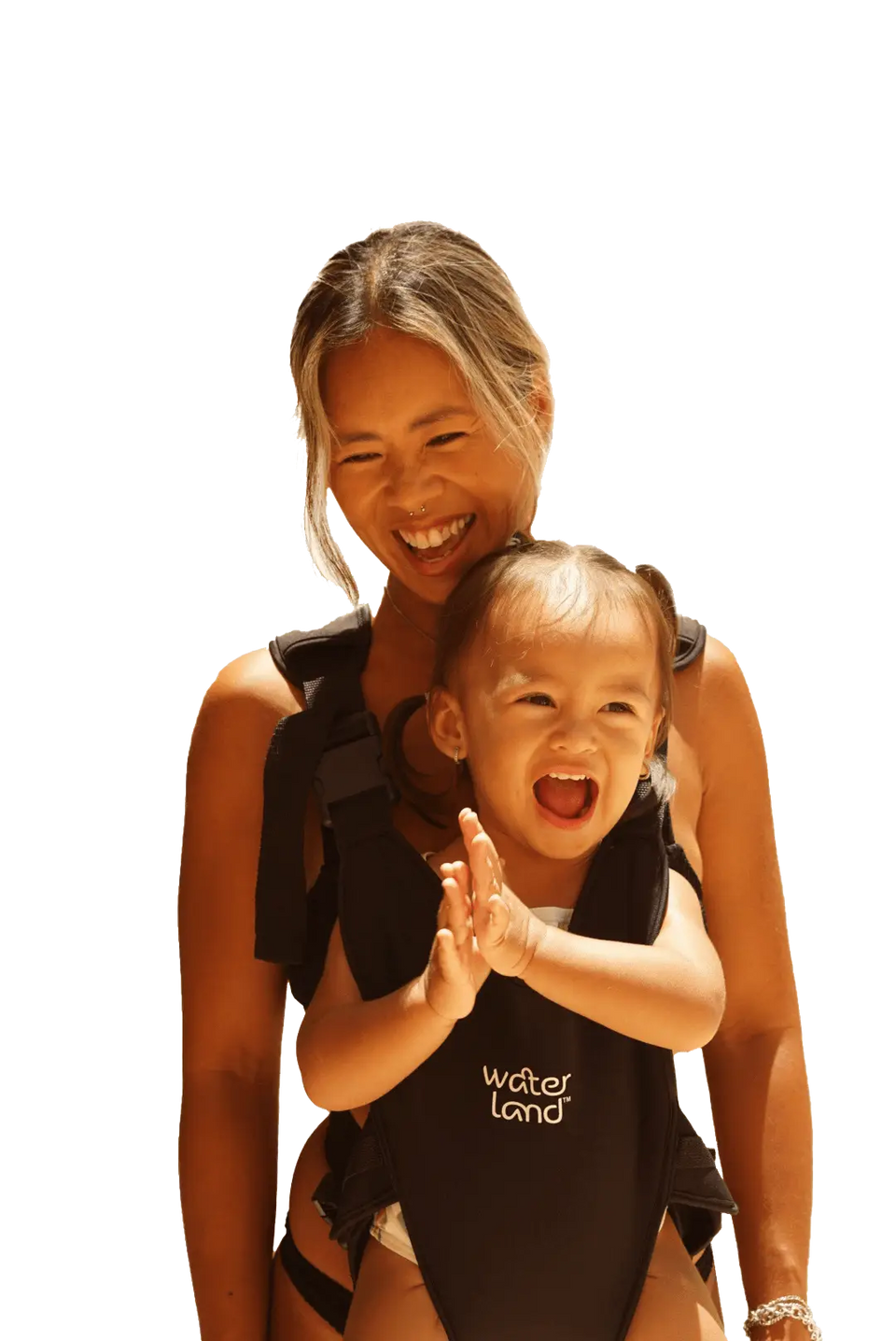
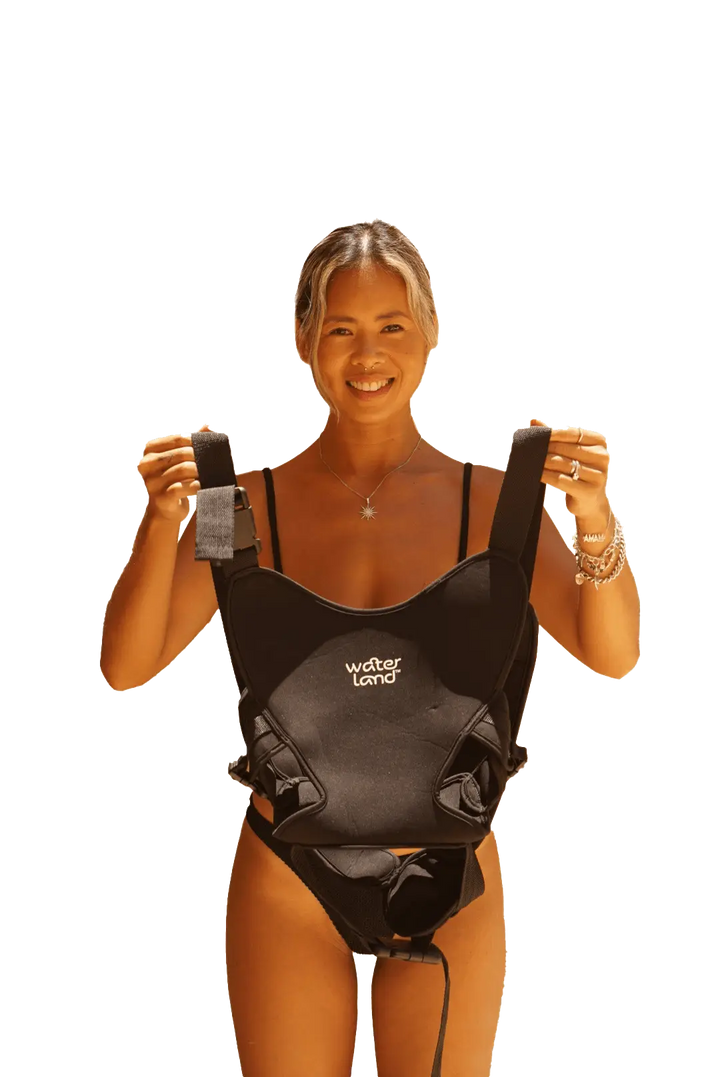
Step 1: Try it on first
Before first use, try the carrier on without your baby.
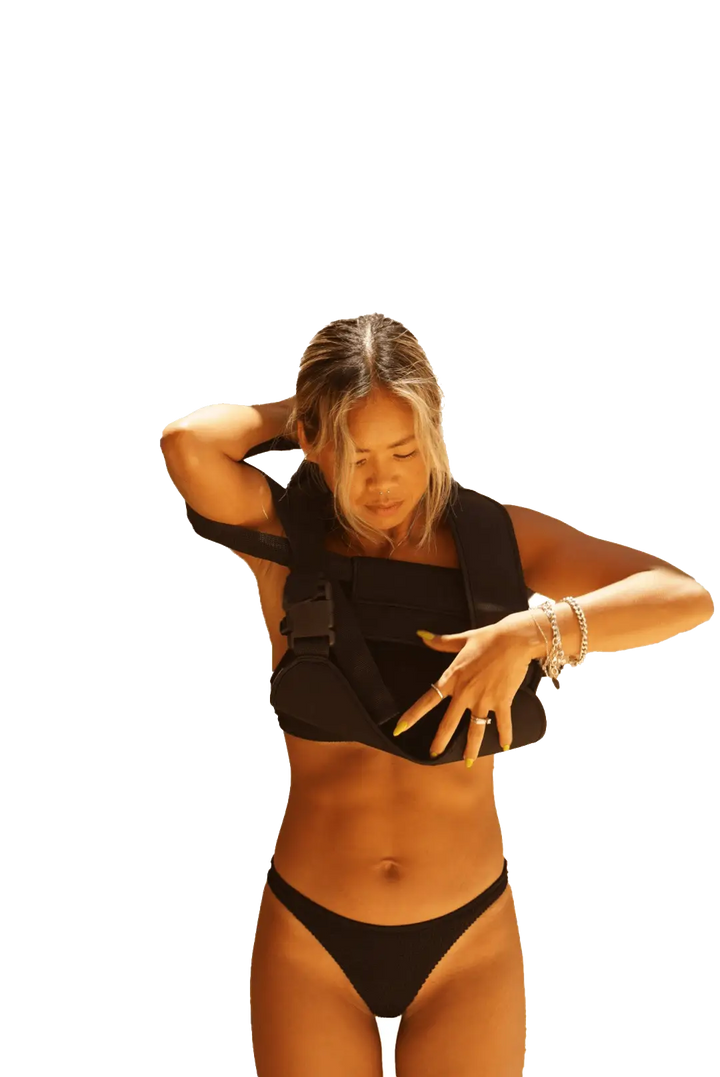
Step 2: Put it on like a shirt
Make sure all the safety buckles are fastened, then put it on as you would a shirt.
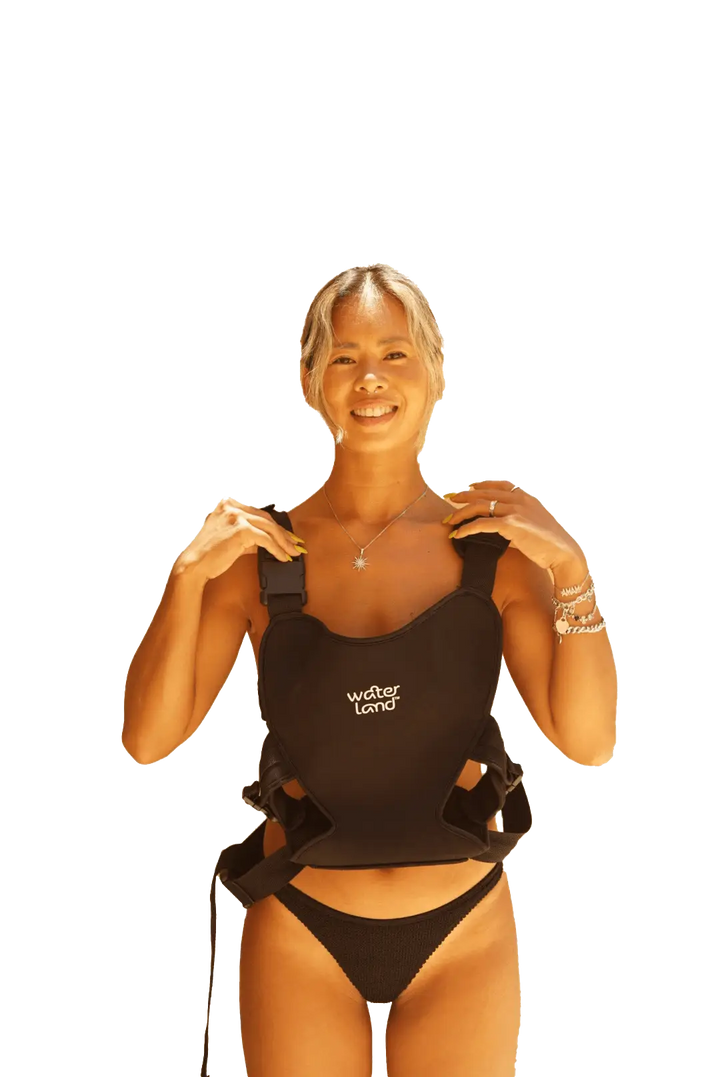
Step 3: Check it feels right
Make sure it’s comfortable on you.
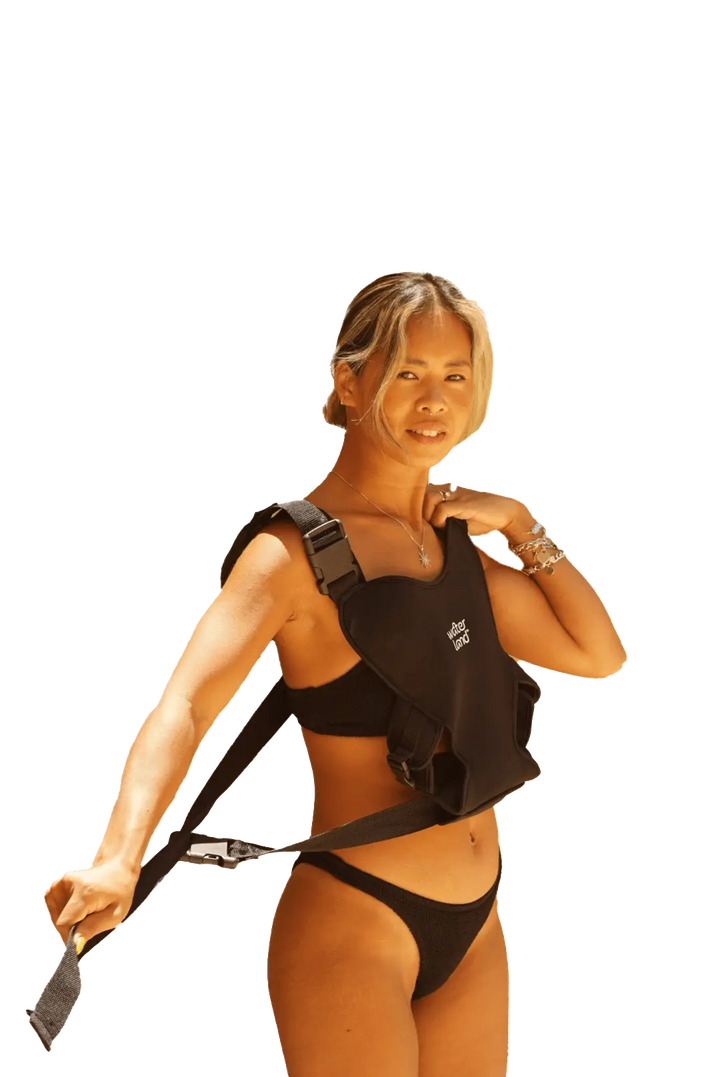
Step 4: Adjust the straps
Tighten and adjust all the straps to fit you and your baby’s size.
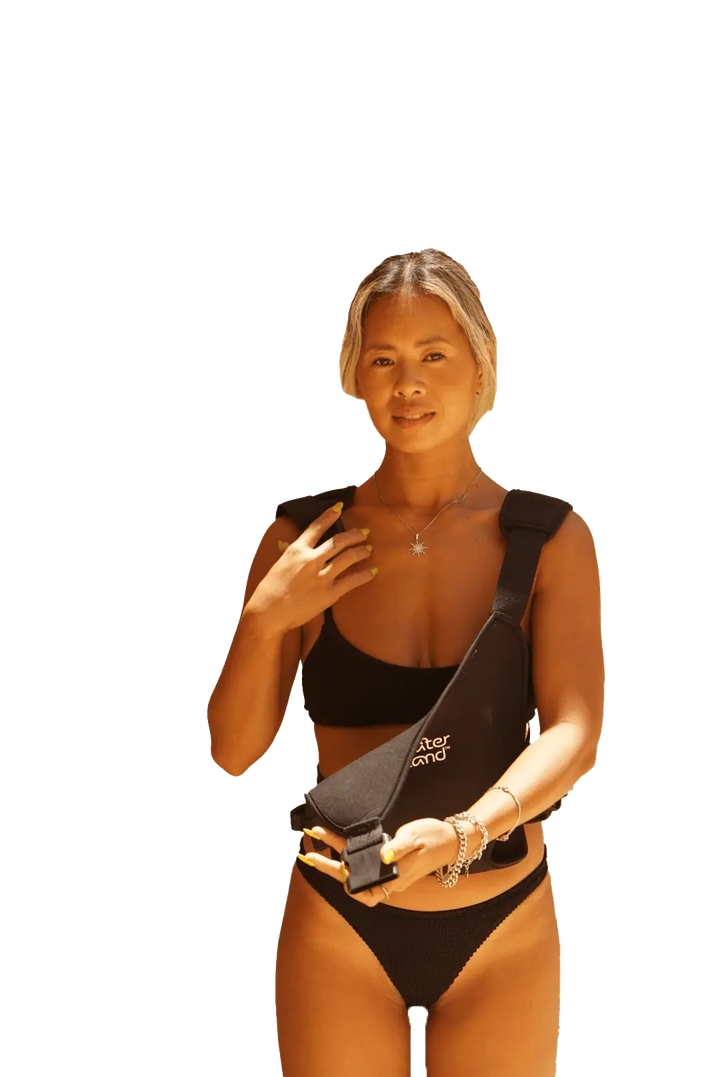
Step 5: Lock the leg buckles
Adjust the leg openings to fit your baby’s legs snugly, and lock the small leg safety buckles.
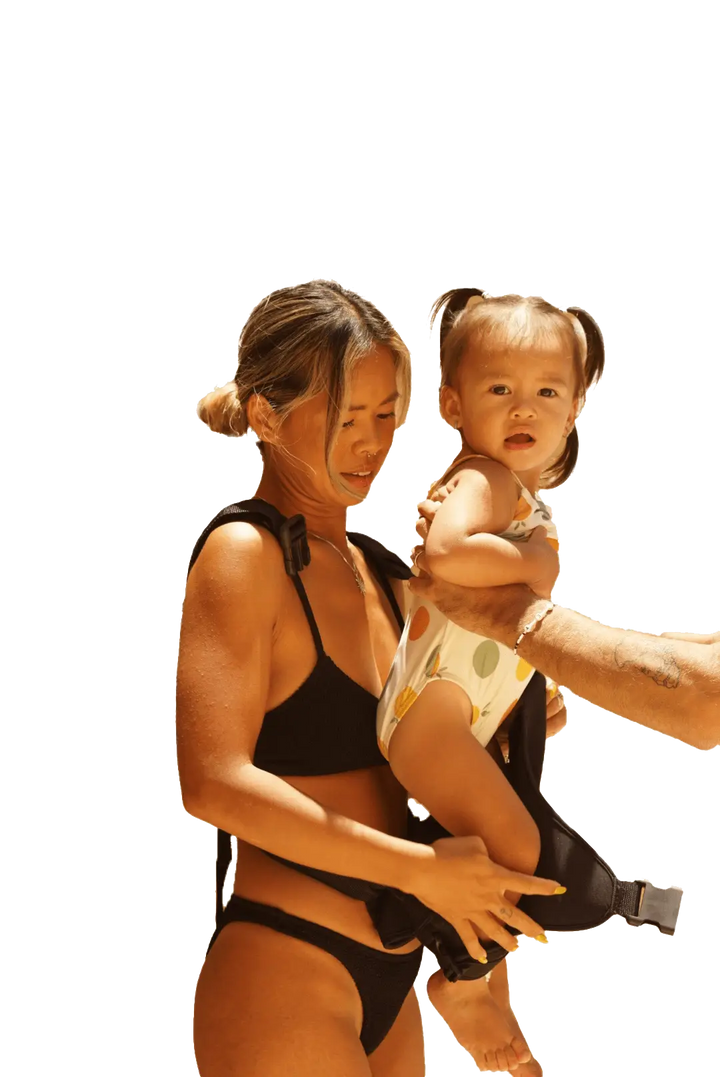
Step 6: Place your baby
Open the upper right buckle and place your baby in the carrier.
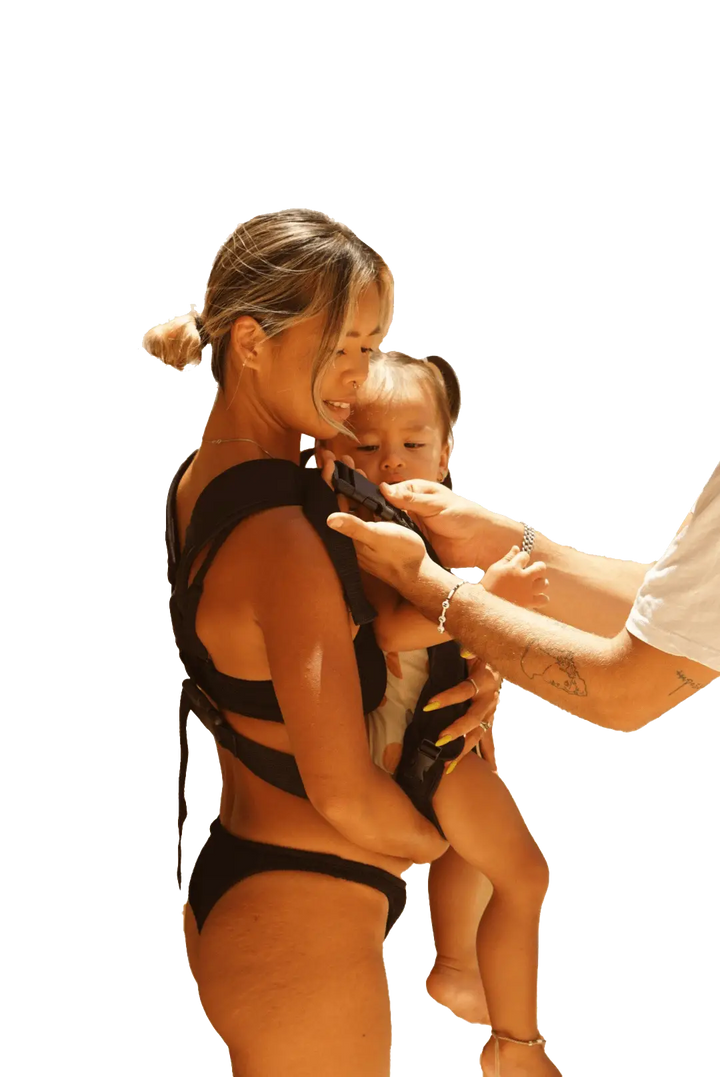
Step 7: Buckle and check
Fasten the buckle and make sure it’s well locked.
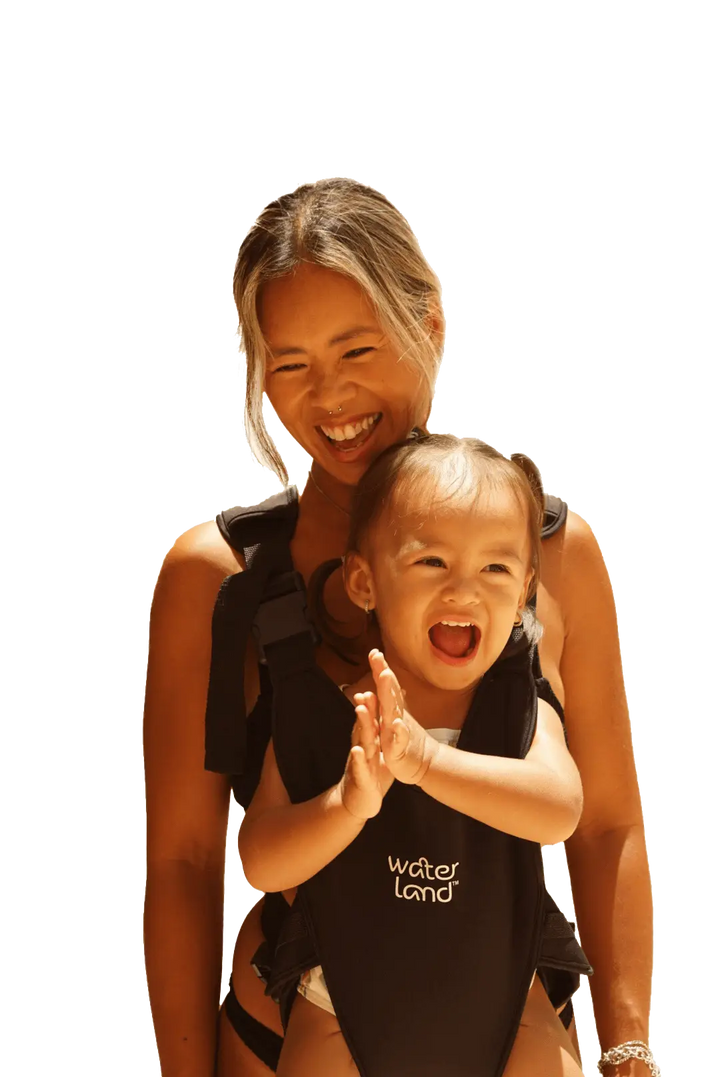
Step 8: The kiss test
Fasten the upper and lower belts so you’re both comfortable and the carrier sits high enough. It’s right when you can kiss your baby’s head easily.
Can’t get a snug fit?
Write to us before you go in.
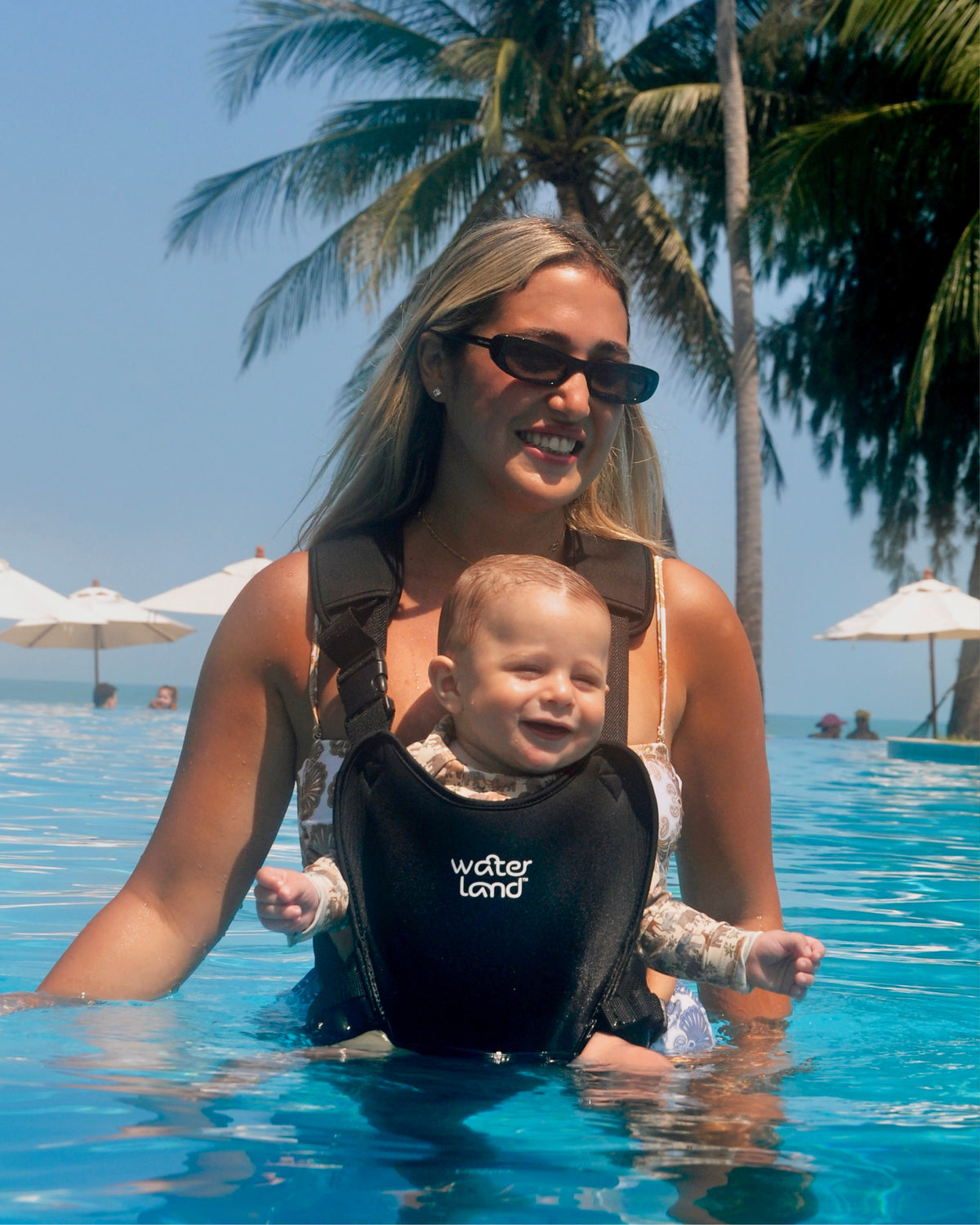
How to go in.
Six steps for every pool and beach day.
- Before you go in, check the fit: face in view, chin off chest, close enough to kiss.
- Get in by steps or a gentle slope, holding a rail.
- Stand with both feet on the bottom, in calm water no deeper than your waist.
- Keep your baby’s face well clear of the water.
- Get out the same way, holding the rail.
- Keep first sessions short: about 15 minutes.
WaterLand is a carrier, not a flotation device.
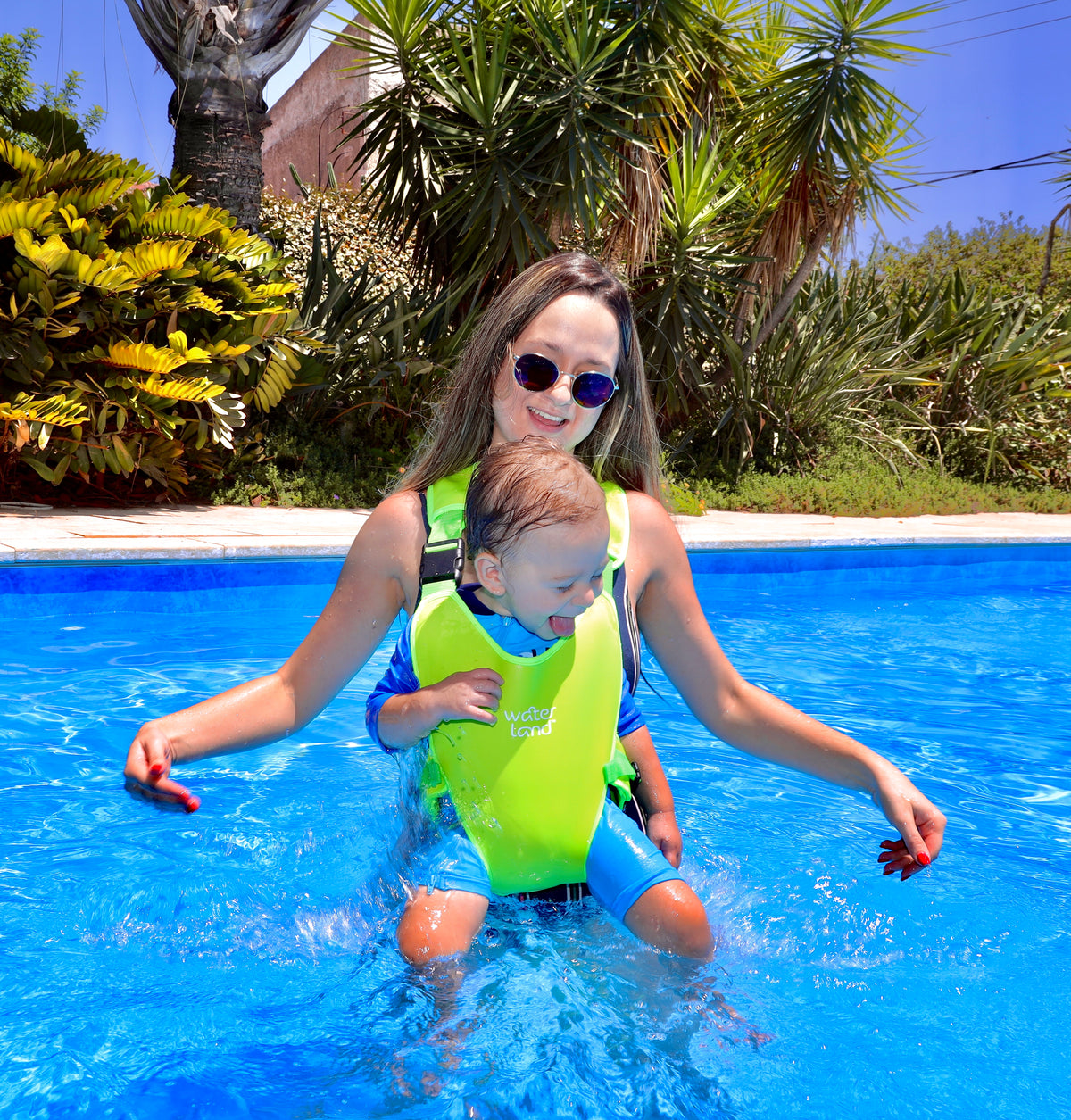
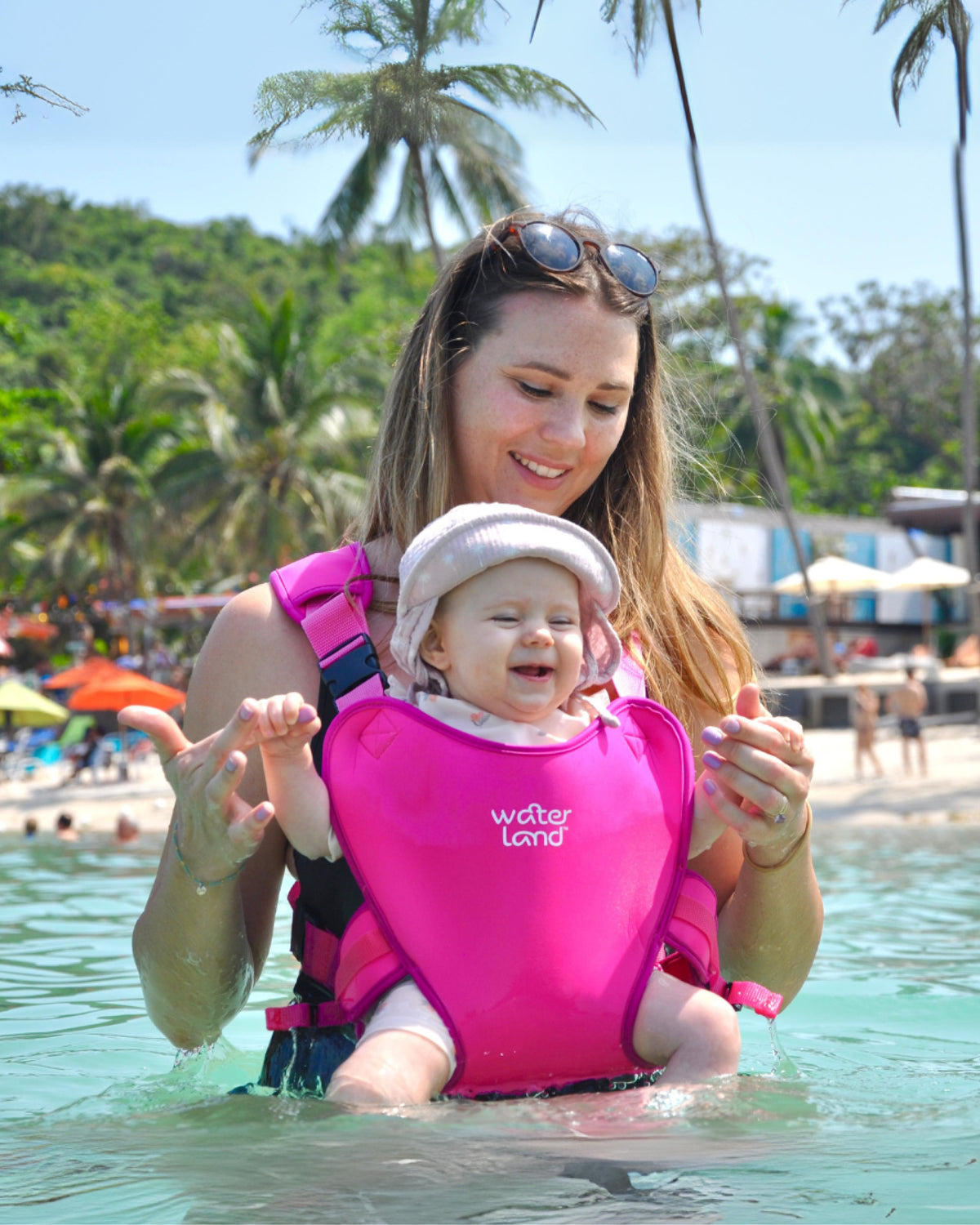
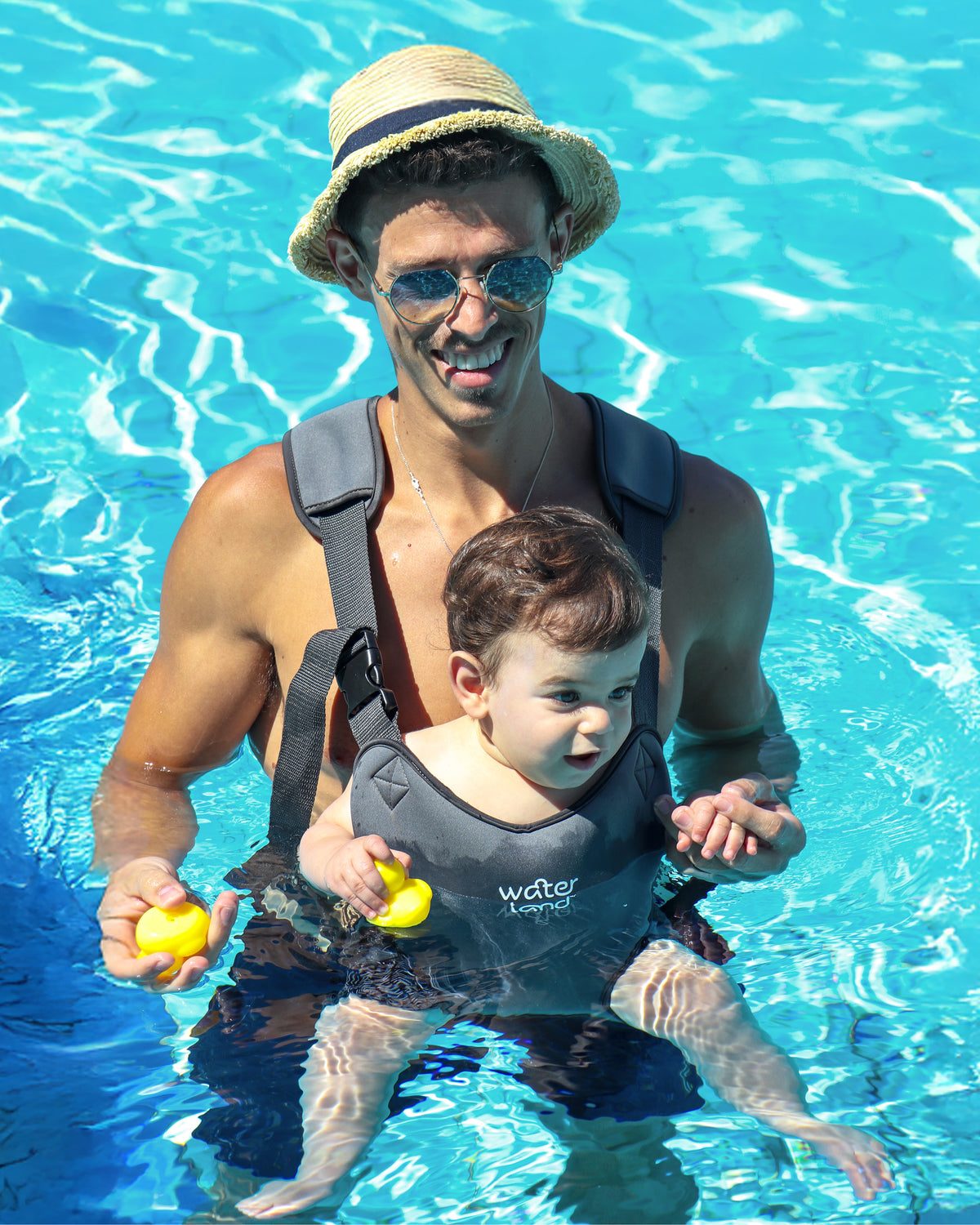
More on going in.
Getting in and out.
Steps or a slope
Get in and out by steps or a gentle slope, holding a rail. Don’t climb a ladder or jump in while wearing your baby.
How deep
Go no deeper than your waist, and keep the water below your baby’s chest, whichever is shallower.
Keep both feet flat and firm on the bottom: never on tiptoe, never crouching or kneeling.
Stay on your feet
Don’t bend, crouch, kneel or sit down in the water while wearing your baby. To reach or lift another child, move to shallower water or the edge first.
The quick exit
If you slip or lose your footing, get your baby’s face clear of the water first, then get out and check your baby.
A sleepy baby
If your baby falls asleep, get out of the water.
Beyond the pool.
The sea or a lake
In the sea or a lake, use it only in calm, flat water no deeper than your waist, with no breaking waves, at a lifeguarded spot where you can (between the flags in Australia).
If a wave, current or drop-off moves you or splashes your baby’s face, get out straight away.
Swim classes and lessons
Ask the teacher what the class does before you get in. Never dip, dunk or submerge your baby while they’re in the carrier, even in a class that does. Take your baby out of the carrier first.
The carrier doesn’t replace swim lessons. The American Academy of Pediatrics says swim lessons can start from age 1.
Boats, docks and hot tubs
Never on boats, docks or paddleboards. On a boat, your baby needs their own properly fitted life jacket.
WaterLand is made for pools, lakes and the sea. Keep it out of hot tubs and spas.
Warm and comfortable.
Temperature
Neoprene, like a wetsuit, holds some warmth, but it doesn’t make cool water safe for a baby, and it can make your baby too warm in sun or out of the water.
Keep sessions short and watch for signs of cold (shivering, pale or blue lips) and overheating (flushed, irritable). If you’re unsure, ask your pediatrician.
Sun
WaterLand has no UPF rating, so don’t rely on it for sun. Under 6 months, keep your baby in shade and clothing first. Some pools and swim classes start at 6 months; check yours.
Out of the water
WaterLand is made for the water. On dry land, keep wear short, because neoprene holds heat. Leave running and cycling to a land carrier.
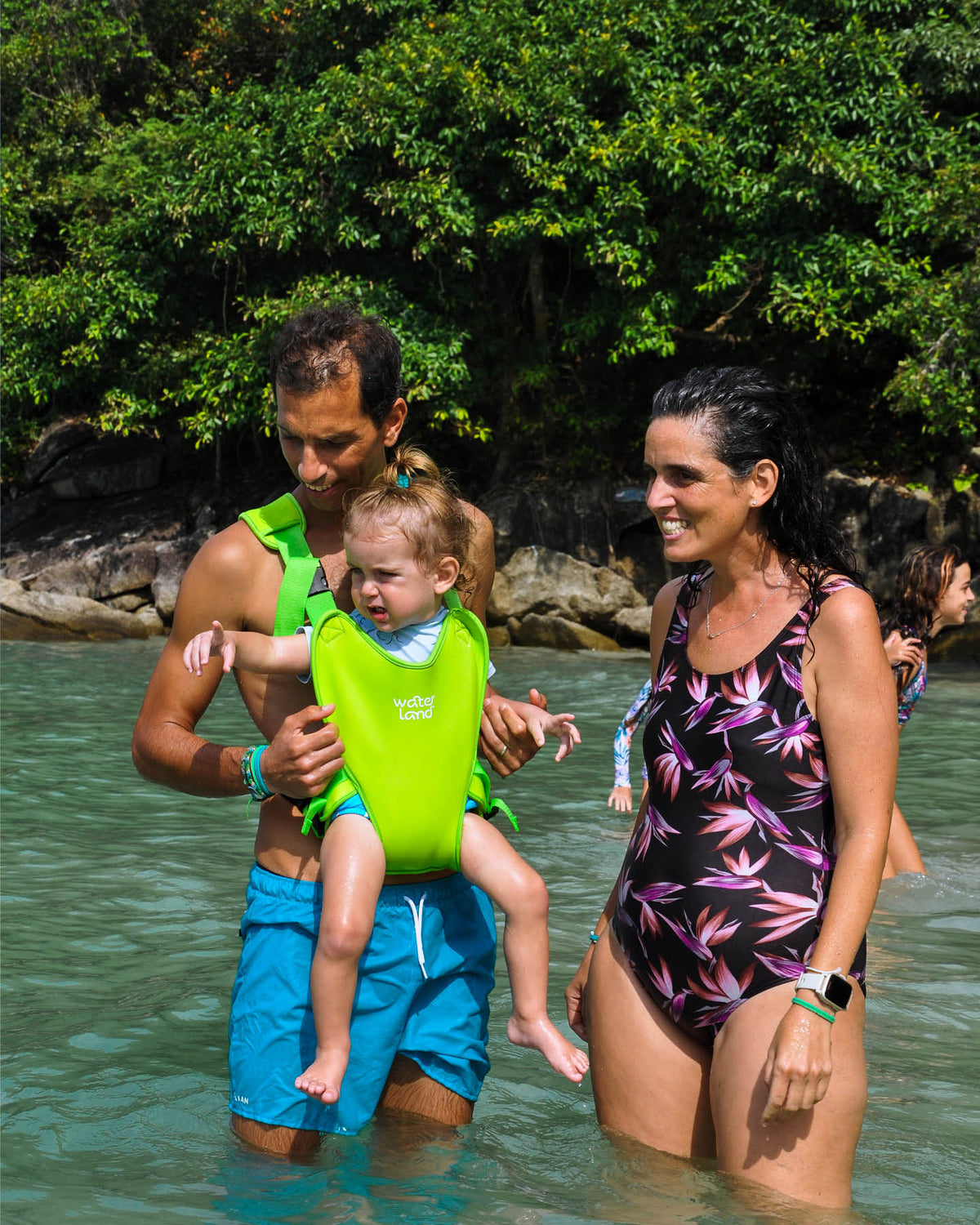
An older child nearby.
Stay within arm’s reach of every child.
Within arm’s reach
Stay within arm’s reach of every young child in or near water.
When other children are with you, an adult must be the water watcher: the adult whose only job is watching the children in the water, with no phone. If you’re the only adult, that’s you.
Two adults, ideally
With an older child in the water, it’s best to have two adults: one wears the baby, one watches the older child.
On your own, the older child wears their own life jacket and stays within arm’s reach; if you can’t keep both within reach, get out.
The right life jacket
An older child who can’t swim wears a properly fitted, Coast Guard-approved life jacket (elsewhere, one approved to your national standard).
Not arm floats, rings, neck floats or inflatable toys.
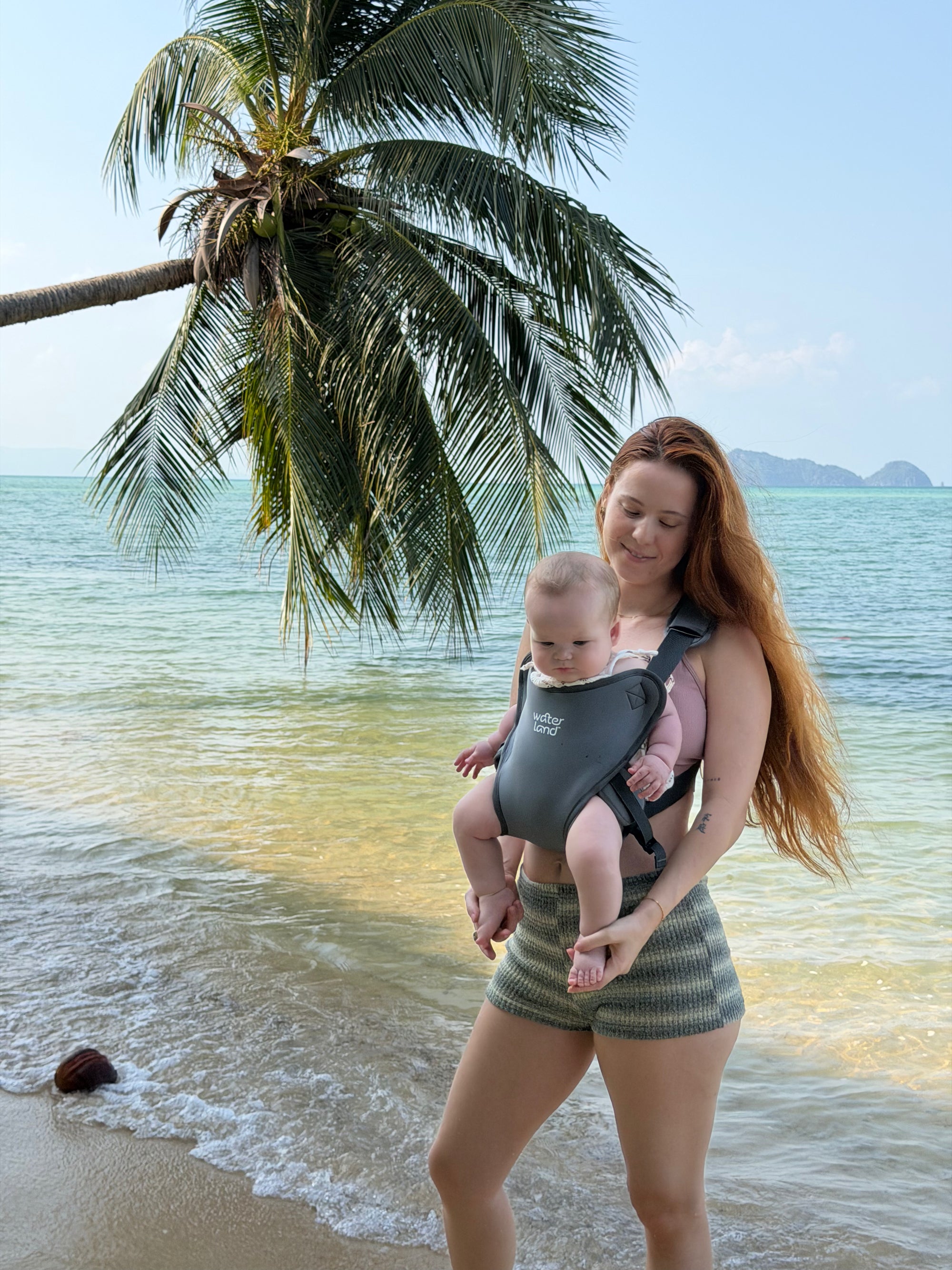
Looking after it.
Rinse, wash, dry, store and look it over.
Rinse
After chlorine, salt water or sand, rinse it in fresh water.
Wash
Check the label first. Hand wash, or machine wash on a delicate cycle, in cool water.
Dry
Hang it to dry, completely, before you pack it away.
Store
Store it away from direct sunlight, somewhere dry and airy. Hang it or lay it flat so it doesn’t crease; don’t fold it. Never store it damp.
Look it over
Before every season, check the neoprene, seams, webbing, buckles, elastic and label. Stop using the carrier if any check fails.
Tested for the water.
WaterLand is:
WaterLand is safety-tested and meets the safety standards that apply to its intended use in water.
- Standards
- ASTM F2236-24 and CPSC 16 CFR part 1226 (US); EN 13209-2:2015 + AC:2016 (EU)
Safety information.
From your carrier’s instructions for use. Read them all before you go in.
Fall hazard
Infants can fall through a wide leg opening or out of the carrier.
- Adjust the leg openings to fit your baby’s legs snugly.
- Before each use, make sure all buckles are secure.
- Take special care when leaning or walking.
- Never bend at the waist; bend at the knees.
- Only use this carrier for children between 13 lb and 33 lb (6–15 kg).
Suffocation hazard
Infants under 4 months can suffocate in the carrier if their face is pressed tight against your body.
- Don’t strap your baby too tight against your body.
- Allow room for head movement.
- Keep your baby’s face free from obstructions at all times.
- If you nurse your baby in the carrier, always reposition them after feeding so their face isn’t pressed against your body.
Before each use
- Read all the instructions before using the carrier, and keep them for future reference.
- Check that all buckles, snaps, straps and adjustments are secure.
- Check for ripped seams, torn straps or fabric, and damaged fasteners.
- Make sure your child is placed correctly, including their legs.
- Your child must face towards you until they can hold their head upright.
In the water
- Before you go in, make sure all the buckles are well fastened.
- Don’t jump into the water. Go in with caution.
- Make sure your baby’s head is always out of the water.
- The carrier is not a flotation device, and not a substitute for your care and attention.
- Never leave your child in the carrier without supervision.
When not to use it
- Premature babies, babies with breathing problems and babies under 4 months are at greater risk of suffocation.
- For low-birthweight babies and children with medical conditions, ask a health professional before using the carrier.
- Never use it when your balance or mobility is affected by exercise, drowsiness or a medical condition.
- It isn’t suitable for sporting activities.
- Never use it while cooking or cleaning with heat sources or chemicals.
- Never wear it while driving or riding in a vehicle, and never use it as a car seat.
- Avoid it if you have back problems, and stop if you feel any pain.
Around the carrier
- Your balance may be affected by your own movement and your child’s. Take care when bending or leaning forward or sideways.
- Be aware of hazards at home, such as heat sources and spilled hot drinks.
- Don’t let children touch the drawstring bag: its string is an entanglement risk. Store the carrier and bag away from children when not in use.
- Stop using the carrier if any part is missing or damaged, and check the belts and buckles regularly for wear.
Standards
WaterLand’s US and EU certificates include ASTM F2236-24 and CPSC 16 CFR part 1226 (US), and EN 13209-2:2015 + AC:2016 (EU).
Recalls and safety notices
Register your carrier for safety notices, and check cpsc.gov/Recalls for the latest.
Reporting an incident? If anyone was hurt, get medical help first. Then tell us what happened, when, and the model and manufacture date on the label.
Contact and manufacturer
WaterLand – Baby Smart Ltd.
Tel +1 (727) 306-8971 · info@waterlandteam.com
Made in Guangzhou, China, for WaterLand.