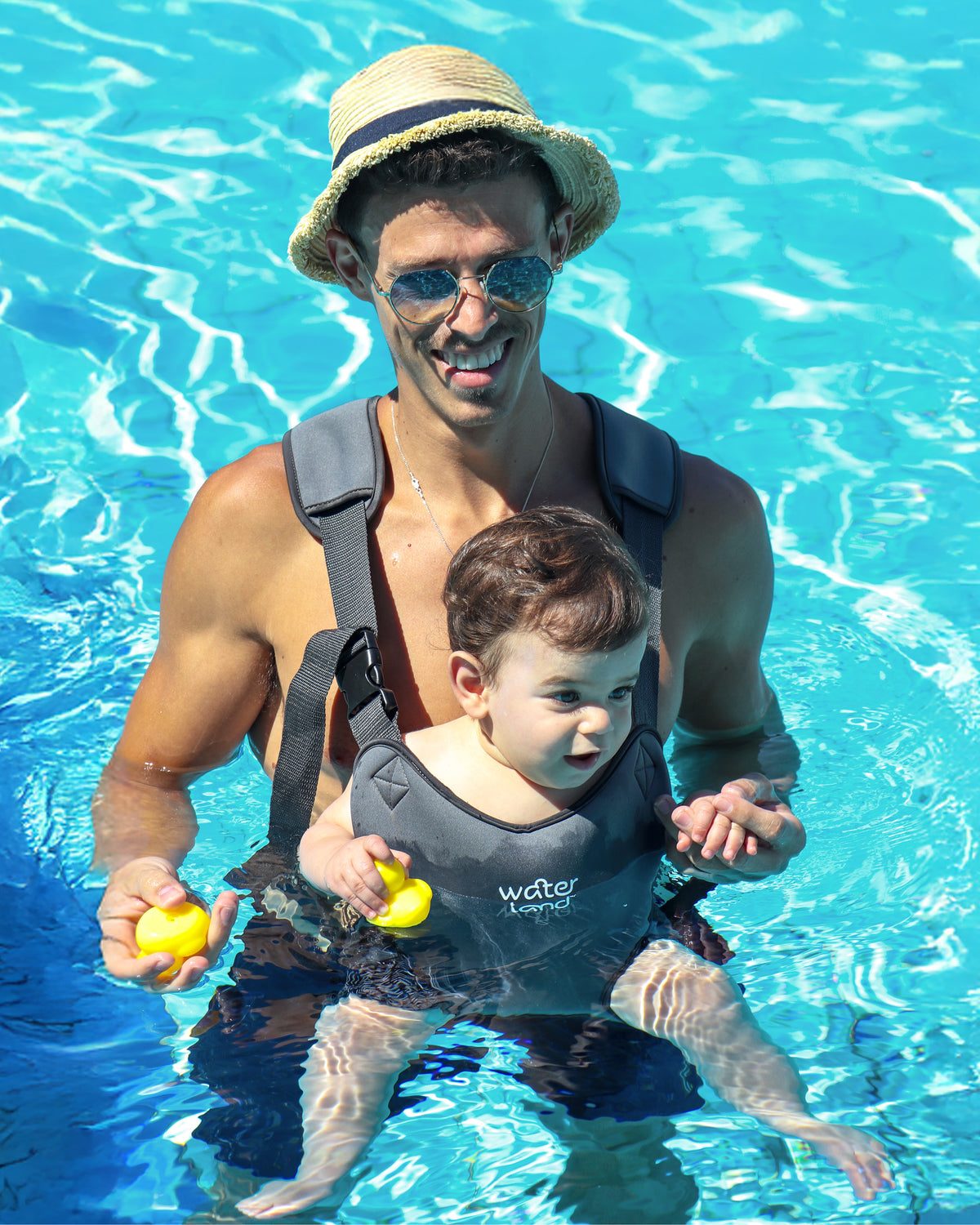
A beach day with a baby and an older child
With two adults, two clear jobs and a calm stretch of water, a beach day can include the whole family. Here’s how to plan it on the sand, so the baby, the older child and you all get to play.
Tammy Cohen Raz 7 min read
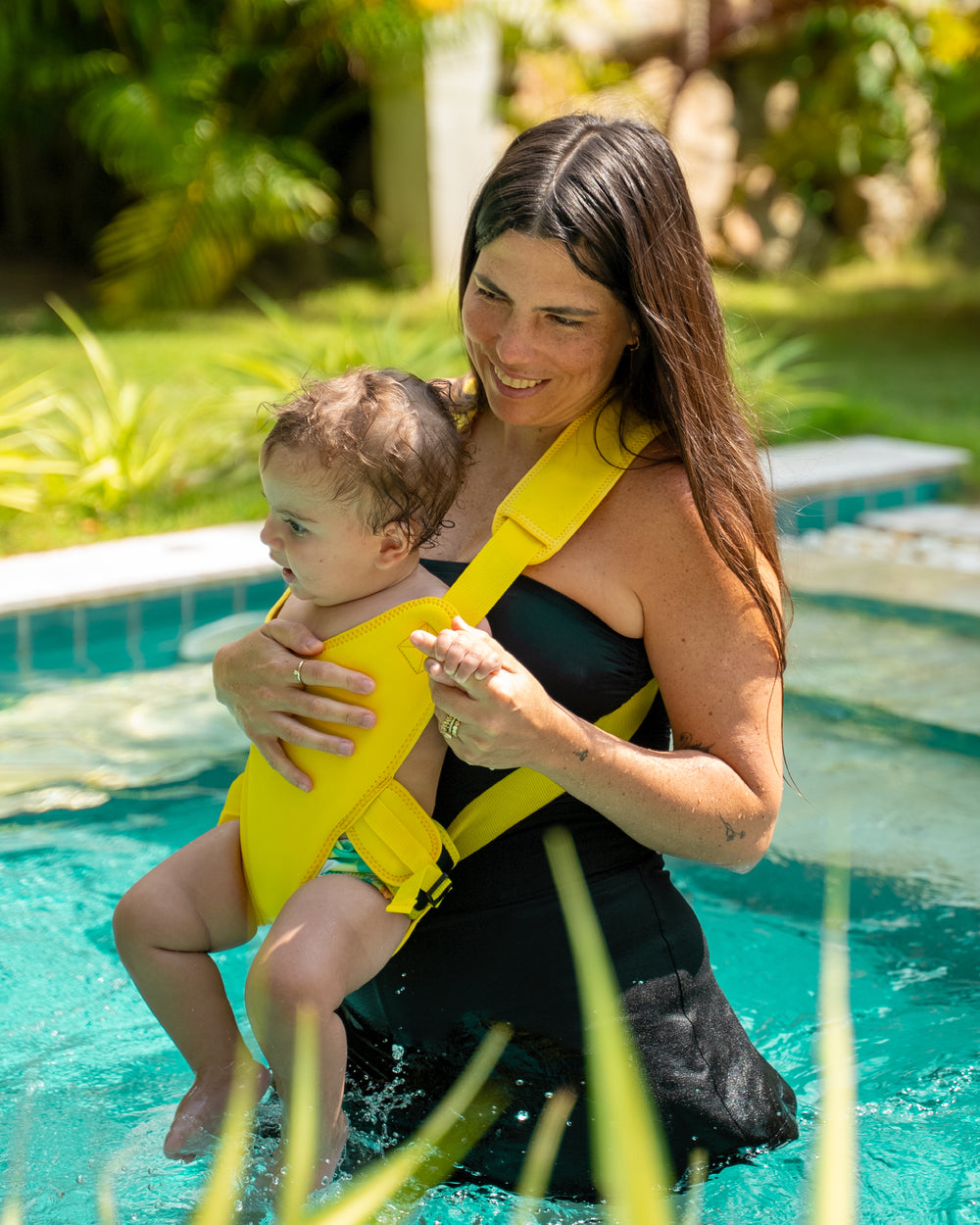
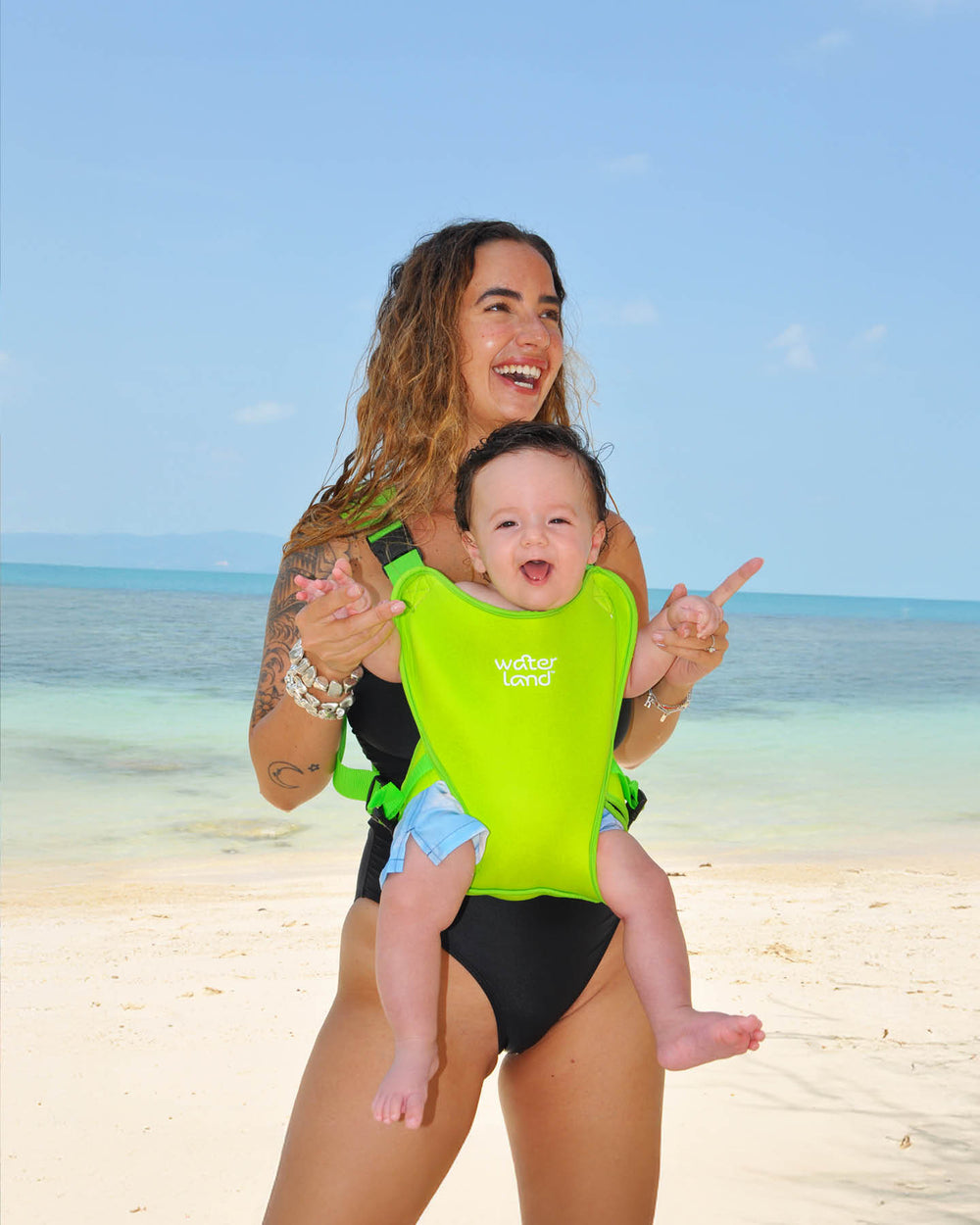
The towels are down, the umbrella is up, and your older one is already halfway to the water with a bucket. Your baby is on your chest, watching the light on the water and kicking at the breeze. This is the beach day you pictured: everyone in it together, nobody left on the sand waiting for a turn.
A day like that runs on a little planning. A beach is a bigger playground than a pool: more space, moving water, sun from above and below, and two children who want different things from you at the same moment. Each of those has a simple answer, and once you know the why, the plan almost writes itself.
Two adults, two jobs
With an older child in the water, it’s easiest with two adults: one wears the baby, one watches the older child. Agree it out loud before anyone gets in. It can feel a little formal, but it solves the quiet problem of two adults each assuming the other one is watching.
The adult watching the older child is the water watcher: their only job is watching the children in the water, with no phone. The American Red Cross describes the role as close and constant attention, free of distractions including cell phones. The American Academy of Pediatrics suggests passing a “water watcher card” to the next adult every 15 to 20 minutes, so attention stays fresh and it’s always clear whose turn it is. Swapping has a lovely side effect, too: both adults get time in the water with the baby. Throughout the day, stay within arm’s reach of every young child in or near water. The AAP calls this touch supervision, and it’s the habit that ties the whole plan together.
The parent wearing the baby keeps one more habit: stay on your feet. Don’t bend, crouch, kneel or sit down in the water while wearing your baby. To reach or lift another child, move to shallower water or the edge first. That’s part of why two jobs work so well: the older child has a grown-up who is free to kneel beside them in the shallows, dig, splash and lift.
On your own with both
If you’re the only adult, you’re the water watcher, and the plan gets simpler rather than harder: keep everyone together. The older child wears their own life jacket and stays within arm’s reach. If you can’t keep both within reach, get out. Many parents find solo days flow most easily in the calm shallows, with a moat to dig at the waterline, ripples to chase, and everyone close enough to touch.
Agree it out loud before anyone gets in.
The right life jacket
An older child who can’t swim wears a properly fitted, Coast Guard-approved life jacket (elsewhere, one approved to your national standard), not arm floats, rings, neck floats or inflatable toys. Here’s the why. The AAP advises against floaties, water wings and inflatable toys because they can deflate, and recommends a properly fitted, Coast Guard-approved life jacket instead. The Red Cross recommends U.S. Coast Guard-approved life jackets for children and inexperienced swimmers, and the Coast Guard notes that adult sizes may not work for children, so choose one made for your child’s size.
Fit is what makes a life jacket work. The Coast Guard sizes them by weight, so check the label for your child’s weight and chest size. A good foam jacket fits snugly and won’t rise above your child’s chin or ears, and the Coast Guard suggests trying a life jacket on in the water to make sure the airway stays clear. A quick try in calm shallows at the start of the day, with a grown-up right beside them, lets your child get used to how it feels.
How to read the beach
Lifeguards read the water for a living, so let them help. Choose a lifeguarded beach and set up near the stand; the Red Cross advises always swimming in a lifeguarded area and asking the lifeguard about water conditions. Look for beach warning flags, often posted on or near the lifeguard stand. The National Weather Service notes that flags aren’t used everywhere and that their meanings vary from area to area, so ask what today’s colors mean at this beach.
Set up away from piers and jetties, too. The National Weather Service explains that rip currents, channels of water flowing away from the shore, are found on beaches with breaking waves and often form near structures like these, and the Red Cross suggests staying at least 100 feet from piers and jetties in the water. A calm, flat stretch away from them is the one you’re looking for.
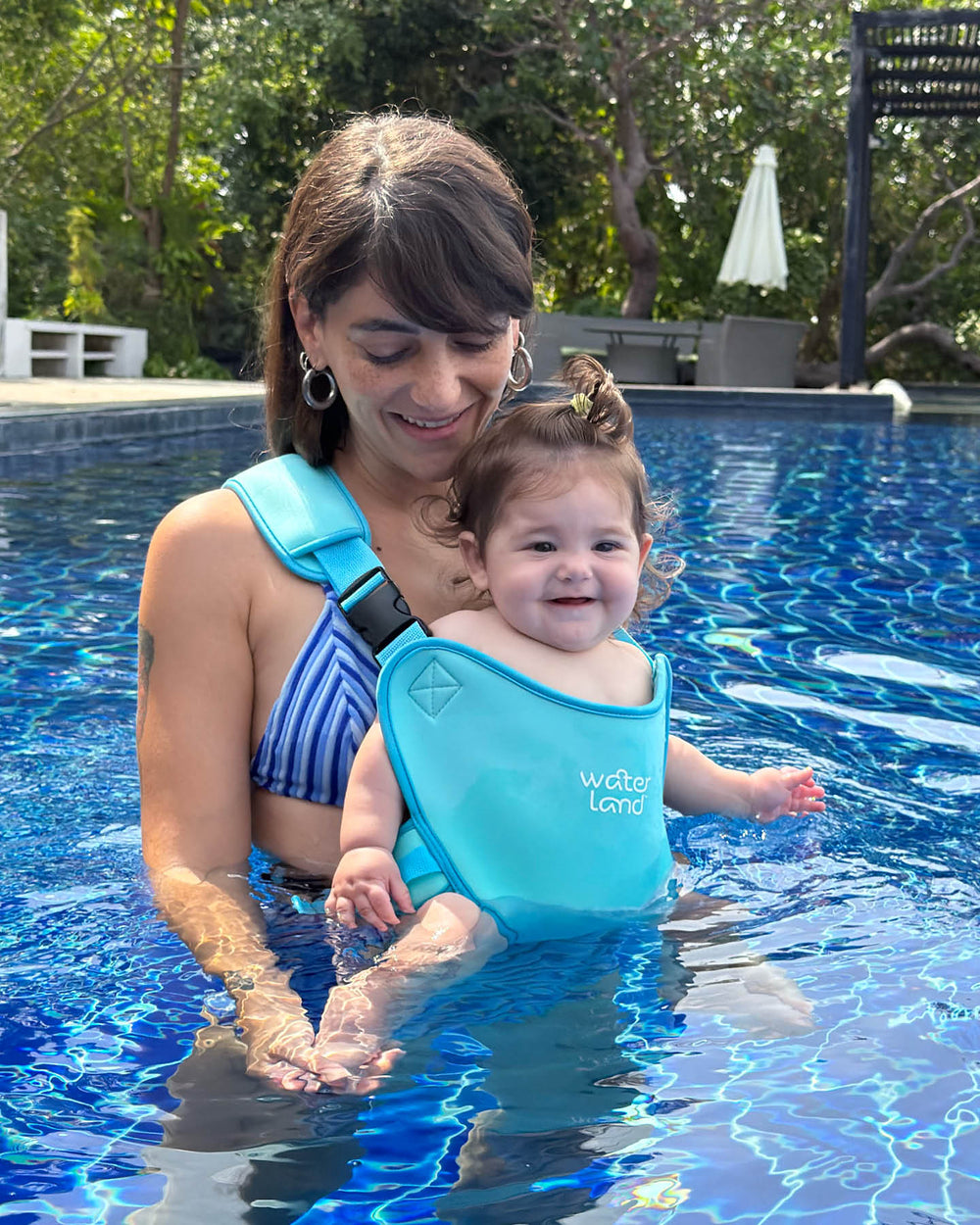
With your baby in the carrier, all of this points to one kind of water. Go in only where it’s calm and flat, no deeper than your waist, with no breaking waves, at a lifeguarded spot where you can. The Red Cross notes that currents and waves can move fast even in shallow water, and advises care when standing so you stay on your feet. That’s part of why you stay waist-deep at most, with both feet flat and firm on the bottom and the water below your baby’s chest, whichever is shallower. If a wave, current or drop-off moves you or splashes your baby’s face, get out straight away. On a calm morning at the right spot, that gentle stretch of water is a wonderful place to be.
Sun for babies and children
At the beach, sun reaches you from two directions: the AAP points out that UV rays bounce back from water and sand, and that up to 80% of UV gets through clouds. For babies under 6 months, it advises keeping them out of direct sunlight, with shade and clothing first; sunscreen goes on small areas such as the face only when protective clothing and shade aren’t available. For children over 6 months, use a broad-spectrum sunscreen of at least SPF 15 (up to SPF 50) on all exposed skin, and reapply every 2 hours and after swimming, sweating or toweling off. Add a hat with an all-around 3-inch brim, and plan your longest stretch in the shade between 10 a.m. and 4 p.m., when UV is strongest.
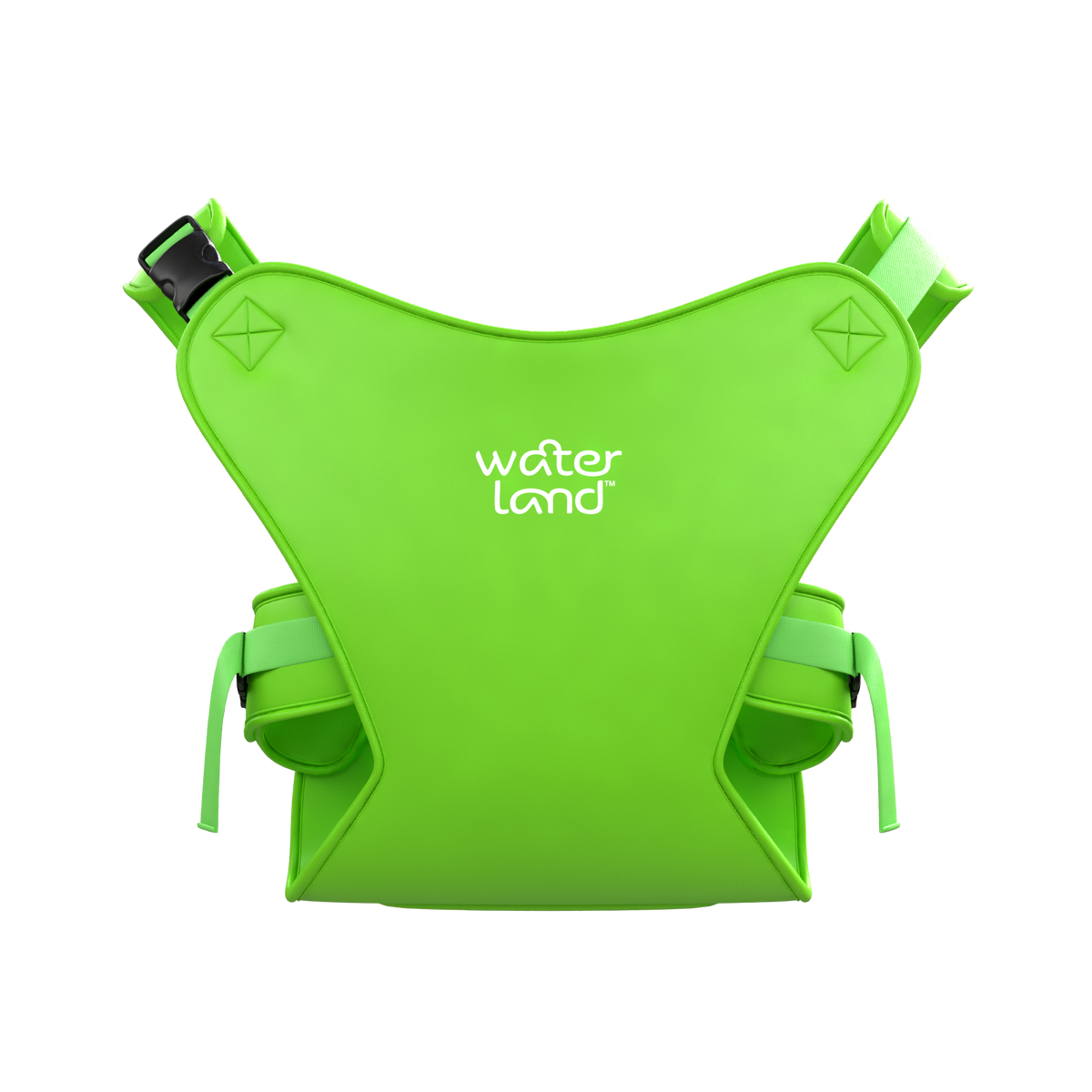
WaterLand has no UPF rating, so plan your baby’s sun protection separately: the hat, the shade, the clothing. Neoprene holds some warmth, but it doesn’t make cool water safe for a baby, and it can make your baby too warm in sun or out of the water, so take the carrier off between dips and let your baby rest under the umbrella. The AAP notes that hot days are especially hard on babies and young children. Offer older children water often; for babies under 6 months, the AAP advises extra breast milk or formula rather than water. Watch for signs of cold (shivering, pale or blue lips) and overheating (flushed, irritable), take a break when you’re unsure, and ask your pediatrician about any health questions.
The plan you agree on the sand
Before anyone heads for the water, take two minutes on the towel and agree on these out loud:
- Who wears the baby, who is the water watcher, and when you swap.
- The older child’s life jacket: Coast Guard-approved, buckled and snug.
- Your stretch of water: calm, flat, no breaking waves, waist-deep at most, near the lifeguard.
- Today’s flags, and what they mean at this beach.
- How you’ll reach the older child: by moving to shallower water or the edge, standing tall.
- Your shade base, and when the next sunscreen is due.
Then go in together. The steps at the end of this article cover getting in and out with your baby. The rest is the good part: the older one jumping ripples beside you, the baby watching every splash, and the whole family in the water at once.