What is water time for?
Water time is time together: the whole family in the water, your baby close and your attention in one place. That’s what it’s for, and it’s reason enough to go in.
Tammy Cohen Raz, founder 5 min read
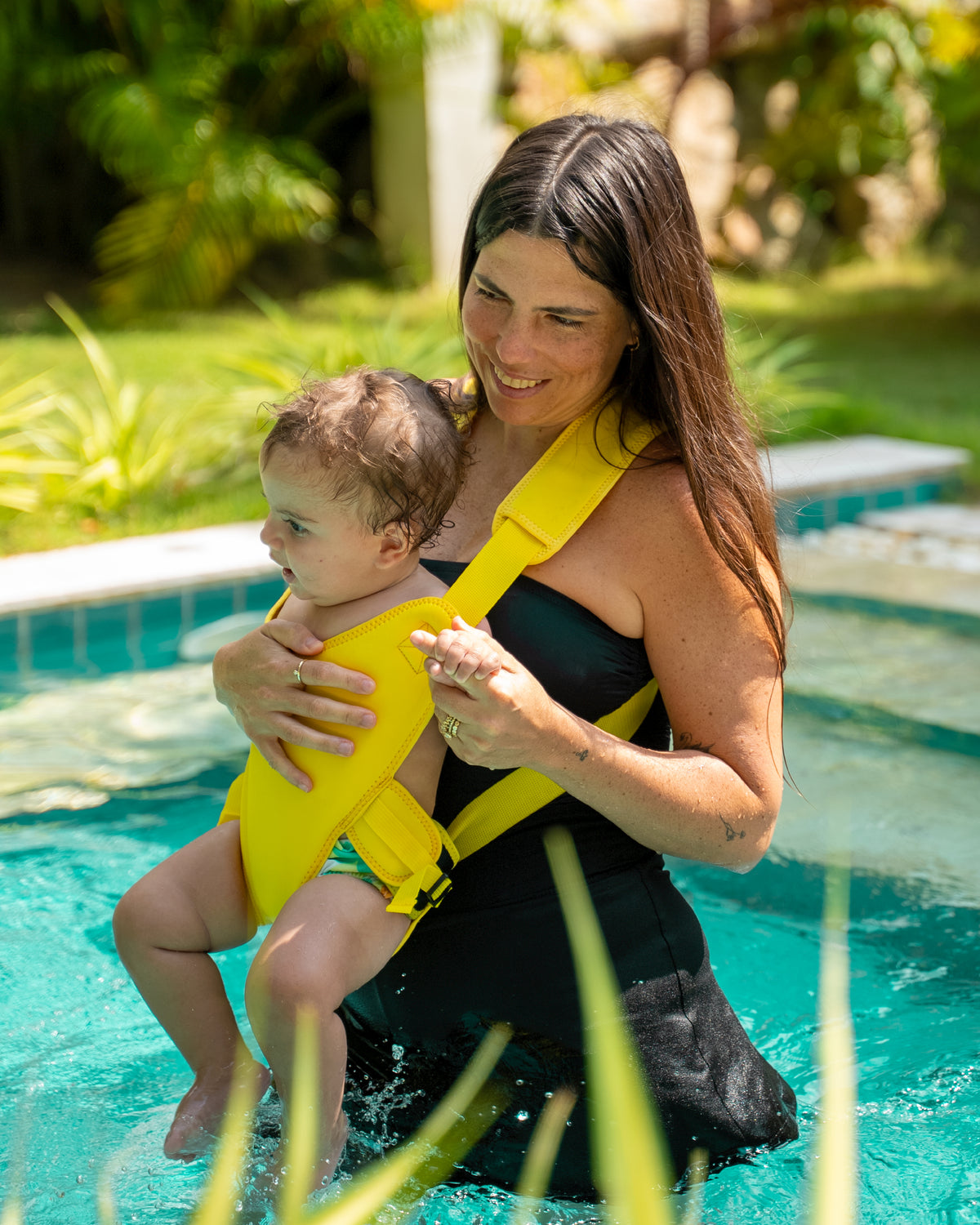
It’s late afternoon and the pool is loud with summer. Your older one is racing a beach ball across the shallows, your partner is cheering, and someone’s towel has blown into the hedge. And you’re in it, not on the lounger minding the bags, with your baby on your chest, patting the water and laughing at every splash.
It’s easy to look for a bigger reason to be there: a skill, a milestone, a head start. You don’t need one. Water time is time together, and that is reason enough.
Time with nothing else in it
So much of a day with a baby is divided: half your mind on them, half on the laundry, the message, the next thing. The water quietly takes most of that away. Your phone is in the bag because it has to be. There’s nothing to tidy. Your feet are on the bottom, your baby is close, and your attention lands in one place.
Many parents find it’s some of the most unhurried time they get with their baby. You notice things you’d miss at home: the way they study a drop on their own hand, the look they give a ripple, the moment they decide the whole thing is funny. You don’t have to make anything happen. Being there, together, is the activity.
The whole family, in the same water
With a baby and an older child, a pool day can easily mean the edge: watching the big kids play with the baby in your arms, or taking turns going in. Going in together changes the shape of the day. Your toddler can show you the thing they just learned. Your older child can splash you, and your baby can hear everyone laughing at once.
A little planning keeps it easy. Stay within arm’s reach of every young child in or near water, and agree before you go in who the water watcher is: the adult whose only job is watching the children in the water, with no phone. If you’re the only adult, that’s you. An older child who can’t swim wears their own properly fitted, Coast Guard-approved life jacket (elsewhere, one approved to your national standard), not arm floats, rings, neck floats or inflatable toys. With two adults, it’s easy to share: one wears the baby, the other plays with the older child, and you swap. If you’re wearing the baby and want to reach a child, move to shallower water or the edge rather than bending down.
Water time is time together, and that is reason enough.
New sensations, simply enjoyed
For a baby, water is full of small discoveries. A hand slaps the surface and the water answers back. A drop runs down a finger and disappears. A sister’s splash lands nearby and the whole face lights up, or goes very serious. Babies take it in at their own pace, sometimes with delight, sometimes with a long, thoughtful stare.
None of it needs to become a milestone or a lesson. What you’ll see is simple and lovely: a baby noticing, reaching and reacting, with you right there to share it. Name what they notice. Let the slow moments be slow.
Water time, for its own sake
Water time with a baby isn’t a swim lesson, and it doesn’t need to be. The American Academy of Pediatrics says swim lessons can begin for many children from age 1, depending on readiness. For younger babies, it says a parent-child water play class “can be a fun activity to enjoy together.” That’s a lovely description of water time with you, too.
So there’s nothing to get ahead on and nothing to fall behind in. Lessons will come when your child is ready, and the water time you share now is a whole thing in itself, not a warm-up for something else.
A small, easy ritual
Water time works well as something you come back to: a Saturday-morning swim at the local pool, a dip before dinner on vacation, a quiet hour by the hotel pool when everyone needs a reset. Many families find that familiar, repeated visits feel easier than rare big outings, for the baby and for the grown-ups.
Let small rituals do the work: the same pool, the same wave to the lifeguard on the way in, the same snack on the bench afterward. Each one gives your baby something to recognize, and gives the whole family a shape to come back to. How do I introduce my baby to water? covers the practical side.
Your joy counts, too
There’s one more reason, and it’s yours. If you love the water, you don’t have to set that aside while your baby is small. This can still be a summer of swims, warm evenings and salt on your skin, with your baby along for all of it.
There’s a particular happiness in standing in sunlit water with your baby close, feeling them kick against you while someone you love laughs nearby. Wanting that isn’t a small thing, and neither is having it. The water is one of the places where family life gets to be simple for a while, and you’re allowed to enjoy it as much as your baby does.
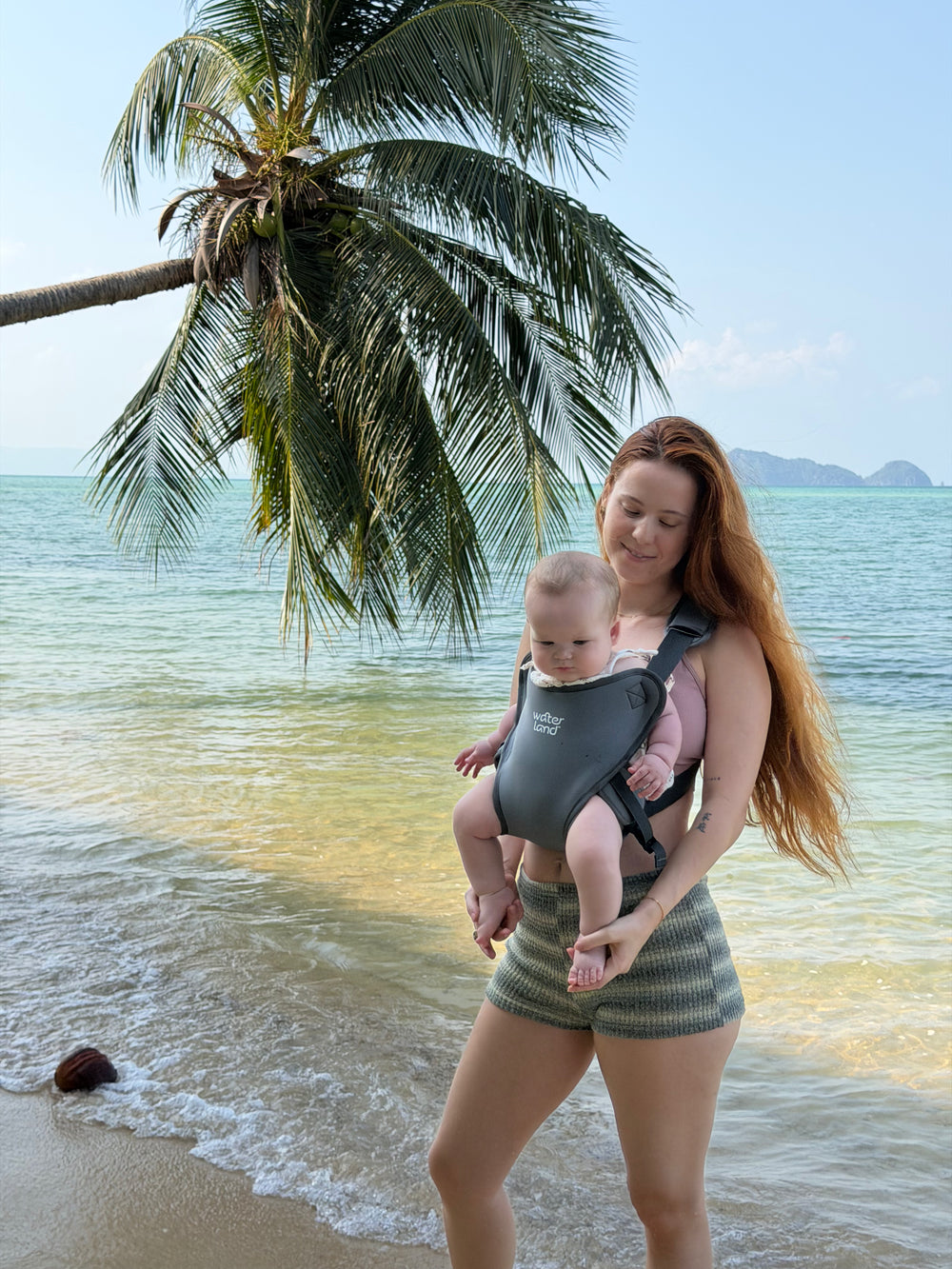
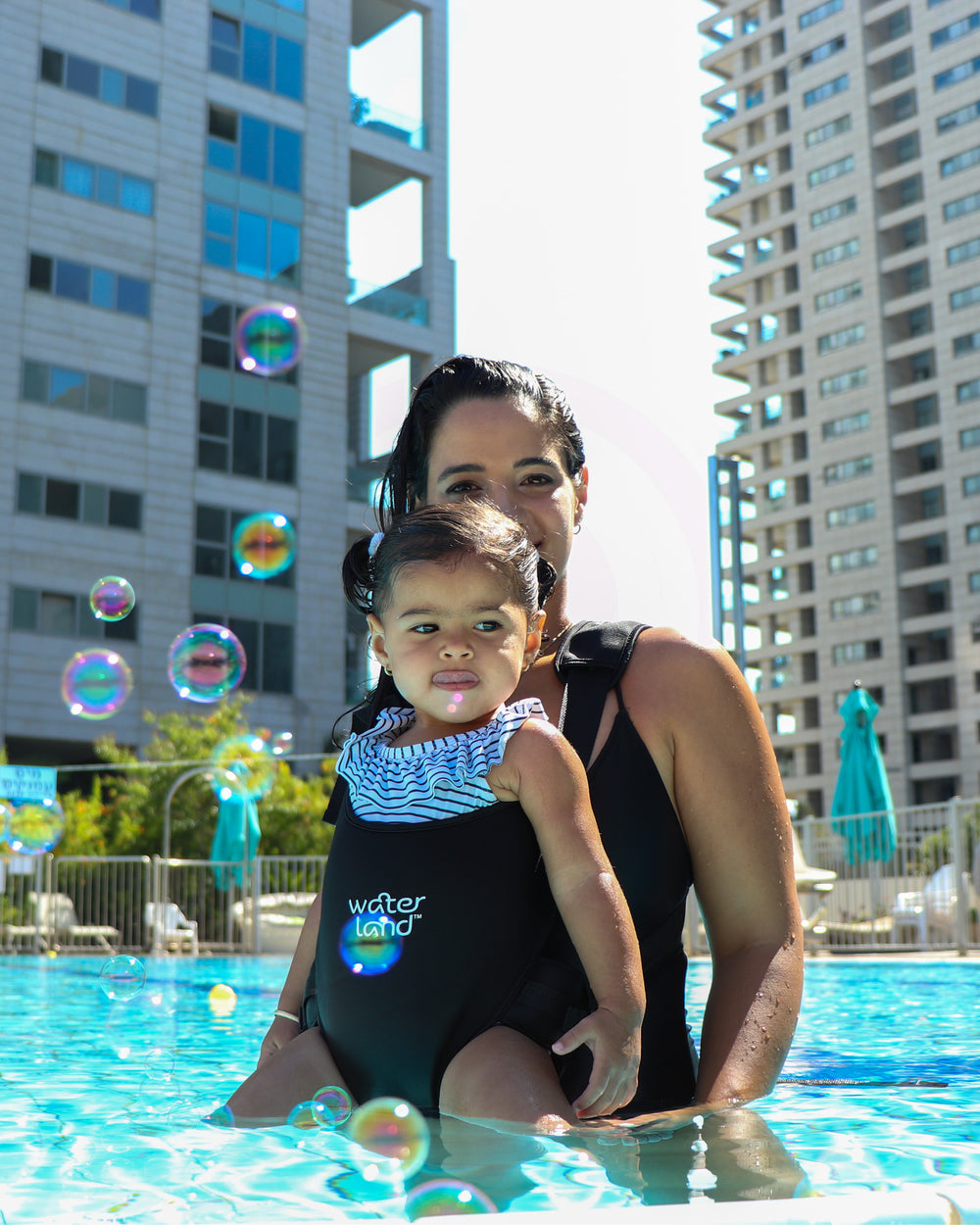
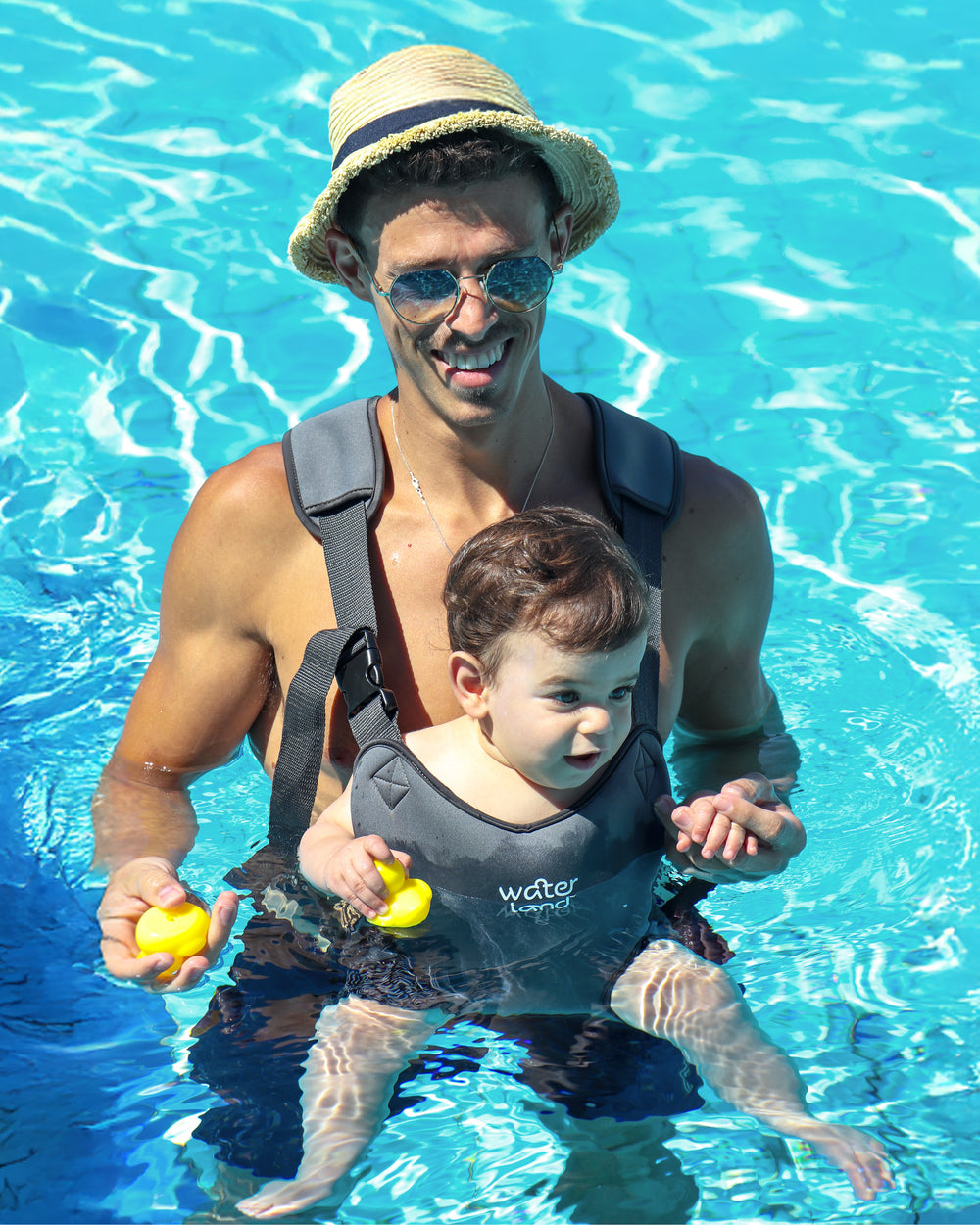
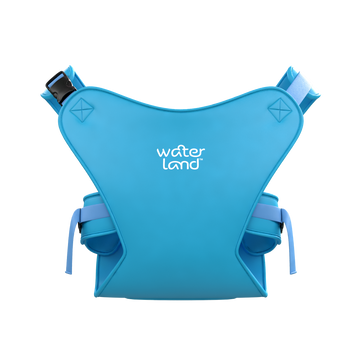
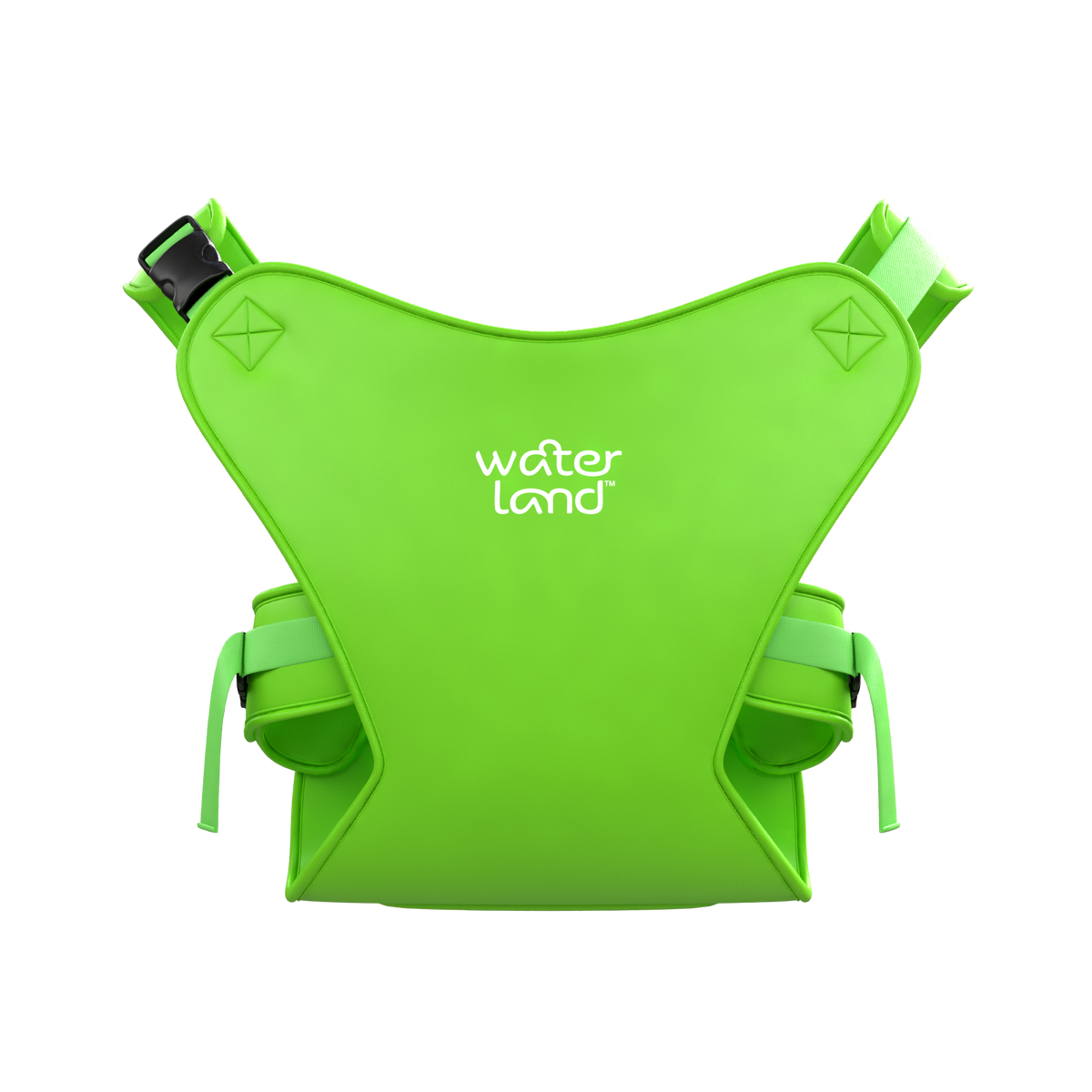
That’s why WaterLand exists. It’s a carrier made for the water, in soft neoprene that stays supportive when wet, and it’s safety-tested and meets the safety standards that apply to its intended use in water. Adjust it once, then it goes on like a T-shirt. Your baby is on your chest, face in view, close enough to kiss, while you stand in calm water no deeper than your waist. The steps at the end of this article show how to go in.
So pick a warm afternoon, call everyone together, and go in together.