How do I introduce my baby to water?
Pick a moment when your baby is rested and fed, and a warm, calm pool. Go in together for a short, unhurried visit, and let your baby’s cues set the pace.
Tammy Cohen Raz, founder 6 min read
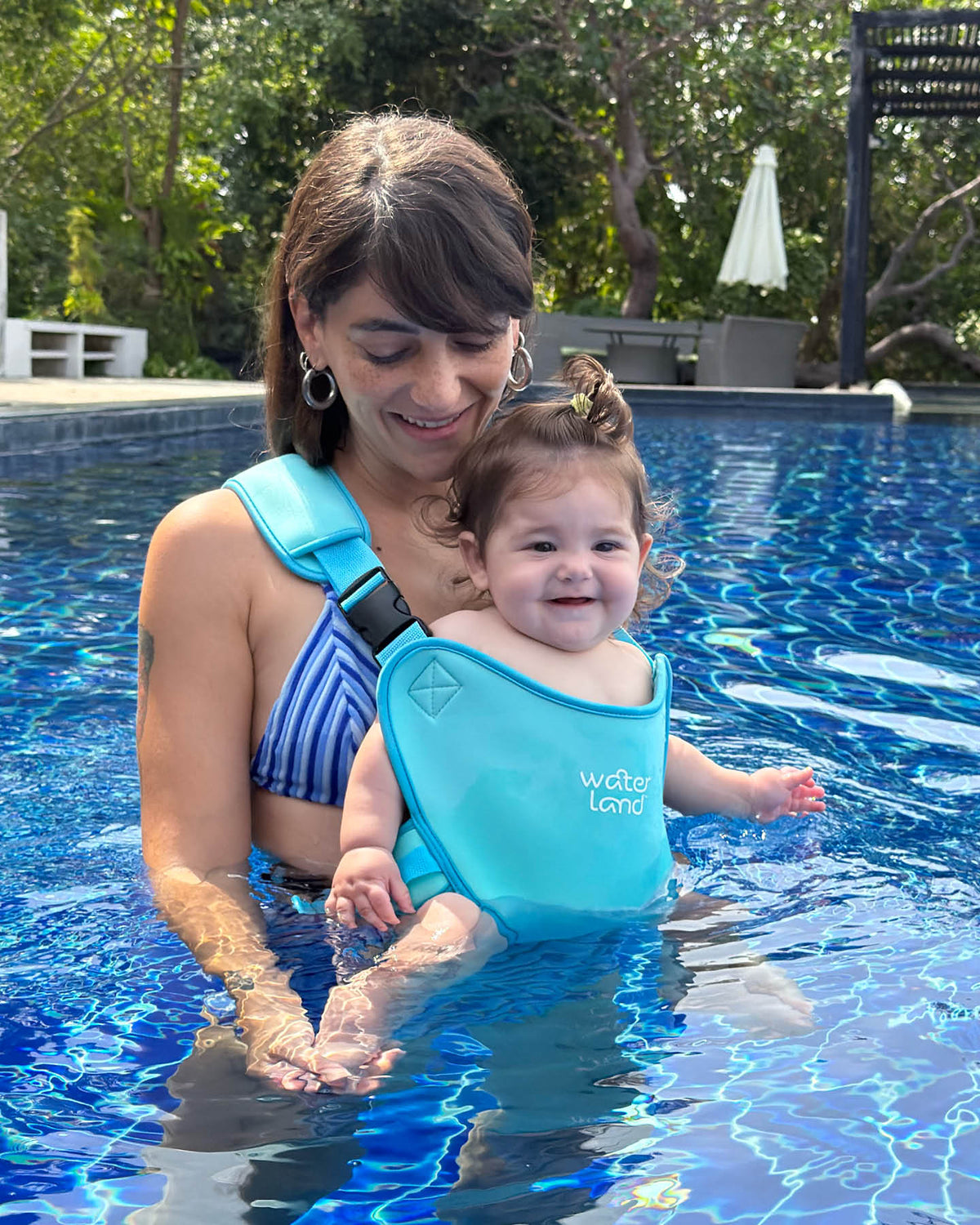
The pool is quiet in the late-morning light. You stand at waist depth with your baby on your chest, and for a moment they go completely still, watching sunlight wobble across the tiles. Then one kick, a splash, and a small surprised laugh. Nothing much has happened, and that’s exactly right.
Introducing your baby to water isn’t a course to complete. It’s a handful of short, easy visits, timed well and taken at your baby’s pace. Here’s what helps, and why it works.
Choose a rested, fed moment
Everything about water is new to a baby: the feel of it on their skin, the way it moves, the sounds it makes. A baby who’s tired or hungry has little room left for something new, so the same pool that delights them after a nap can overwhelm them an hour before one. Go when your baby is rested, fed and comfortable, and when you’re not racing the clock yourself.
Leave time on either side. Changing, walking to the water and drying off all take longer with a baby, and a rushed start tends to set the tone for the whole visit. An unhurried quarter of an hour in the water is worth more than a tense forty minutes.
Why start in a warm pool
A heated pool gives you everything that makes early visits simple: calm, clear water, steps and a rail, and a temperature that stays the same from one visit to the next. That warmth matters more to your baby than to you, because smaller bodies lose heat more quickly than grown-up ones. Ask what temperature the pool keeps, or look for a teaching or baby pool.
The sea and lakes are lovely too, and they bring wind, waves and temperatures that change through the day. When you go, choose calm, flat water no deeper than your waist, with no breaking waves, at a lifeguarded spot where you can. If a wave, current or drop-off moves you or splashes your baby’s face, get out. A beach day with a baby and an older child has more.

Nothing much has happened, and that’s exactly right.
What your baby notices
Watch your baby in the water and you’ll see them taking it in, one sense at a time. Temperature arrives early: the cooler moment as water reaches their legs, then the steady warmth once you’re in. Sound changes too. Indoor pools echo, splashes are sudden, and other children shriek with joy, so a baby may startle at a noise you barely hear. Light is everywhere, dancing on the surface and bouncing off the tiles, and it can hold a baby’s gaze for minutes.
And then there’s you: your voice, your touch, the face they know. Your voice is the most familiar sound in that whole bright, splashy place, and many parents find a steady, quiet running commentary helps. “That’s the water. It’s on your toes. Here’s a splash.” Pause on the steps for a moment before you walk in, and let your baby feel the water before they’re in it. Small, gentle transitions make the new parts easier to take in.
A clean pool for everyone
Babies in the pool need a swim diaper, and it helps to know what it does. The CDC explains that swim diapers and swim pants can hold in solid poop, but they aren’t leak-proof and don’t replace regular changes. Check the diaper about every 60 minutes, change it in a changing area away from the poolside, and wash your hands afterward. Shower before you get in, and if anyone in the family has diarrhea, stay out of the water that day. These small habits keep the water pleasant for every family in it.
A small pool bag makes the whole visit smoother:
- Swim diapers, with a spare or two
- Regular diapers and wipes for afterward
- A hooded towel and a warm layer
- A brimmed hat and something for shade, if you’re outdoors
- A feed or a snack for after the water
Sun under and over six months
Outdoors, the sun shapes the plan. The American Academy of Pediatrics advises keeping babies younger than 6 months out of direct sunlight, in the shade of a tree, an umbrella or a stroller canopy, with protective clothing. If shade and clothing aren’t available, you can use sunscreen on small areas such as the face. Some pools and swim classes start at 6 months; check yours.
From 6 months, the AAP recommends a broad-spectrum sunscreen of SPF 15 or higher on all exposed skin, applied carefully around the eyes and reapplied every two hours and after swimming. A hat with a 3-inch brim shades the face, ears and neck, and the sun is strongest from 10 a.m. to 4 p.m. WaterLand has no UPF rating, so plan shade and sunscreen as you would without it. An indoor pool sidesteps the question altogether, one more reason it makes such an easy start.
Short visits, happy endings
Early visits work well at about 15 minutes. A short visit that ends while everyone is still smiling is the one your baby, and you, will want to come back to, and that is how water becomes familiar.
Your baby will tell you how it’s going. Kicking, reaching, splashing and calm, alert watching usually mean they’re enjoying it. Turning away, fussing or crying means today’s visit has done its job. If your baby seems cold, too warm or sleepy, get out, wrap them in the towel and cuddle. Why babies settle in warm water explains how warm a pool should be and the signs to look for, and your pediatrician is there for any question about your own baby.
Going in together
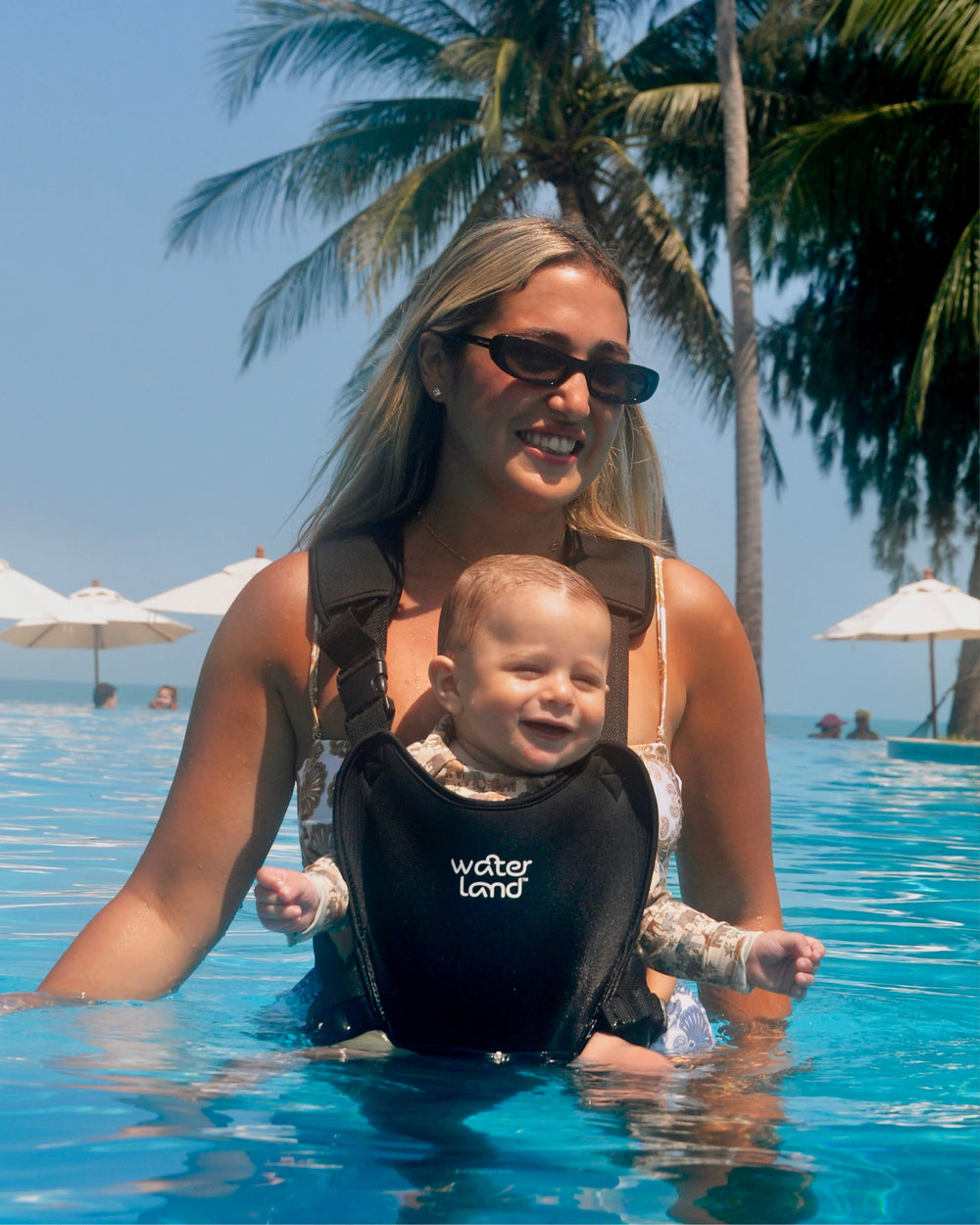
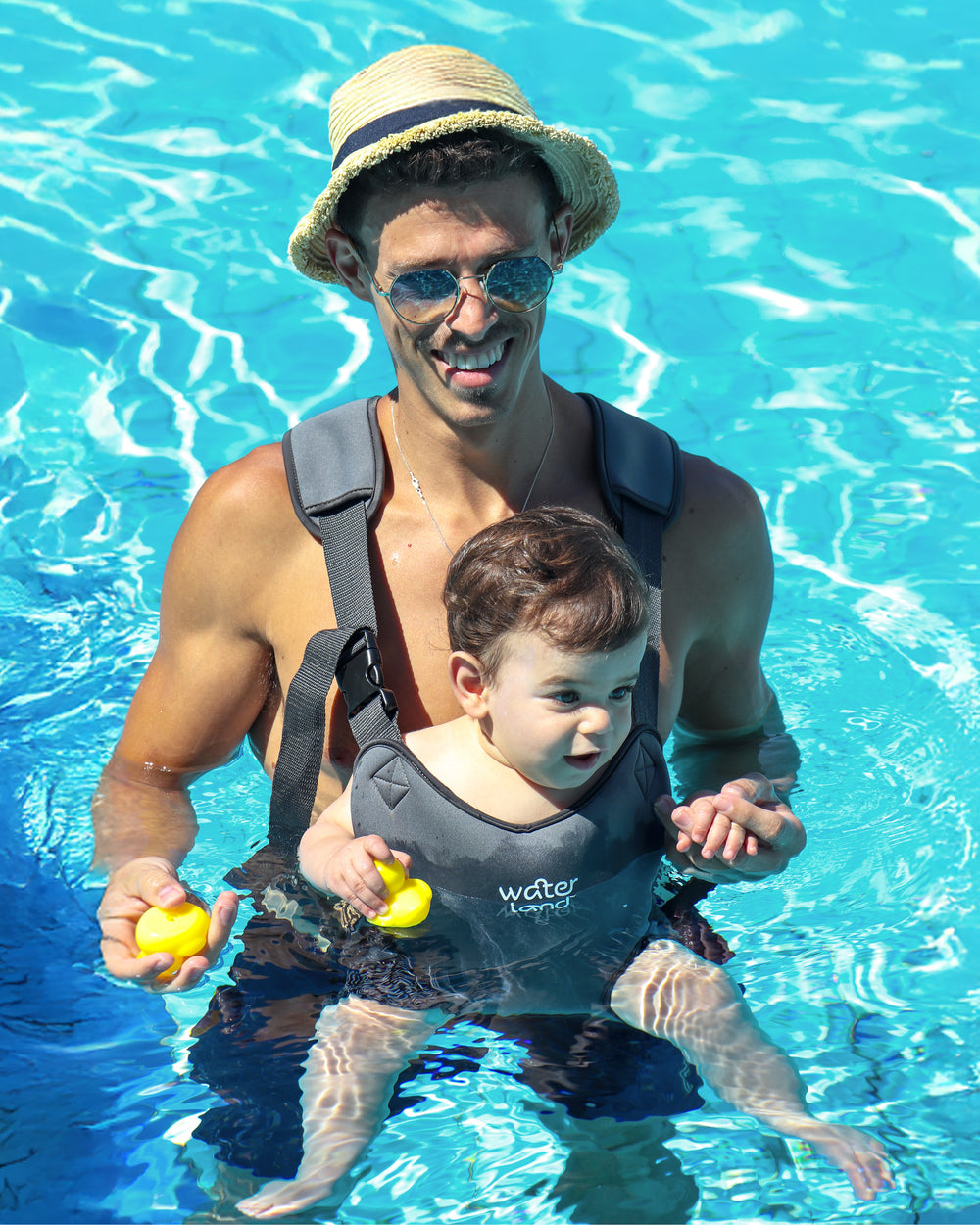
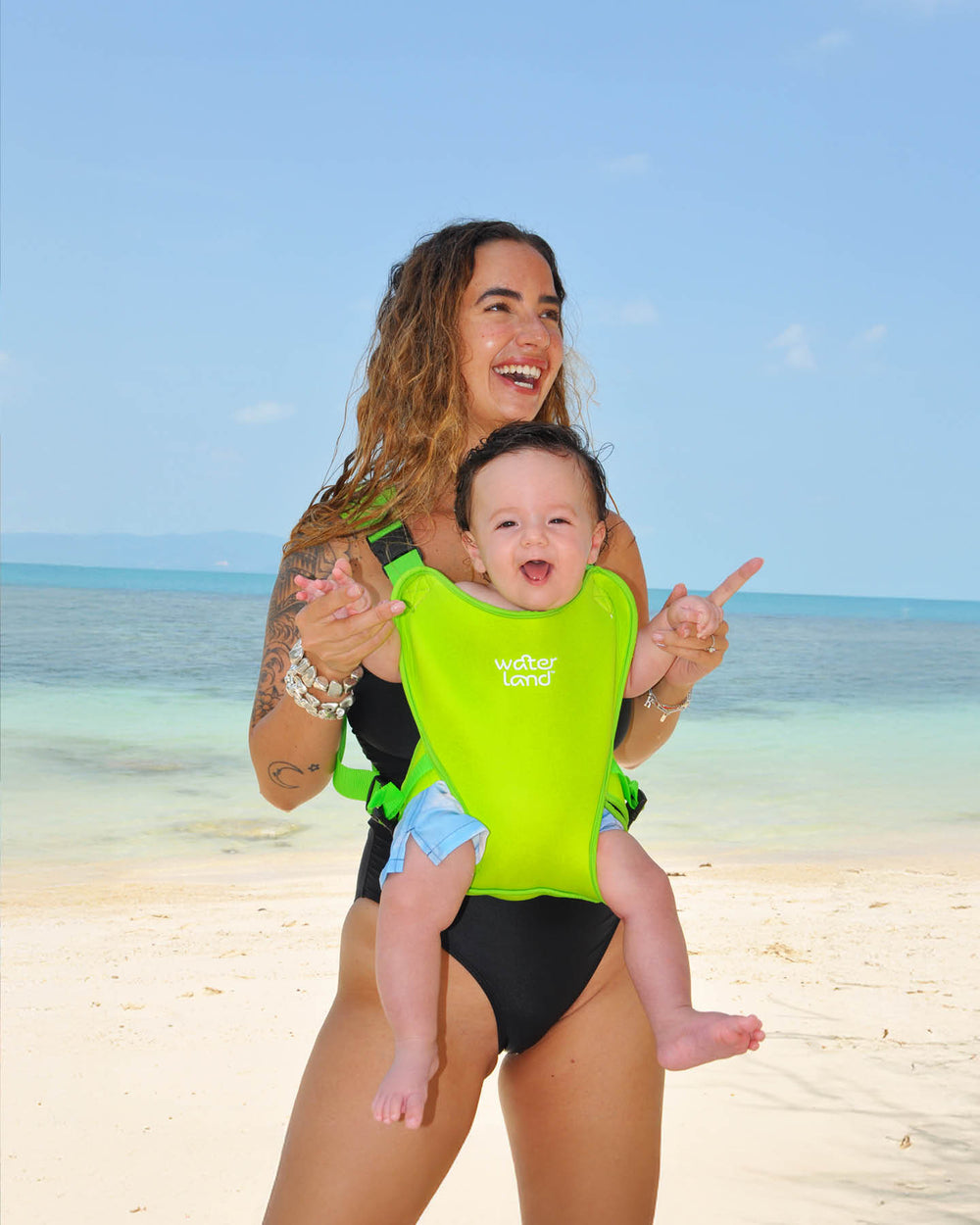
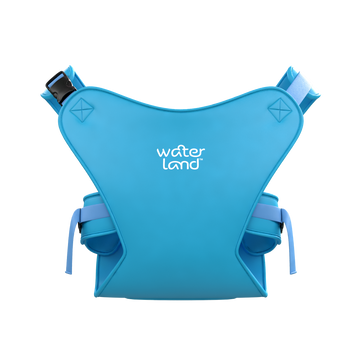
A carrier made for the water lets you share the pool with your baby close. WaterLand is made from soft neoprene, the material in wetsuits, and stays supportive when wet. Adjust it once, then it goes on like a T-shirt, with your baby on your chest, face in view, chin off chest, close enough to kiss. You stand with both feet on the bottom, in calm water no deeper than your waist, keeping the water below your baby’s chest, whichever is shallower. The steps at the end of this article walk you through going in and out.
Stay within arm’s reach of every young child in or near water; with your baby on your chest, you already are. If older children come along, agree before you go in which adult’s only job is watching the children in the water, with no phone, and if you’re the only adult, that’s you. If you join a class that dips or submerges babies, take your baby out of the carrier for that part.
So pick a warm pool and a rested morning this week, pack the bag, and go in for fifteen easy minutes. Then come back and do it again.