How to choose a carrier for the water
Look for a carrier that meets the US and European carrier standards, is tested for use in water, and tells you plainly how to use it. Clear limits, care instructions for pool and sea, a written warranty and registration for safety notices complete the picture.
Tammy Cohen Raz 6 min read
The baby is asleep, the house is quiet, and you have a few carriers open side by side on your phone. You can already picture the summer: a warm morning, the pool still quiet, your baby on your chest reaching for the shine on the water. That morning starts tonight, with the choice. A good carrier for the water makes it easy, because it shows you what it is in a handful of clear signals you can check in a few minutes.
Here’s what each signal means, why it matters, and what it looks like on a label, in a manual or on a maker’s website.
The standards behind every carrier
In the US: 16 CFR part 1226 and ASTM F2236
In the US, every soft infant and toddler carrier must meet a mandatory federal safety standard. The Consumer Product Safety Commission (CPSC) wrote it into law as 16 CFR part 1226, which adopts a voluntary industry standard, ASTM F2236, with any changes CPSC makes. The edition a carrier is tested to depends on when it was made: carriers made after February 22, 2025 must meet ASTM F2236-24.
The standard looks at the whole carrier. Its general requirements cover sharp points and edges, small parts, lead in paint, locking and latching, labeling and the flammability of textiles. Its performance tests cover the leg openings, so a baby can’t slip through them; fastener strength and strap retention; and dynamic and static load, which check that a carrier holds together and stays on the wearer in normal use. It also sets the warnings and instructions every carrier must carry.
The testing itself happens in an independent lab. Every carrier must be tested by a third-party, CPSC-accepted laboratory, and the maker or importer must issue a Children’s Product Certificate that names the rule it meets. So when a carrier is sold in the US, the standard is already working for you in the background.
In Europe: EN 13209-2
In Europe, the standard for soft carriers is EN 13209-2, “Child use and care articles: Baby carriers, Safety requirements and test methods, Part 2: Soft carrier.” It covers soft carriers worn on the carer’s torso, for a child up to a maximum of 15 kg, and sets both what a carrier must do and how a lab tests it. The current edition dates from 2015. A carrier tested to both the US and the European standards has been checked against two of the main sets of carrier requirements, which is a good sign of a maker who takes testing seriously.
Testing for the water
Both standards are written for carriers in their everyday use, on the move and close to you, and they are the foundation every carrier shares. A carrier made for the water builds on that foundation and is tested for its intended use in water, with buckles, straps and material chosen for the conditions they were made for.
The signal to look for is a clear, specific statement that a carrier is tested for its intended use in water. Specific beats general every time: “tested for the water” tells you far more than an adjective ever could.
A good carrier for the water tells you plainly how to use it.
Clear labels and clear limits
A good carrier for the water tells you plainly how to use it. You’ll find the baby’s age and weight range, the head control your baby needs before they start, how deep you can go and what kind of water it’s made for. It also says clearly what it is: a carrier, held by you, standing in the water. Limits written like this aren’t small print. They’re the instructions that let you walk in knowing exactly what to do.
The label carries useful facts too. Under CPSC regulations, a carrier has a permanent label with the maker’s or importer’s name, a US address and phone number, the model, and the month and year it was made. That date is how you match a safety notice to your own carrier. When you’re choosing, AAP’s HealthyChildren.org suggests matching the carrier to your baby’s size, making sure it supports their back, and checking that the leg holes are small enough that your baby can’t slip through. In any carrier, you should always be able to see your baby’s face.

Care that covers the water
Pool water and the sea each leave something behind, so a carrier for the water comes with care instructions written for both. Look for the whole routine: how to rinse it after the pool or the sea, how to dry it, where to store it and how often to look it over. A manual that builds that routine around the water is written by a maker who expects you to use it in the water often. For the why behind each step, what makes a carrier right for the water covers how materials behave wet and how to care for them.
A maker who stays in touch
The last signal is about the years after you buy. Look for a written warranty, a way to reach a real person, and a way to register your carrier. US regulations require every durable infant and toddler product, soft carriers included, to come with a product registration form and an option to register online, so the maker can reach you with a recall or other safety information. Registering takes a minute and keeps you in the loop.
You can also check recalls yourself at cpsc.gov/Recalls, where CPSC lists recalls and product safety warnings and offers recall emails you can sign up for. It’s a good habit for everything your baby uses, from the car seat to the crib.
How WaterLand answers
Here is how WaterLand answers each of these signals:
- Tested: WaterLand is safety-tested and meets the safety standards that apply to its intended use in water.
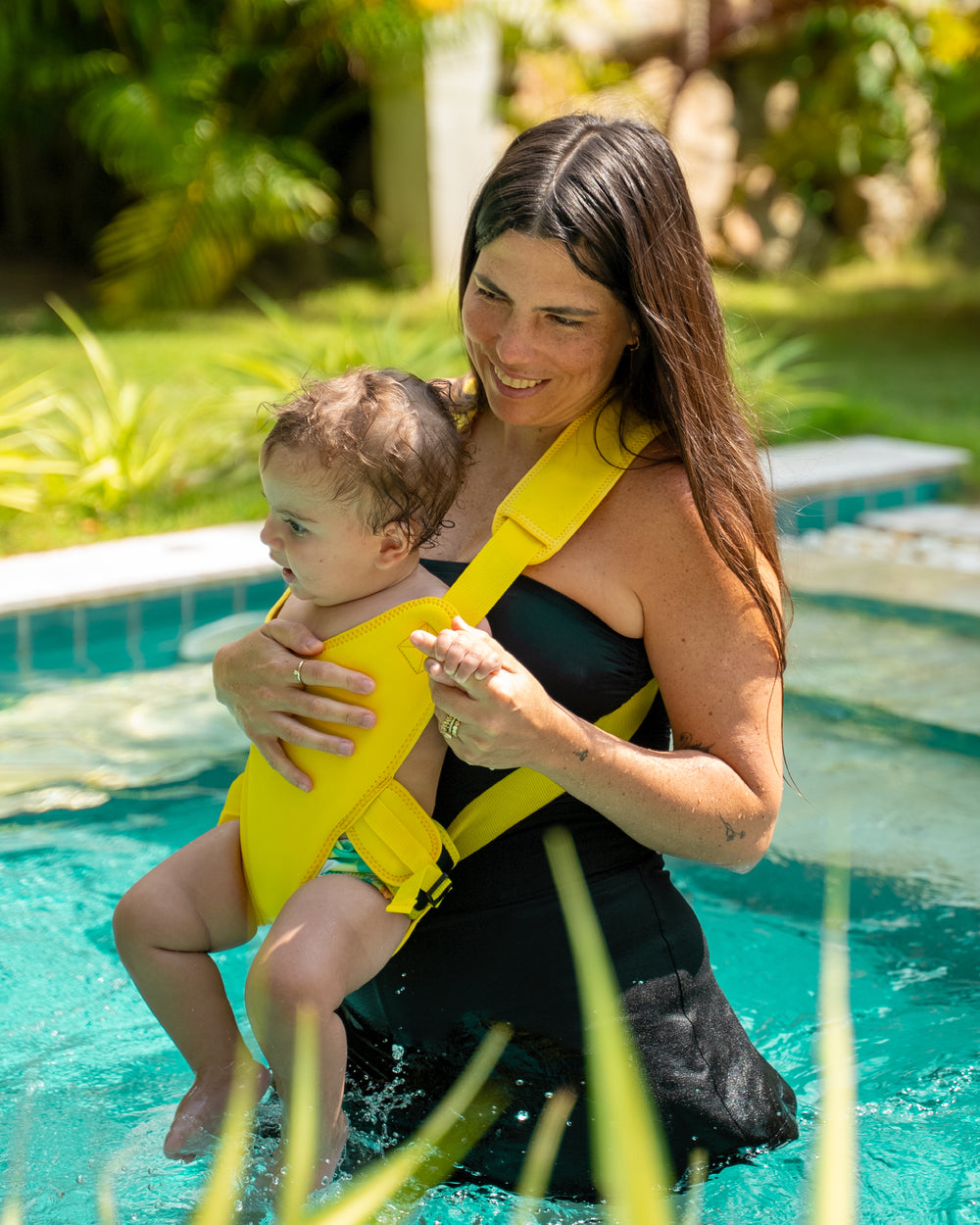
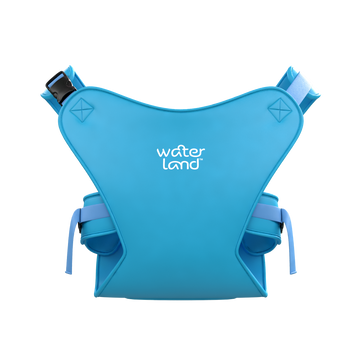
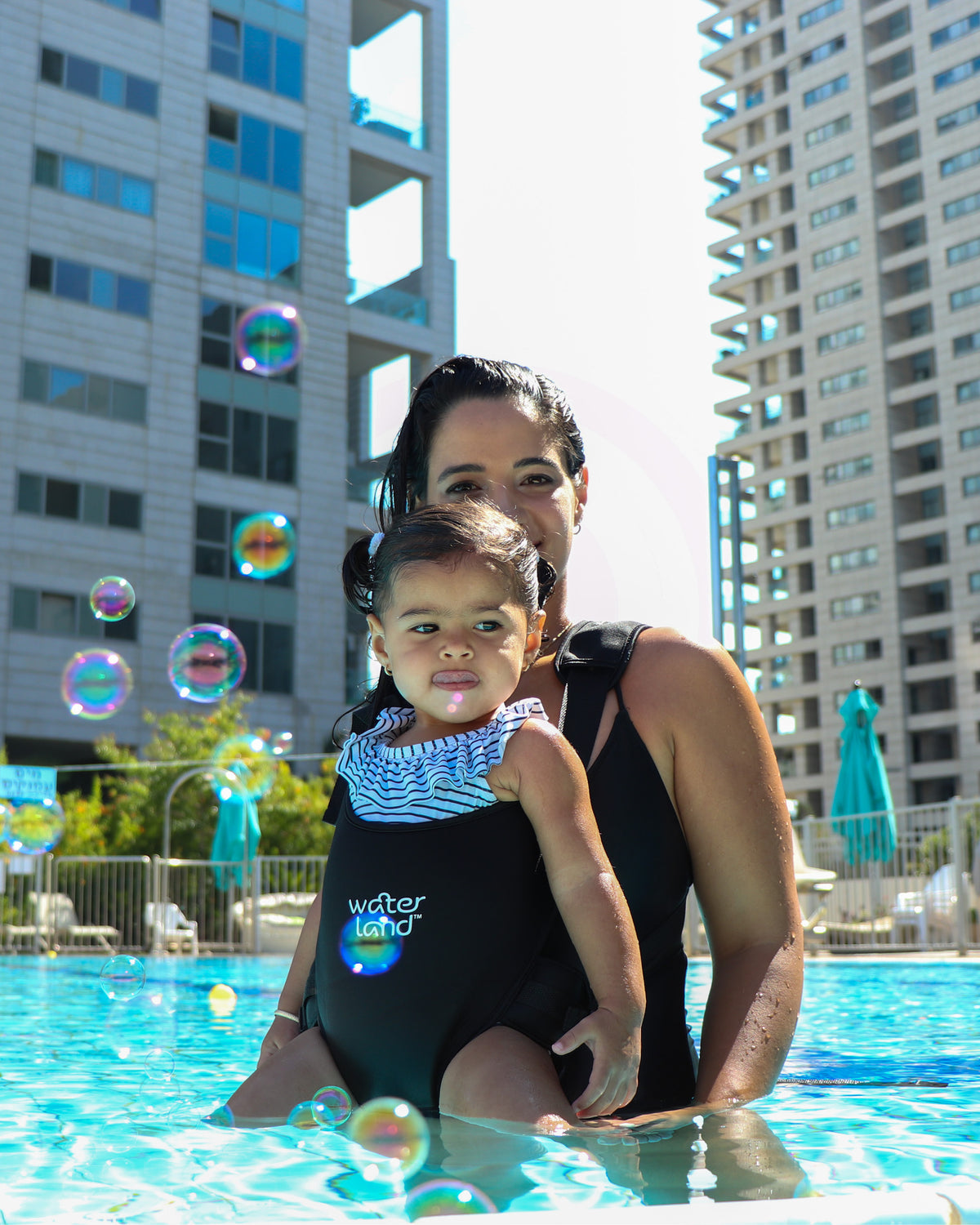
- Made for the water: soft neoprene, the material in wetsuits. It stays supportive when wet, then drains and dries, and its buckles and straps are made for water.
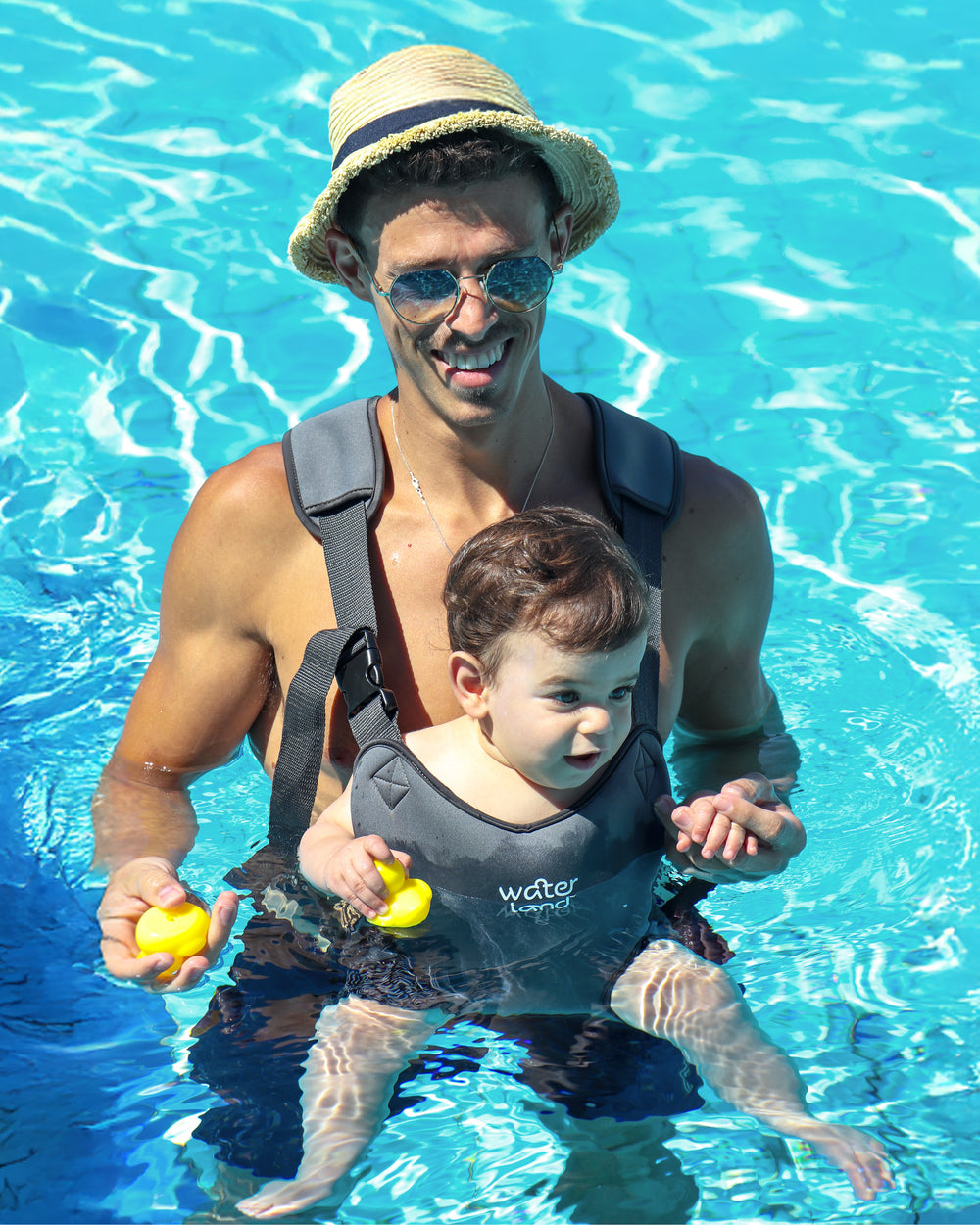
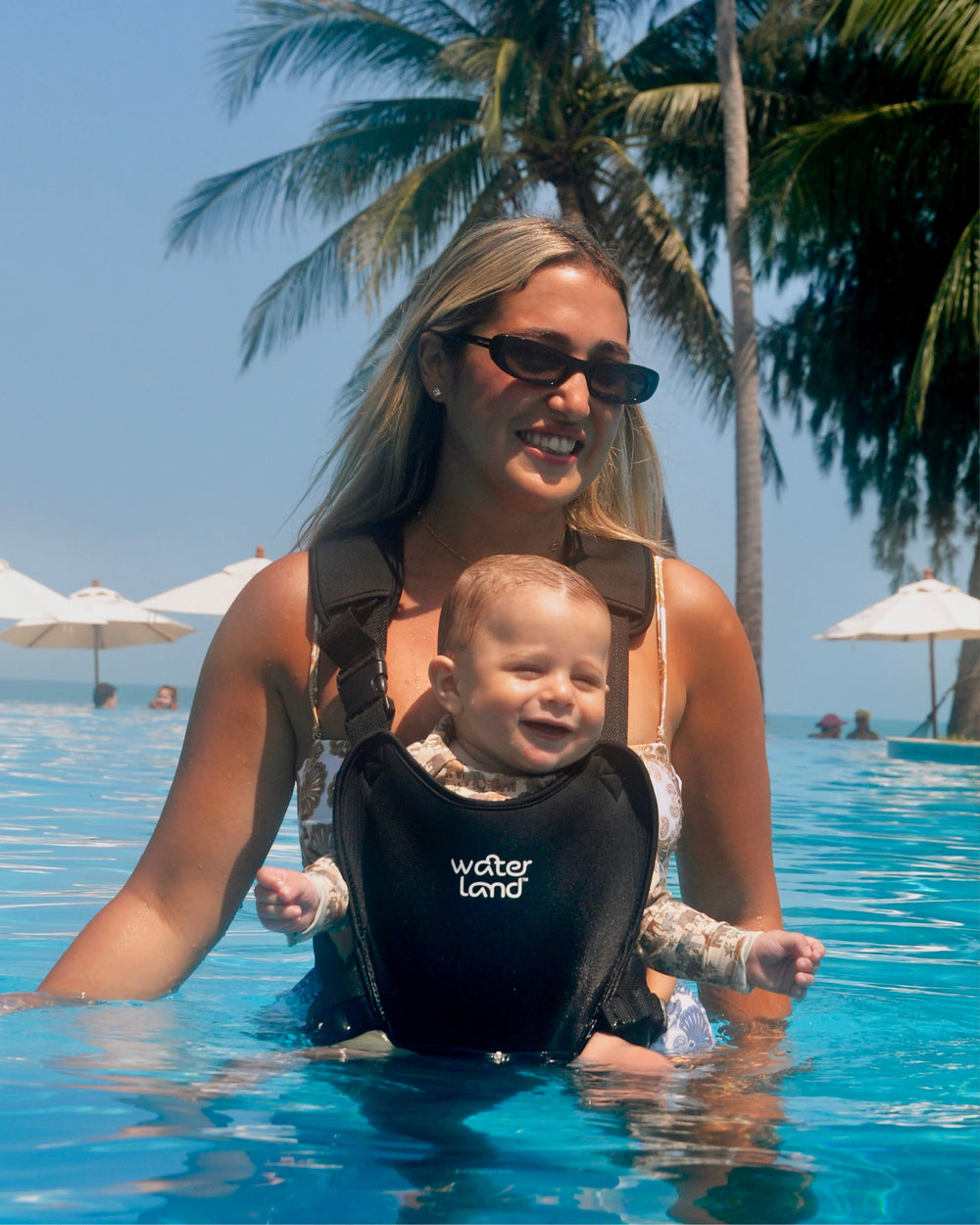
- Clear limits: for babies from about 4 months, once they hold their head steady without support (born early? use their corrected age, and ask your pediatrician if unsure), 13–33 lb (6–15 kg), up to about 24 months. You wear it standing with both feet on the bottom, in calm water no deeper than your waist, keeping the water below your baby’s chest, whichever is shallower.
- Care: rinse it in fresh water, let it drip-dry completely, store it dry, out of direct sun, and look it over before every season (see Care).
- Behind it: a 2-year limited warranty, and registration for safety notices.
From choosing to going in
Once your carrier arrives, the rest is the fun part. Register it so safety notices reach you; it takes a minute. Then set the fit once at home, with the guide’s Fit chapter beside you, and choose a calm morning to go in together. The steps at the end of this article take you from the deck into the water.