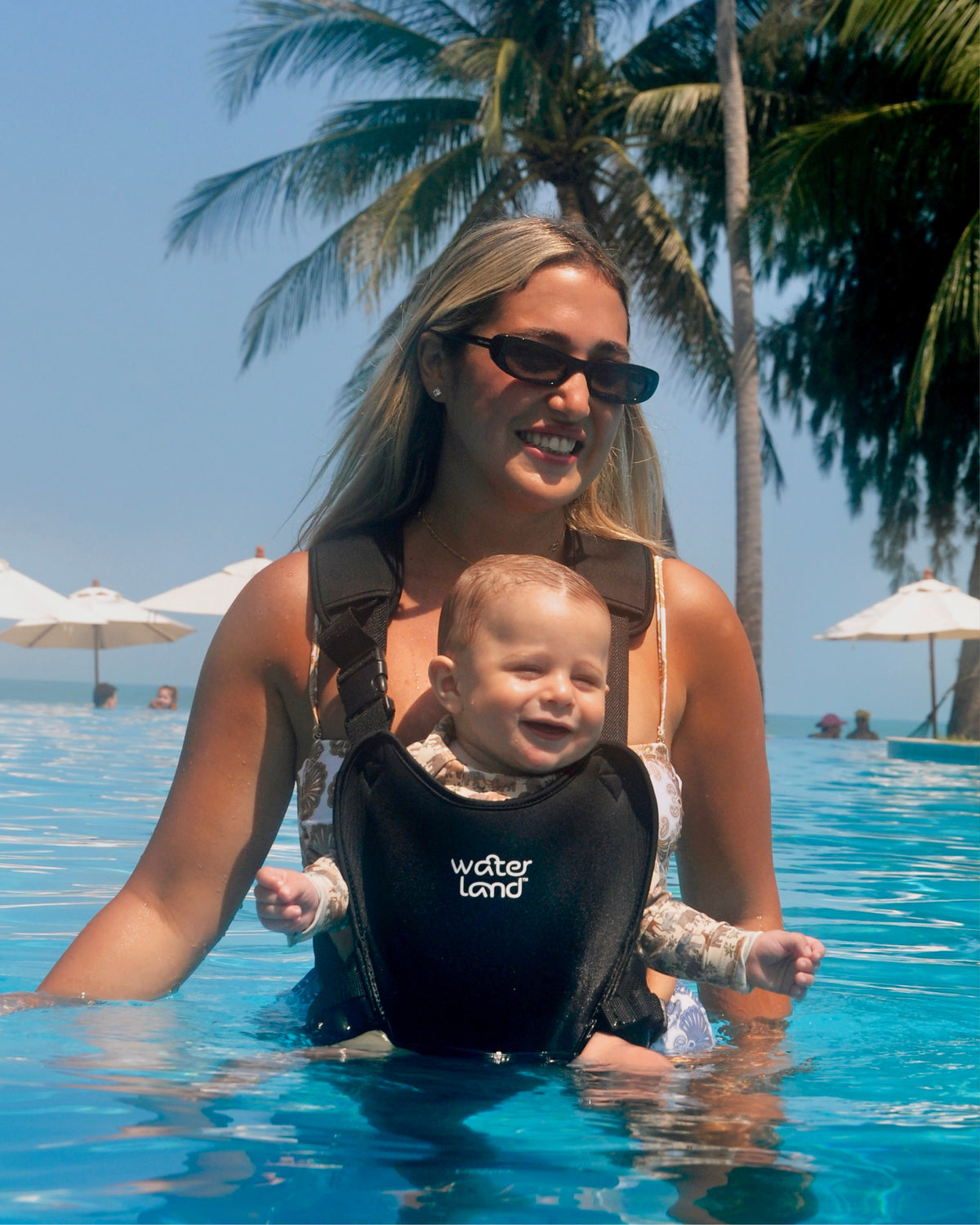
What makes a carrier right for the water?
A carrier made for the water stays supportive when it’s wet, drains and dries, and has buckles and straps made to be used in water. Here’s how materials behave once they’re soaked, why the hardware matters, and how to care for a carrier that lives between pool, sea and sun.
Tammy Cohen Raz, founder 6 min read
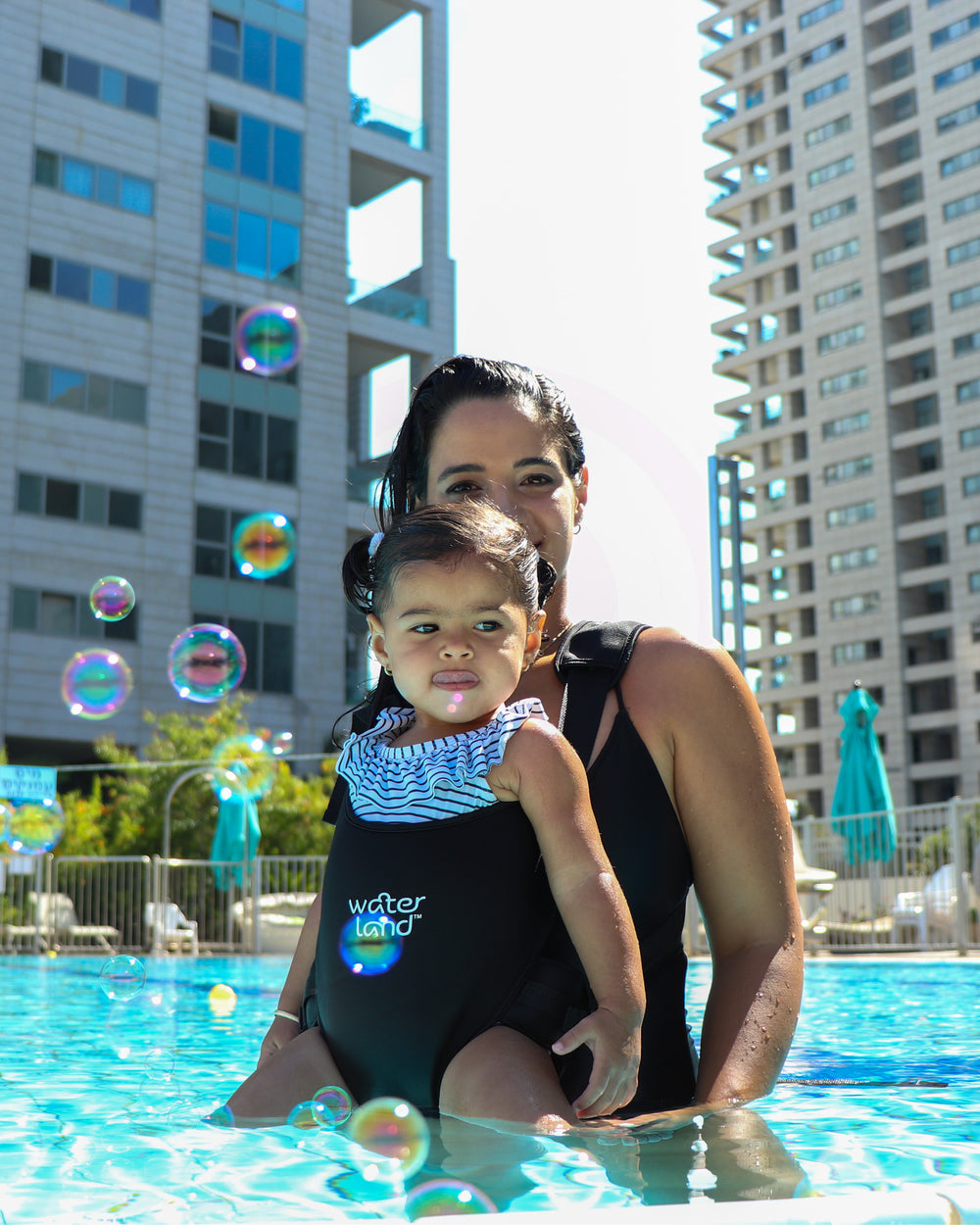
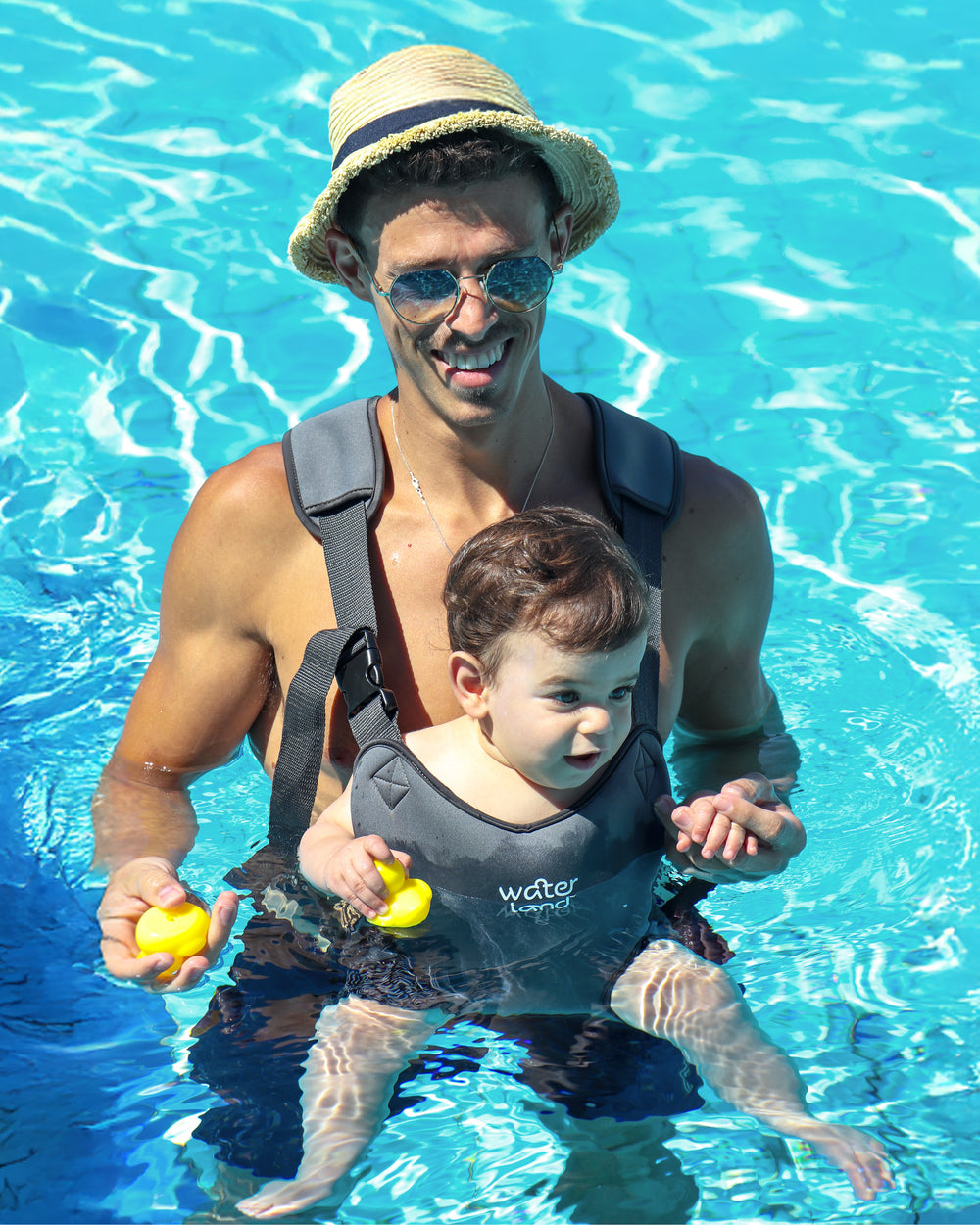
You step down into the pool and the water rises to your waist, cool for a breath and then just right. Your baby is on your chest, close enough to kiss, eyes wide at the light moving on the surface. Their hands find the water and slap it, and they look up at you to see what you think. You laugh, so they laugh. The carrier is doing its job when you forget it’s there.
That kind of forgetting comes from a carrier built for where you are. Here’s how materials behave once they’re wet, why neoprene suits the water, why the buckles and straps matter so much, and how to look after a carrier that lives between the pool, the sea and the sun.
What water does to fabric
A carrier made for walks and errands is usually built from woven cotton, canvas or padded panels, often with mesh to keep you both cool on a warm day. On land those are good choices, because they’re made for land. Water asks something different of a material, and it helps to know why.
Woven cotton and padding take on water and hold it, so a carrier made of them gets heavier the longer you stay in, and that weight settles onto the straps you set so carefully on the deck. Mesh lets water through faster, though the padding, seams and webbing around it still hold some. A material made for the water works the other way round: it keeps its shape in the water and lets the water go when you step out.
Comfort is part of this, for both of you. A carrier that stays the same shape wet or dry sits where you set it, moves with you, and holds your baby the same way at the end of the swim as at the start. That’s what lets you stop thinking about it.
Why neoprene works in water
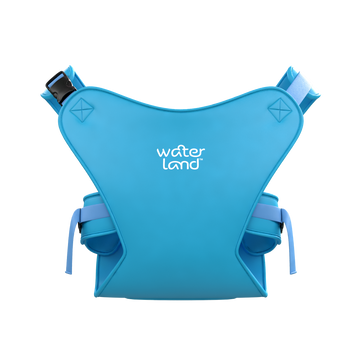
Neoprene is the soft, stretchy material of wetsuits, made to be worn in the water. It stays supportive when wet, so your baby is held as close in the pool as they were on the deck, and once you’re out it drains and dries rather than staying heavy. It sits smoothly against bare skin and moves with you as you walk through the shallows.
Neoprene also holds some warmth, which is part of why wetsuits are made from it. For a baby that’s worth understanding clearly: it doesn’t make cool water safe for a baby, and it can make your baby too warm in sun or out of the water. A neoprene carrier isn’t sun protection either, so plan shade and sun clothing as you would on any water day. Watch your baby rather than the carrier, keep early sessions short, and take a break whenever you’re unsure. The guide covers temperature and sun in more detail.

The carrier is doing its job when you forget it’s there.
Buckles and straps that work wet
The parts that hold your baby are the buckles, the straps and the stitching that joins them. They carry the load every time you take a step, and in the water they also get wet, salty, sandy and sun-warmed, sometimes all in one afternoon. That’s why the mandatory US standard for soft carriers puts so much weight on them. Its tests include fastener strength and strap retention, locking and latching, and dynamic and static load, which check that a carrier holds together and stays on the wearer in normal use.
A carrier made for the water starts from those same requirements and chooses its hardware for the water: buckles and straps made to be used wet. In practice, that means you can fasten every buckle on the deck, give each strap a gentle tug, and know everything is fastened before you step in. Make that check part of putting the carrier on, every time. AAP’s HealthyChildren.org suggests checking a carrier from time to time for rips and tears in the seams and fasteners, and Health Canada advises looking for ripped seams, torn straps and damaged parts before you use one. With a carrier that goes in the water, that look-over takes seconds and soon becomes habit.
Rinse, drip, dry
Water always leaves something behind. Pool water carries chlorine, which is added to kill germs. Sea water carries salt and fine sand, which dry into webbing and settle in the gaps of a buckle. A rinse in fresh water after every water day takes them out before they settle in.
Then let the carrier drip-dry completely and store it dry, somewhere airy and out of direct sun. It’s the same care the US Coast Guard’s boating safety program describes for life jackets: rinse with clean water, hang to dry, and store it fully dried in a dry, well-ventilated place out of direct sunlight. Gear made for the water lasts longest when it gets a little attention after each swim. Before every season, look it over properly: the material, the seams, the webbing and every buckle.
Tested for the way you’ll use it
Every soft carrier sold in the US must meet a mandatory federal safety standard, and in Europe soft carriers have their own standard, EN 13209-2. Together they set the shared foundation for every carrier. A carrier made for the water builds on that foundation and is tested for the place you’ll actually wear it. WaterLand is safety-tested and meets the safety standards that apply to its intended use in water. To see what the standards cover, and the other signals worth looking for when you choose, how to choose a carrier for the water walks through them one by one.
What it feels like to wear
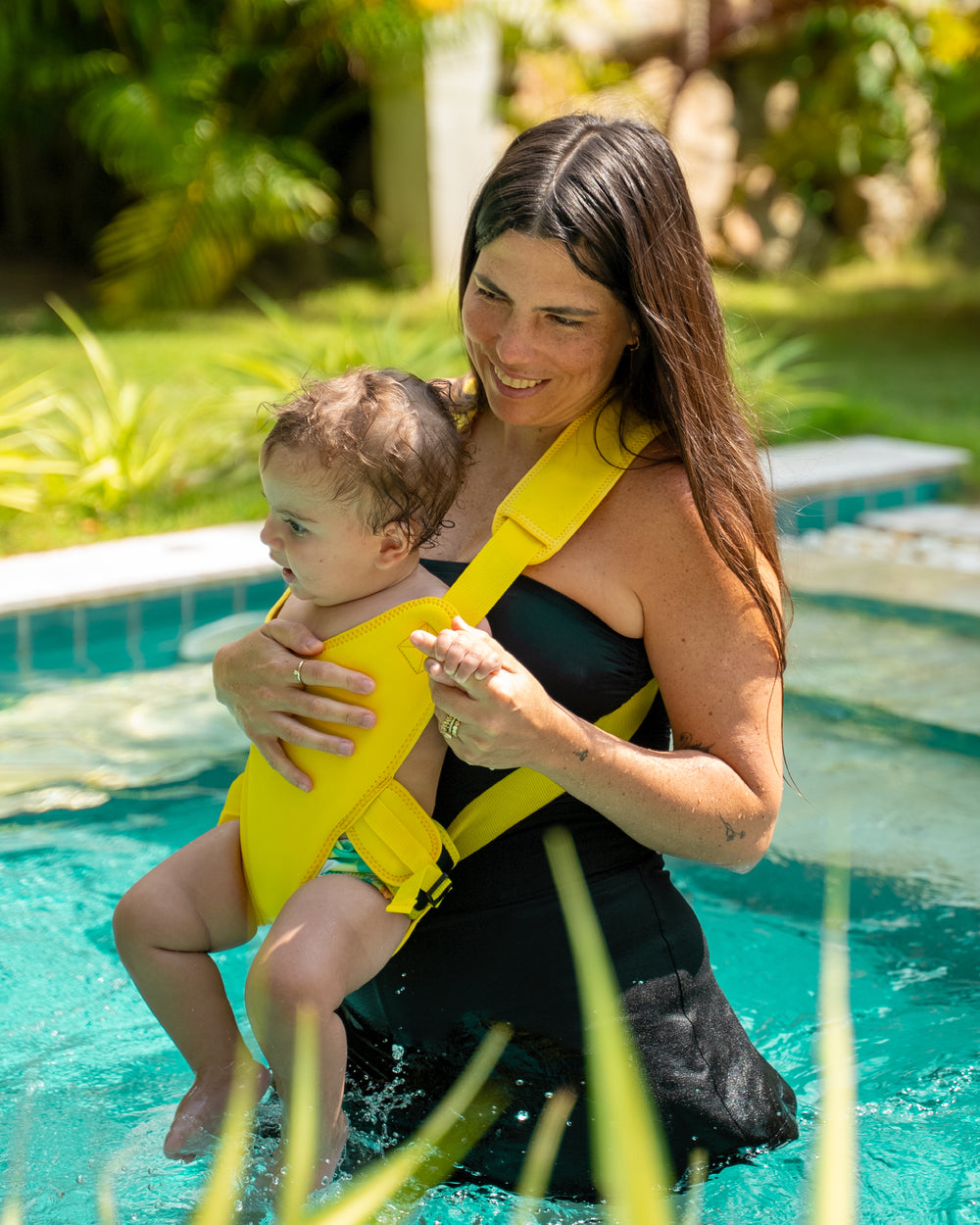
WaterLand is made from that soft neoprene, with buckles and straps made for water. Adjust it once, then it goes on like a T-shirt. Your baby is on your chest, face in view, chin off chest, close enough to kiss. It’s made for babies from about 4 months, once they hold their head steady without support (born early? use their corrected age, and ask your pediatrician if unsure), 13–33 lb (6–15 kg), up to about 24 months.
You wear it standing with both feet on the bottom, in calm water no deeper than your waist, keeping the water below your baby’s chest, whichever is shallower. That’s the whole idea of a carrier for the water: your baby stays close, face to face with you, part of everything happening around you.
Your next water day
Try the carrier on at home first and set the straps on dry land. Then choose a calm morning, step in by the steps with a hand on the rail, and let your baby find the water with their fingertips. Afterward, a rinse, a hanger and some shade, and it’s ready for next time. The steps at the end of this article take you from the deck into the water.