Why do some babies settle in warm water?
Babies lose heat faster than adults, so a warm pool, slow movement and being held close help many of them relax in the water. Some settle right away and some take a few visits, and both are completely normal.
Tammy Cohen Raz, founder 6 min read
You walk slowly down the pool steps, and your baby’s toes meet the water before you do. A small gasp, a pause. Then their shoulders drop, their hands open on the surface, and they settle in to watch the ripples spread away from you both. It’s a lovely moment to watch, and a good one to understand.
There’s no single answer, and babies don’t all settle the same way. But a few things about how babies handle warmth, closeness and movement go a long way toward explaining it, and knowing them helps you set up water time that suits your baby.
How small bodies handle warmth
Warmth is the place to start, because babies handle it differently from you. Heat leaves the body through the skin, and a small body has a lot of skin for its size. The American Academy of Pediatrics puts it simply: because children’s bodies are smaller, they lose heat more quickly. The American Red Cross makes the same point for the pool, noting that younger children need warmer water to stay comfortable, and it lists surface area relative to body mass among the reasons.
Water sharpens the difference. The National Weather Service notes that water conducts body heat away up to 26 times faster than air of the same temperature. That’s why water that feels refreshing to you on a hot afternoon can feel cool to your baby within minutes, and why a properly warm pool is so often the one where babies relax.
What warm means in a pool
“Warm” has numbers behind it. For children 3 and younger, the American Academy of Pediatrics recommends swim programs keep the water heated to 87–94°F (about 31–34°C), because little ones get cold more easily than older swimmers. Water for lap swimming can be cooler, because people working hard make their own heat; the American Red Cross recommends cooler water for intense swimming than for infant and preschool classes.
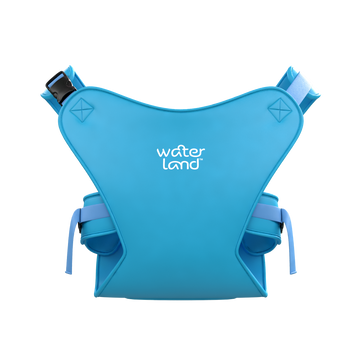
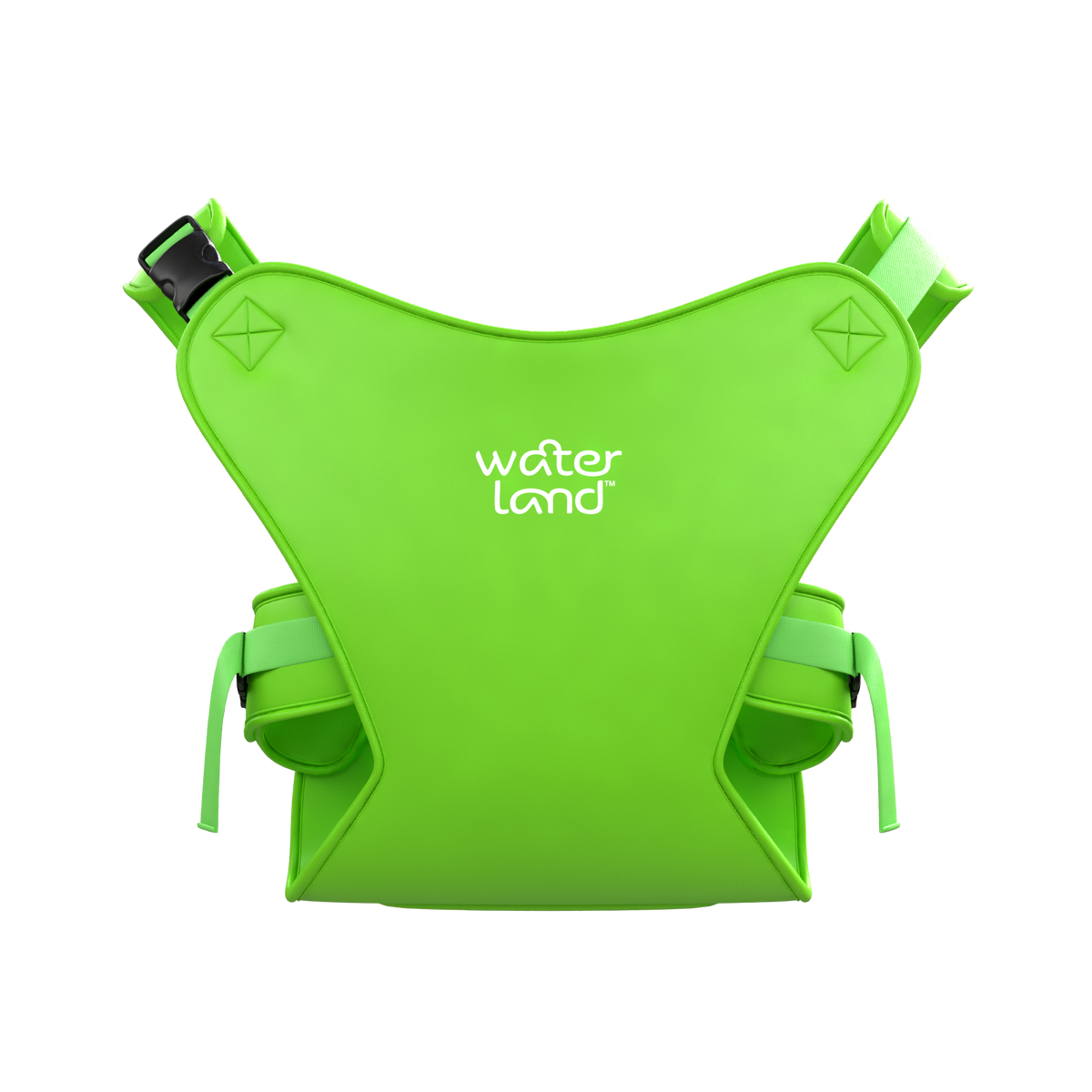
Even at the top of that range, pool water is cooler than your baby’s body, so it is always drawing a little warmth away. Feel the water with your hand and ask the pool what temperature it keeps. A neoprene carrier such as WaterLand holds some warmth, the way a wetsuit does, but it doesn’t make cool water safe for a baby, and it can make your baby too warm in sun or out of the water. The water temperature still decides how long you stay.
Settling isn’t something to push for; it’s something you make room for.
The comfort of bath time
Your baby already knows warm water from the bath. Bath time is often one of the warmest, closest parts of the day: water that is warm, not hot, as the NHS puts it, checked with your wrist or elbow, your hands holding them, your voice nearby. A pool is a different place, bigger, cooler, brighter and louder. But some of the bath comes with you, and the most familiar part of it is you.
You can bring a little more of it along. Sing the song you sing at bath time. Bring the duck that floats in the tub. Small, known things give a baby something to hold onto while everything else is new.
Held close, moving slowly
Many parents notice that their baby settles more easily when held close and spoken to softly, in the water just as on land. Research hasn’t pinned down why for water time, and it may be as simple as the familiar: someone they know, right there, while the world does something new. Your steady breathing, your arm around them and your voice close by all come into the pool with you.
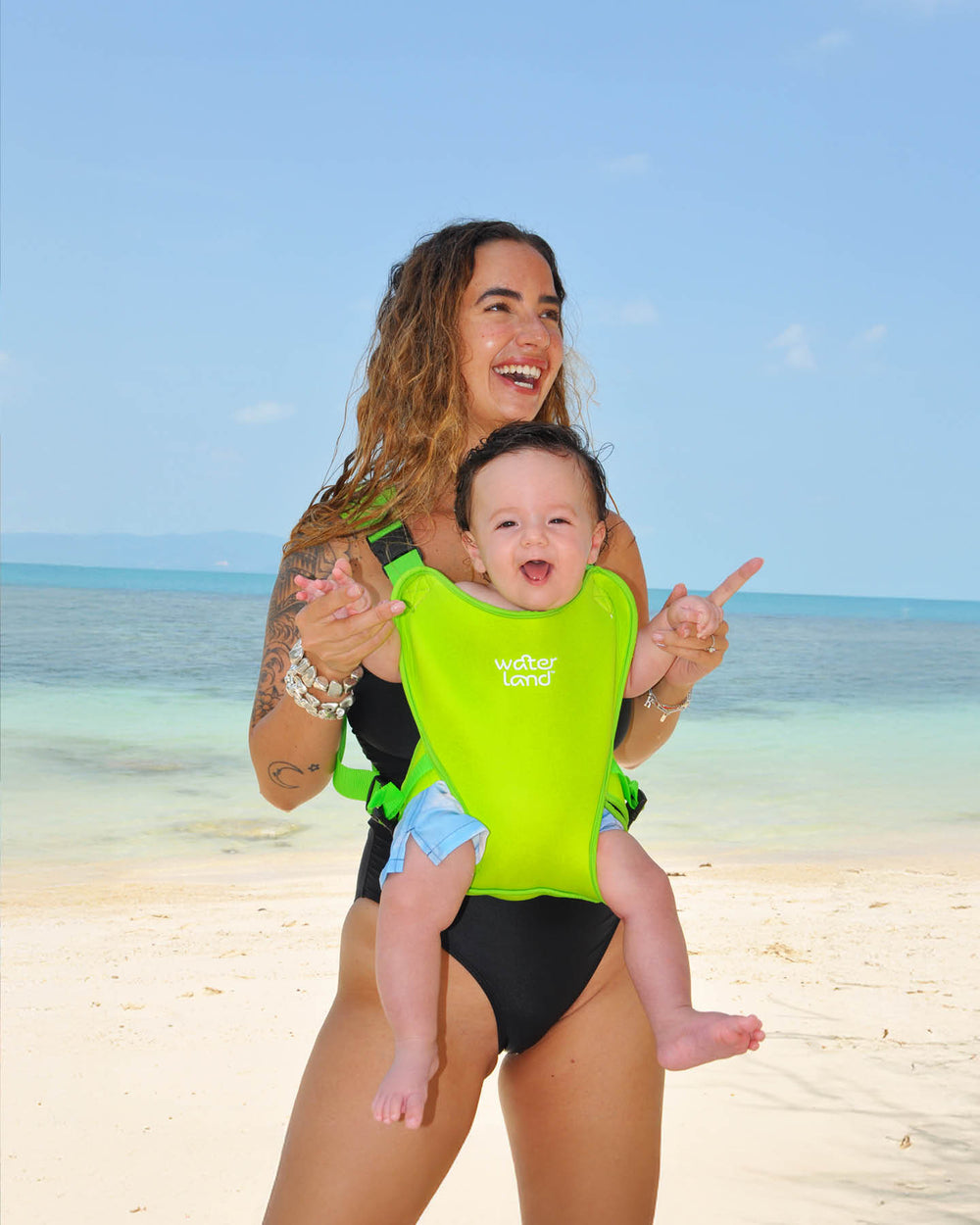
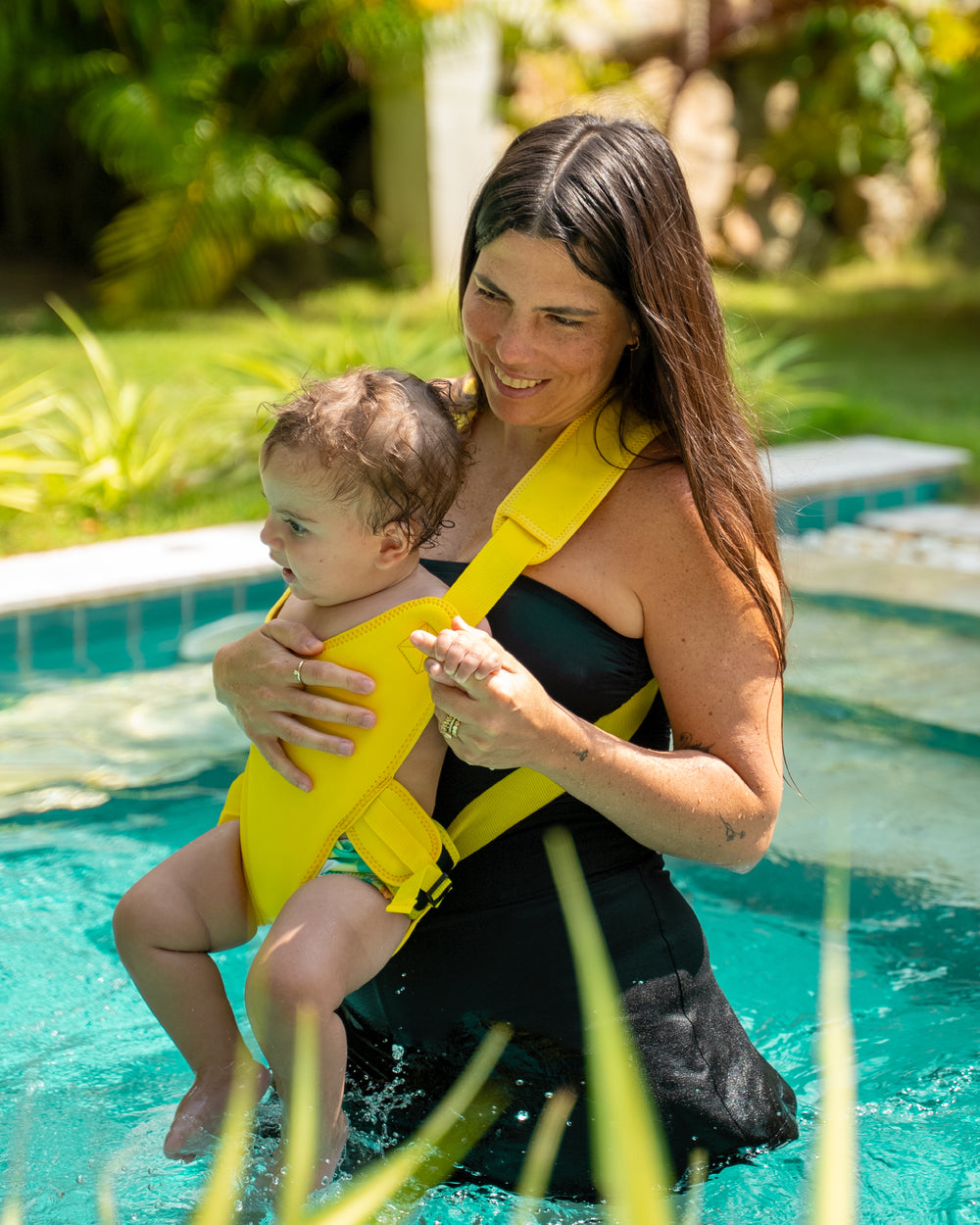
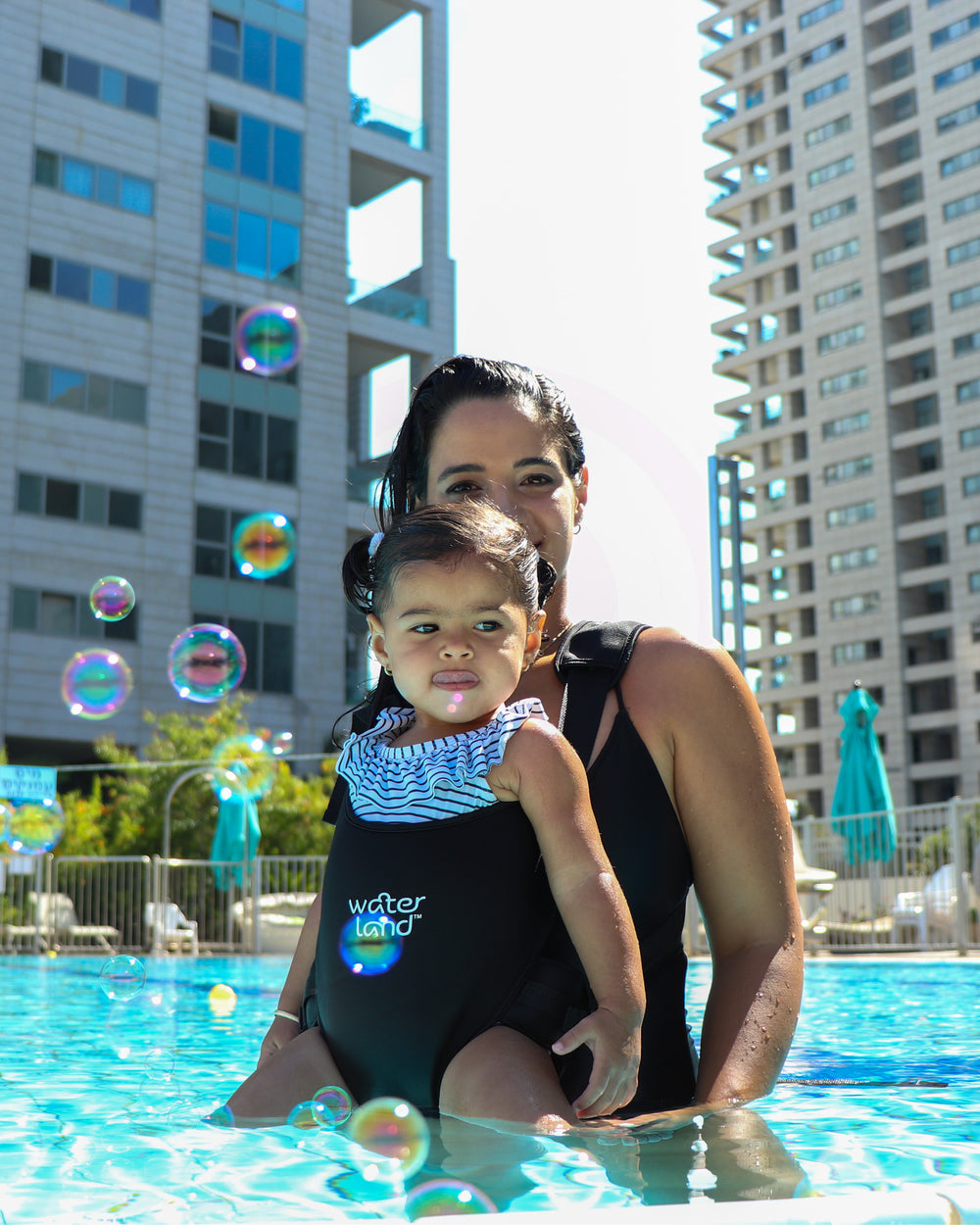
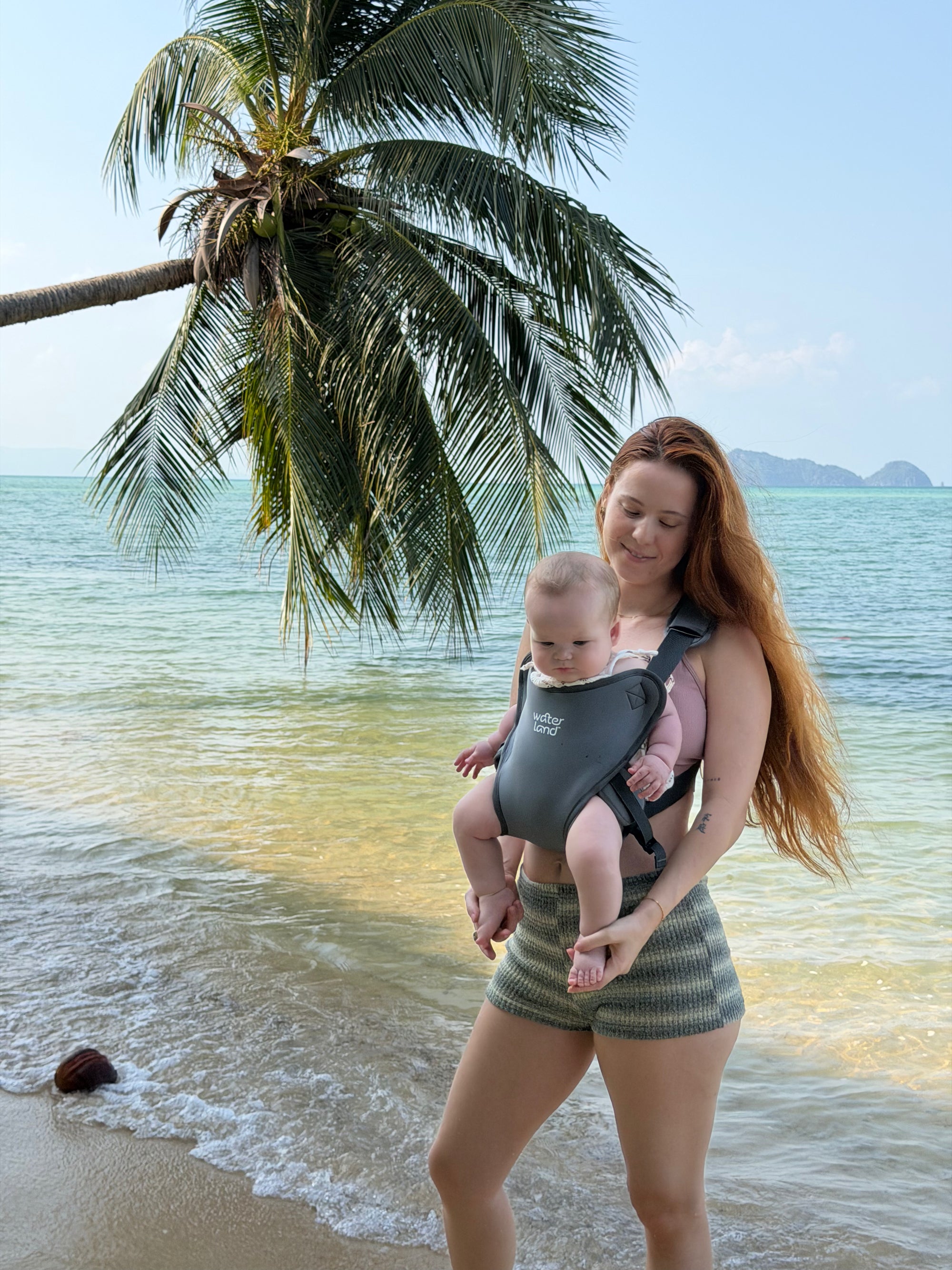
Movement matters too. Walk slowly, turn gently and keep your rhythm even, the way you might sway at bedtime. Sudden turns, bouncing or a big splash from someone nearby can startle a baby who was just getting comfortable. In WaterLand your baby is on your chest, close enough to kiss, and you stand with both feet on the bottom in calm water no deeper than your waist. Standing steady and moving slowly is what makes the water feel calm from where your baby sits.
How long is long enough
Keep early sessions to about 15 minutes, even when everything is going well. Babies cool gradually, and the moment to get out is while your baby is still content, before they start to fuss. As water days become familiar, and if the pool is warm, you can stretch sessions little by little. The American Red Cross plans its infant and preschool classes at 20 to 30 minutes in properly warm water, and suggests shorter sessions when the water is cooler.
Keep a hooded towel within reach of the steps and wrap your baby the moment you’re out. Then a dry diaper, a warm layer and, if it’s breezy, a hat. That warm, wrapped-up minute after the water is part of the visit too.
Reading cold and warm
A settled baby in the water is calm and alert: watching, reaching, kicking now and then. A baby who is getting cold looks different. Shivering, pale or blue lips and skin that feels cool are your cue to get out and warm up. The NHS also describes a baby who is too cold as cold to the touch and unusually quiet and sleepy, so if your baby starts to doze in the water, get out, wrap them up and let them warm through.
Too warm is the other side, more likely out of the water, in the sun or in neoprene. NSW Health notes that babies can become unwell in the heat more easily than older children and adults. A flushed face, or a baby who is more irritable than usual, is a sign to move into shade, take off a layer and cool down. When you’re unsure, take a break, and for questions about your own baby, ask your pediatrician.
Some babies take their time
Some babies love the water right away. Others need several short visits before the echo, the light and the feel of it stop being surprising, and that’s completely normal. Tiredness, a noisy pool or a cool day can make a difference, and so can simply being a baby who likes to watch before joining in.
If your baby is unhappy, get out, cuddle, and try again another day. Make the next visit shorter, pick a quieter time and check that the water is warm. Settling isn’t something to push for; it’s something you make room for. Next time, ask the pool its temperature before you pack the bag, and give it fifteen calm minutes together.